We started this day off out of Wichita after busting on the cold core setup the day before. After scrutinizing posted road closures and construction zones, we got moving and stopped near Pittsburgh, KS. Around 00Z a tornado warned cell nudged us into Missouri for a first attempt before it weakened as it moved out of Kansas. Another cell was strengthening to its southwest though, so we headed south to Carthage and explored vantages and road network as that one approached.
I was surprised how consistently paved the roads were in the area. As long as we could stay out of the river valleys, the grid tested out excellent with a lot of good visibility. I wound up liking Base Line Blvd southeast of Jasper for an intercept that would keep us in flatter terrain to pace on to the northeast for a reasonable distance before Stockton Lake would become a problem.
I jockeyed back and forth to make sure my escape routes and vantages looked good. The sun had gone down and it was getting dark just as the base and wall cloud started to take shape to the southwest. What unfolded next was so like my storm-photography nightmares that I caught myself actively wondering if I was actually having a dream. I was just a few days into actively using a new camera and lenses and as much as I thought I’d developed reflexive control and worked out any glitches, I was totally wrong. The first surprise issue was back button focus not working, which quickly morphed to the aperture not adjusting from the dial I thought I had it set for, which then cliff-dove straight into some horrifying card-write error. All of this while the storm was quickly winding up about 3 miles southwest and closing.
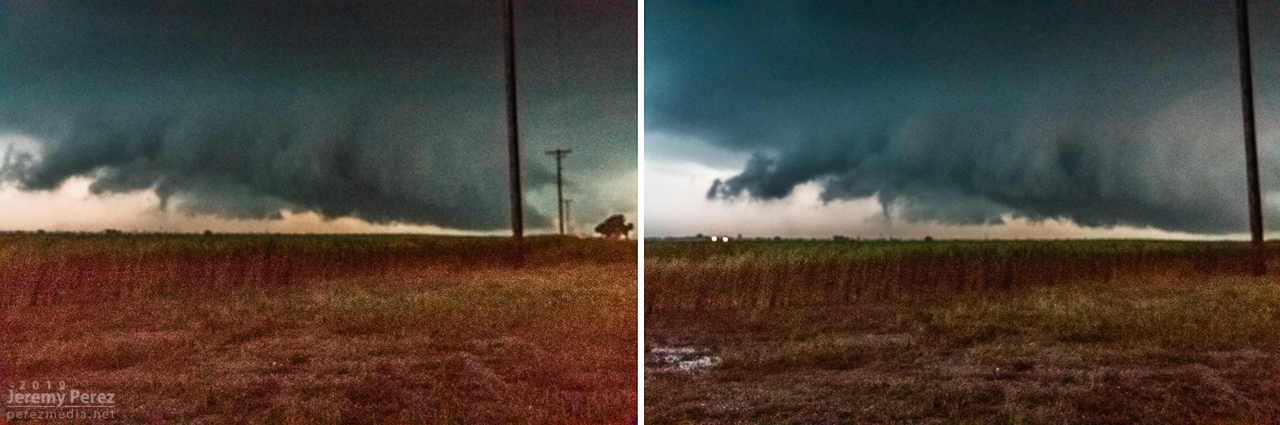
0146Z — blurry shots as storm approaches with possible funnel/debris toward left side—didn’t notice that smaller detail in the gloom at the time.
The first couple issues were frantic forgetfulness on my part, but the third glitch was due to a unique lens-camera-zoom-preview settings combo bug that I didn’t figure out until a couple weeks later. At the time, it was all just nightmare gremlins in deep twilight when every setting is critical, with a dangerous storm bearing down. After rebooting the camera a couple times, we jetted east a couple miles and tried again. By this time, I had re-set the camera to factory settings, which probably made things worse, and now I didn’t have decent light sources to focus on.
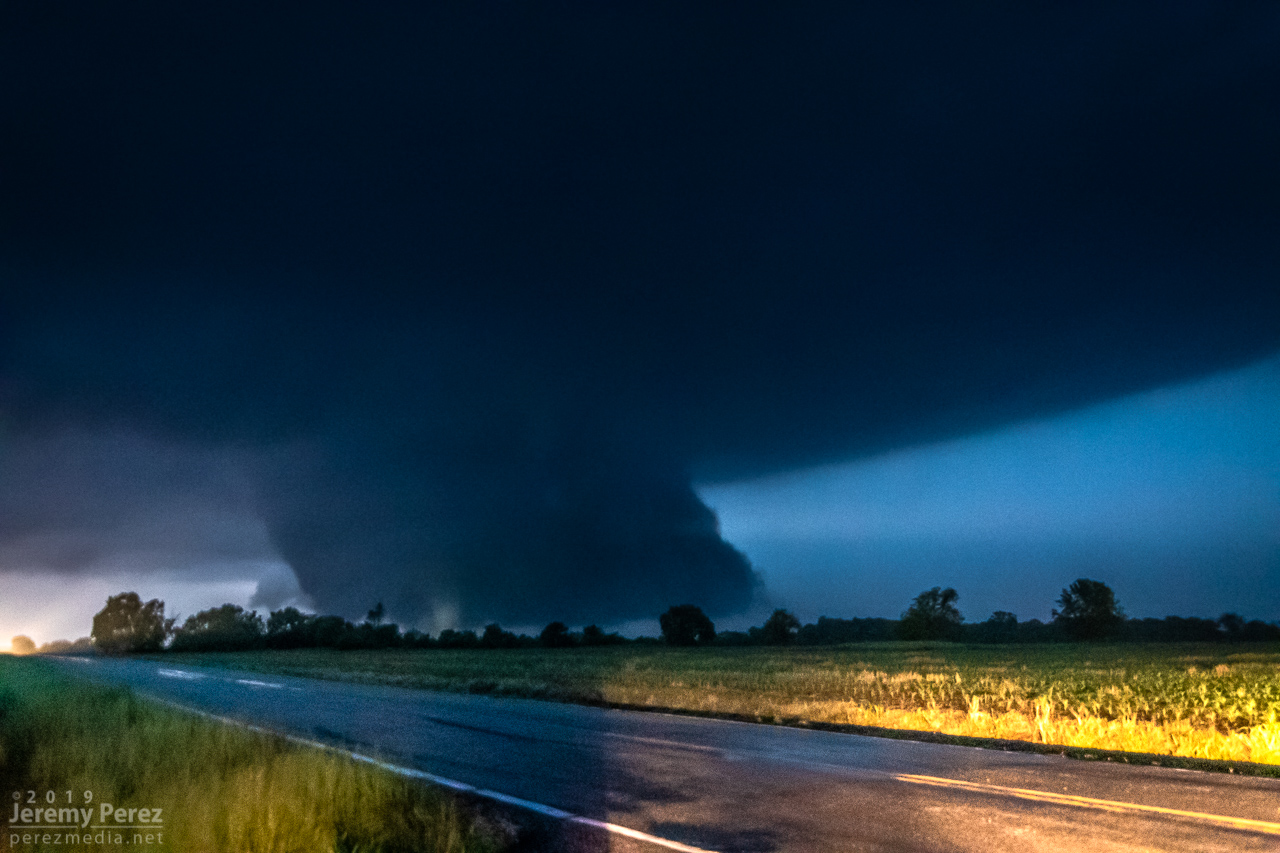
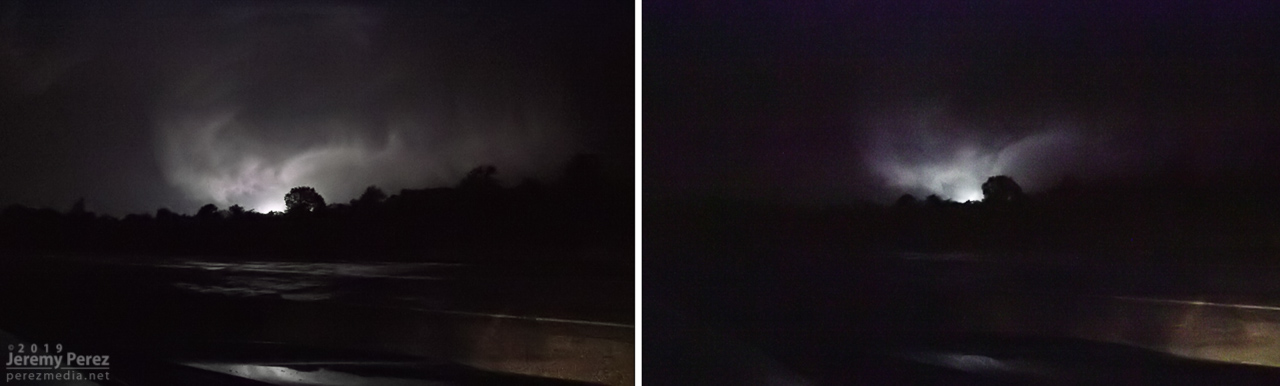
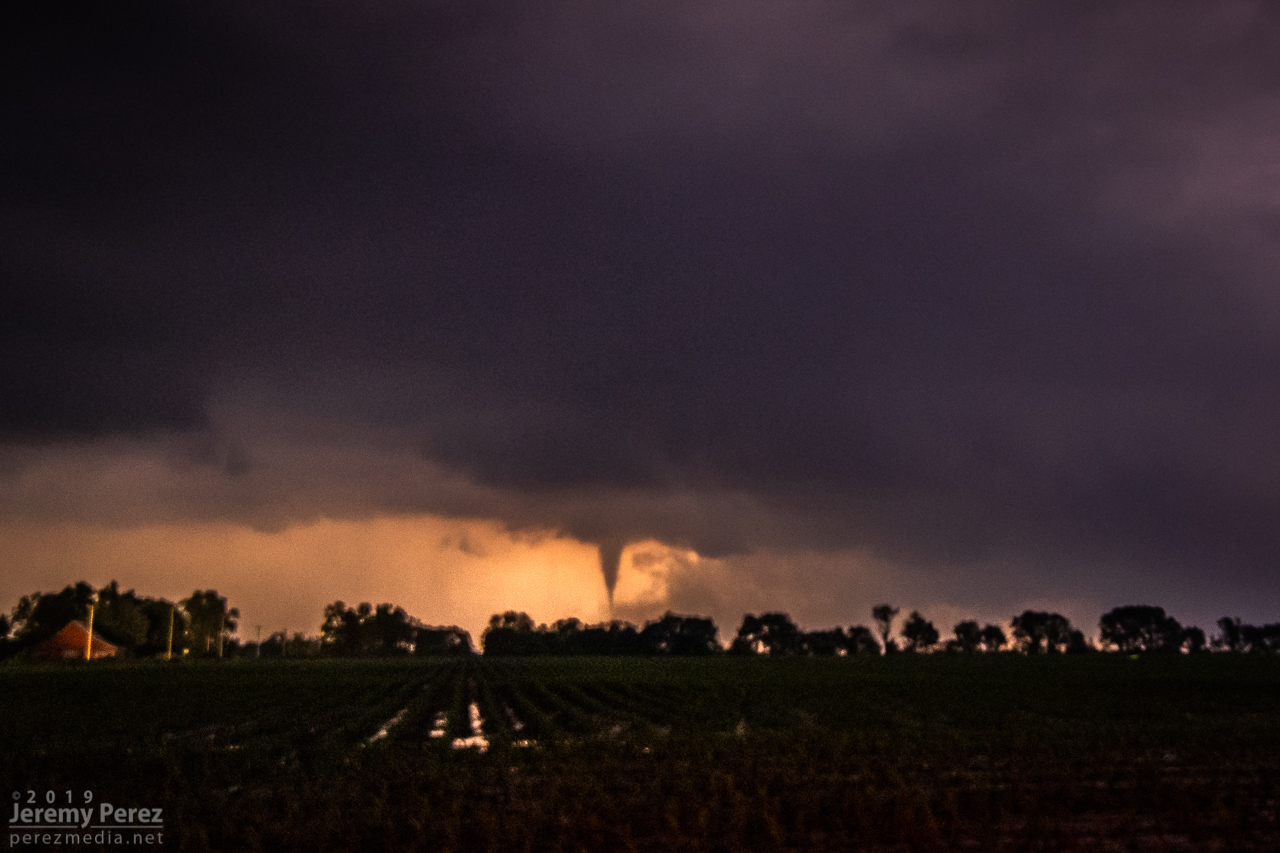
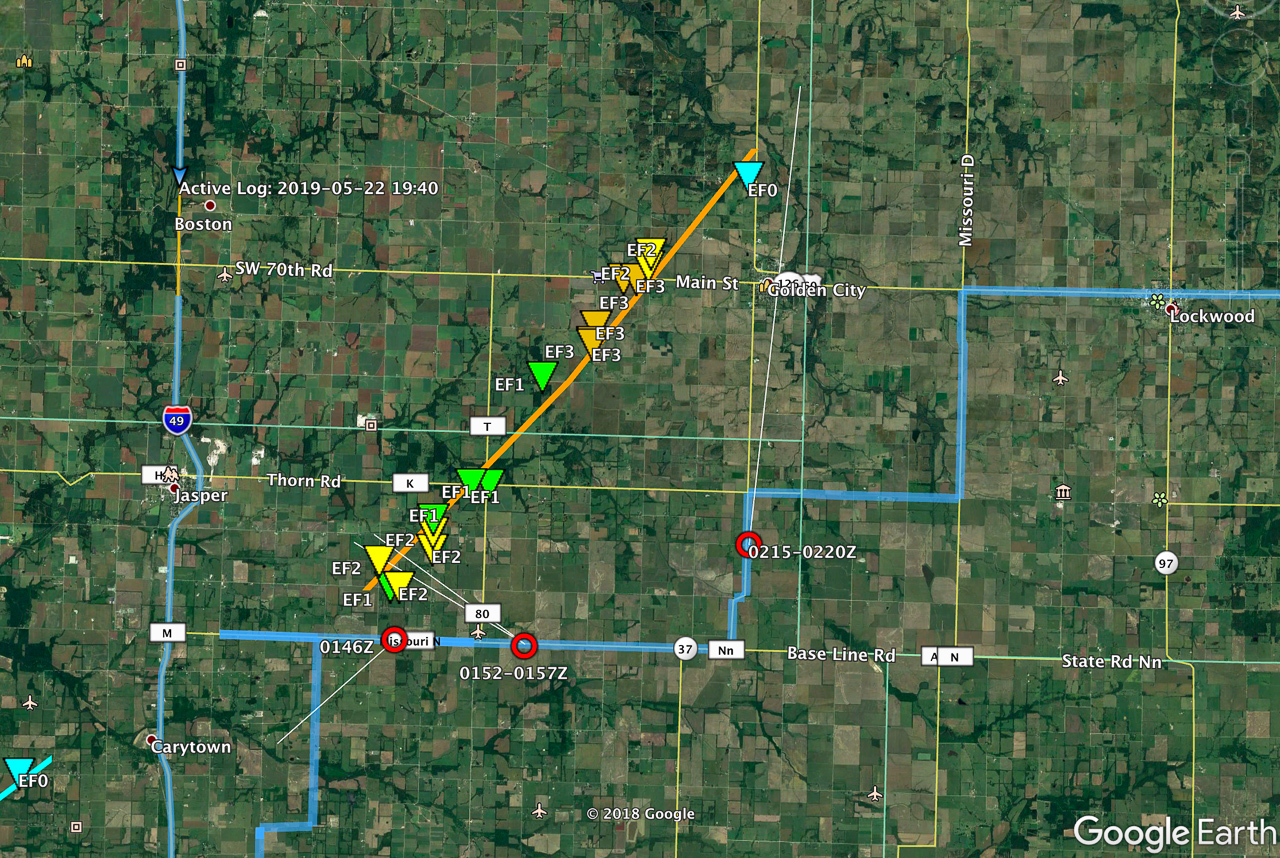
With my brain fried by technical issues and a ton of missed shots, I couldn’t actually tell that the storm was producing, other than it had developed a huge, incredibly solid wall cloud slanting above the trees. I didn’t pick up on the power flashes visually at the time, but the camera caught one as it illuminated the tornado in progress about a quarter mile northeast of where the first damage markers were surveyed. My daughter was running the video camera and picked up a couple more power flashes after that. We didn’t get an actual visual on the condensation funnel until about 20 minutes later as it was backlit by lightning as the storm was racing off north of Golden City.
0152Z — Power flash illuminating tornado as it crossed 100th Rd. north of Rosebud 3 miles to our northwest.
0153Z — Video frames of power flashes as it approached 90th Rd. south of Sumac.
0154Z — Wall cloud and RFD shelf — tornado obscured by large tree at center.
0217Z — Backlit funnel north of Golden City, about 8 miles to our north.
We paced it for a while, but terrain and trees gradually became a huge problem as we got east of Lockwood. We made our way back west to the next day’s target in the Texas Panhandle, dodging heavier cores and flooded roads along the way during a very long night of driving.
Map of image locations and damage survey
The next day was a punch in the gut to realize that the whole time I was aggravated and stressed about camera problems, the storm was taking three lives just a few miles up the road as it approached Golden City. I can’t rationalize anything that makes me feel positive about that day, just grief for the families of Betty Berg and Kenneth & Opal Harris.
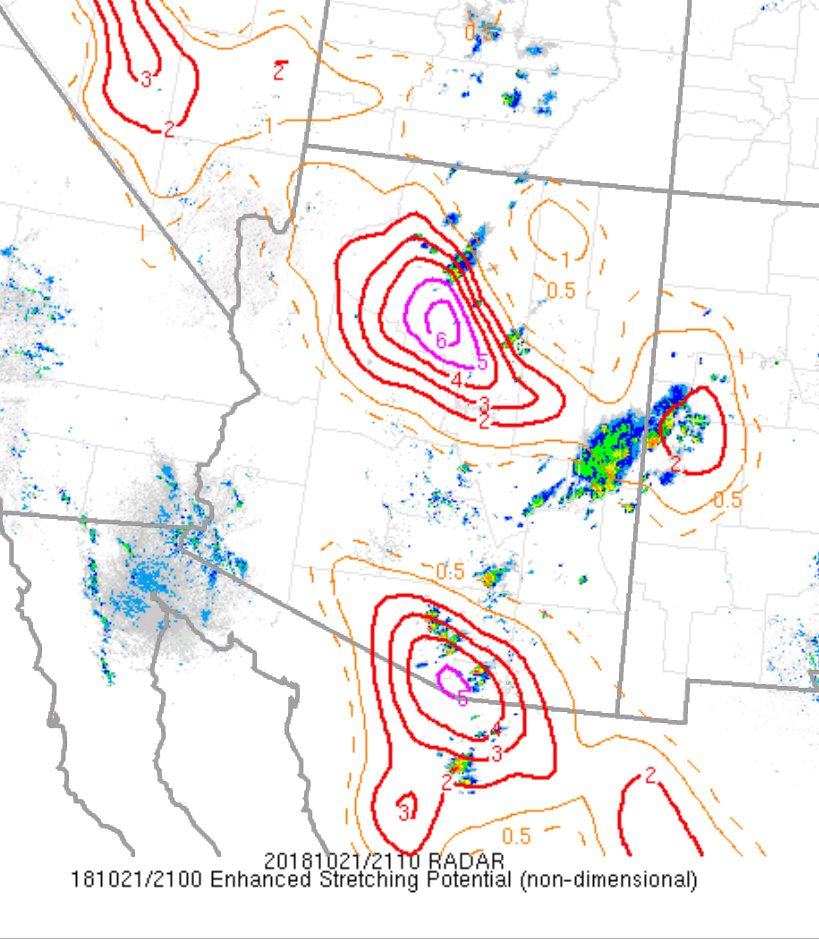
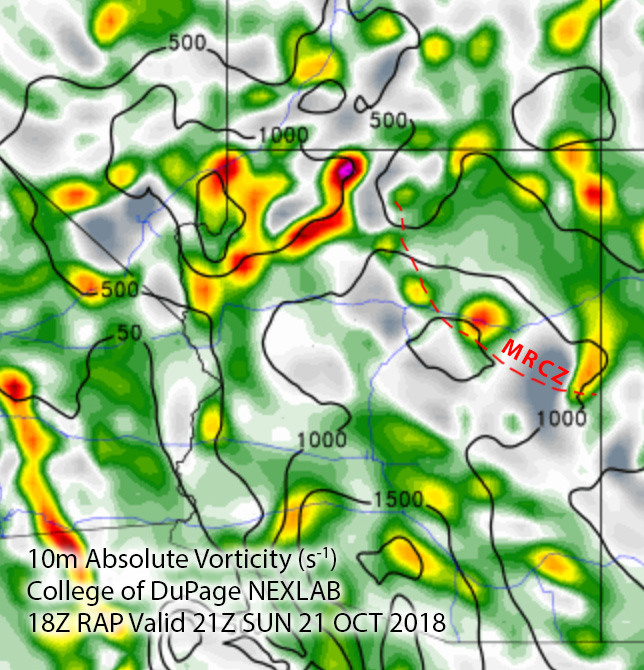
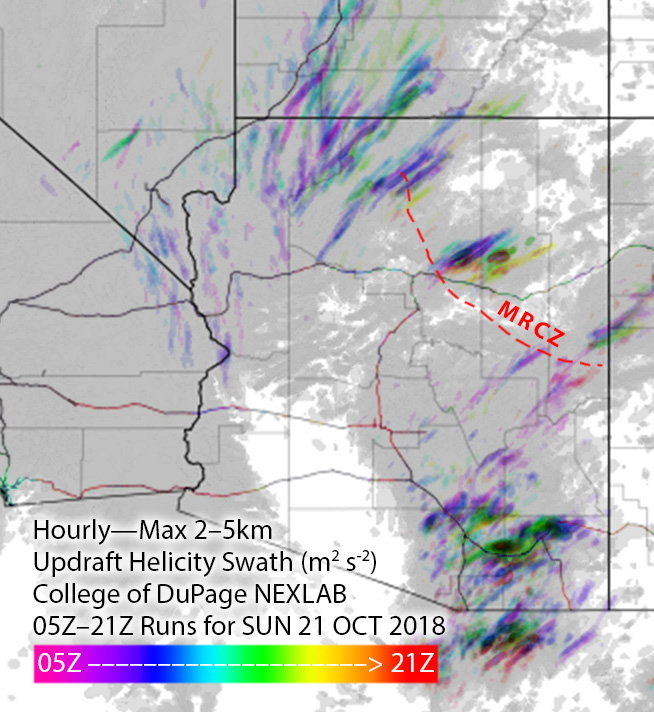
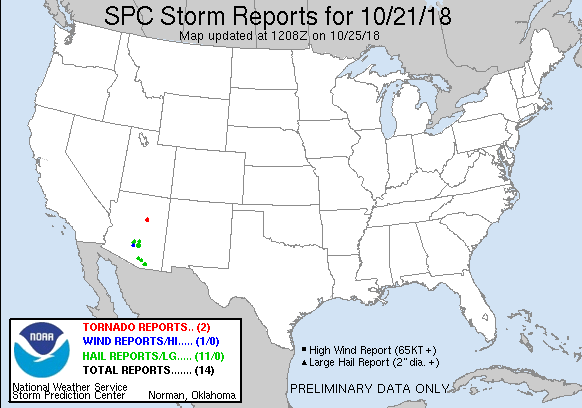
On Sunday, October 21st, tropical moisture was in place over Arizona, with a low impinging on it from the west. So southwest flow was in play over the Mogollon Rim Convergence Zone (MRCZ). Work had been a bear and I’d been dealing with a chest cold the previous few days so I wasn’t exactly eager to get out. But I felt better by Sunday morning, and was watching conditions and browsing HRRR/UofA WRF CAMs. HRRR had been pretty set on some stronger storms initiating and moving across the MRCZ, from Twin Arrows through Winslow. RAP surface vorticity suggested elevated vorticity in that same area. WRF CAMs didn’t have the same consistent signal, but with HRRR being so interested in it, I figured I’d mosey out there around 1-2PM and see what was up.
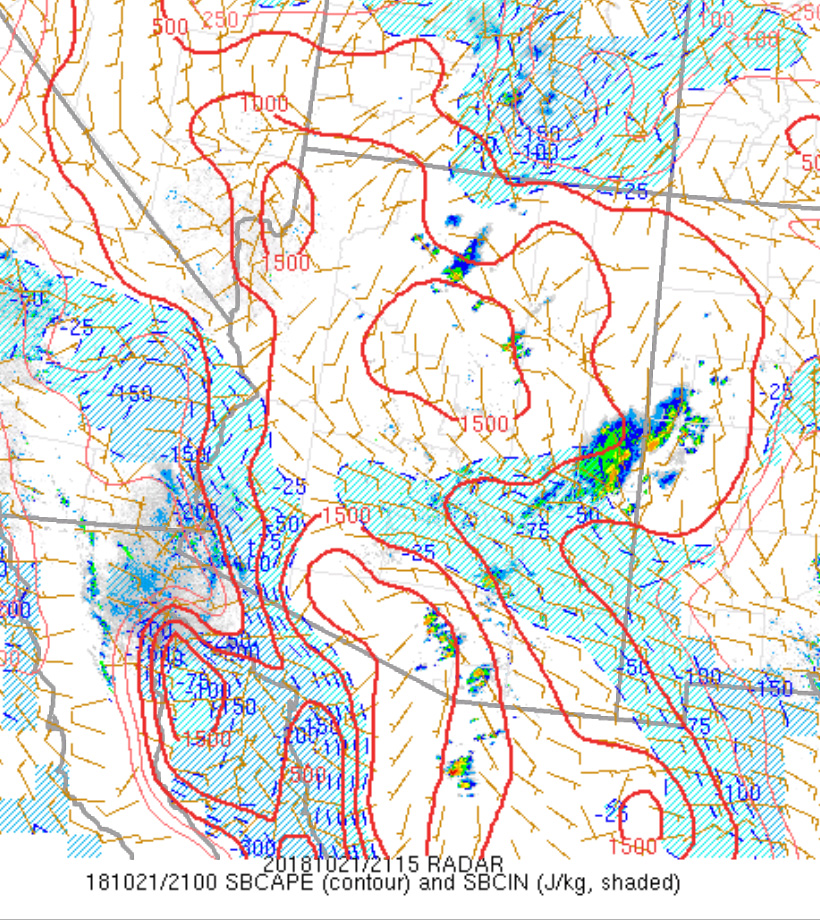
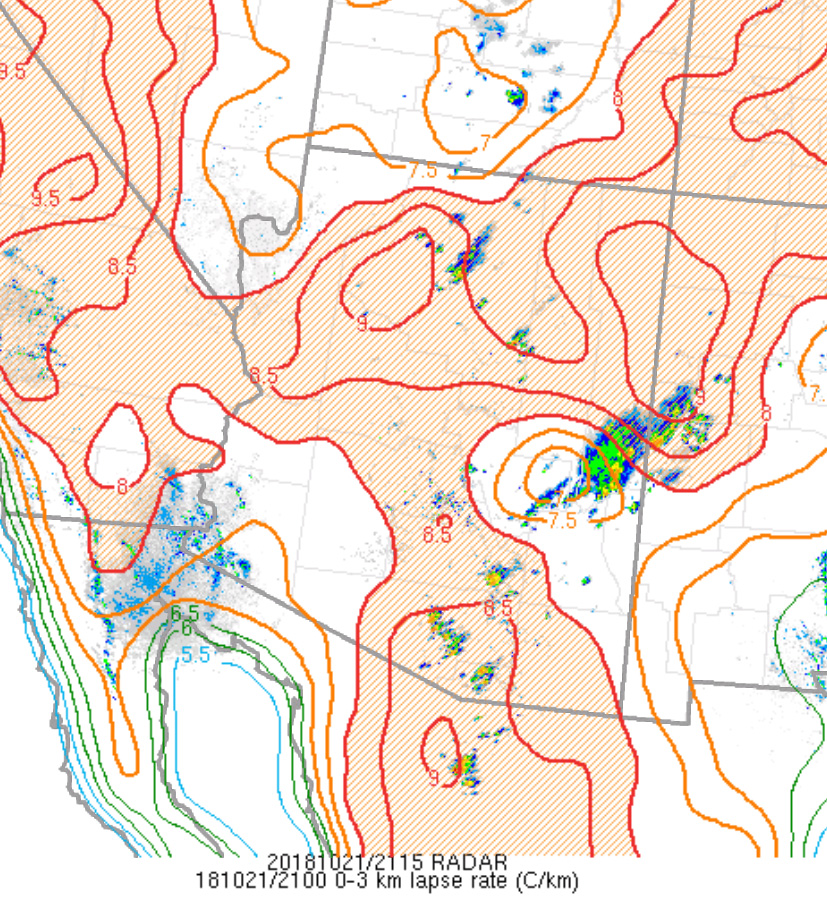
Forecast, nowcast, SPC data
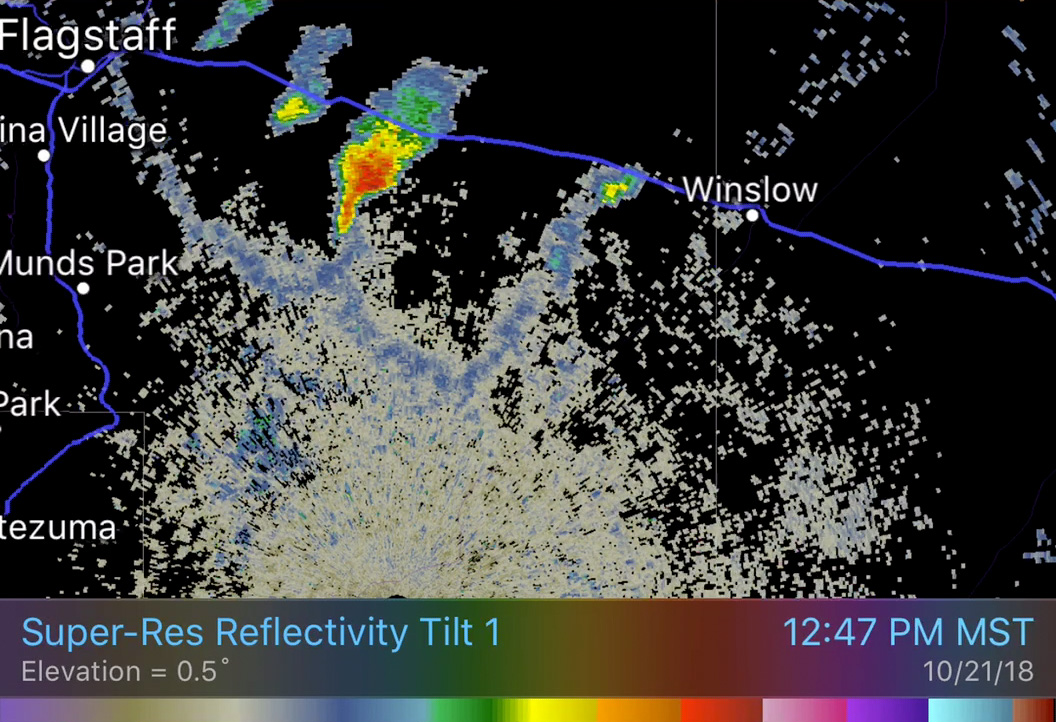
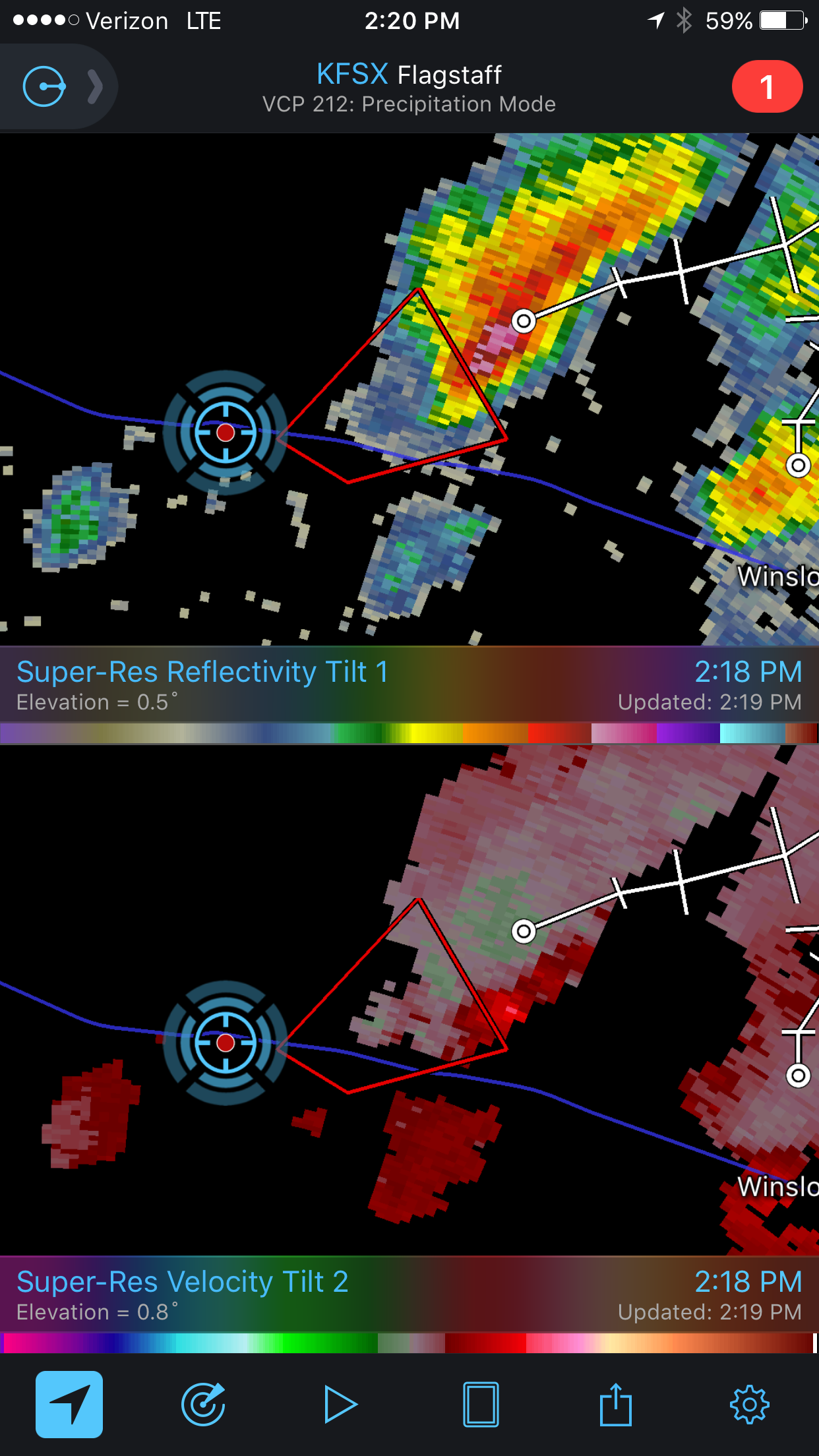
While I was out running an errand, radar showed convection trying to fire. It was pulsing inside a notch in the convergence boundary that had formed southeast of Flagstaff around 12:30PM. That was earlier than I expected, so by the time I was on I-40 heading east, one cell was already looking pretty good. With 30ish knots of bulk shear, I was mainly interested in some brief structure.
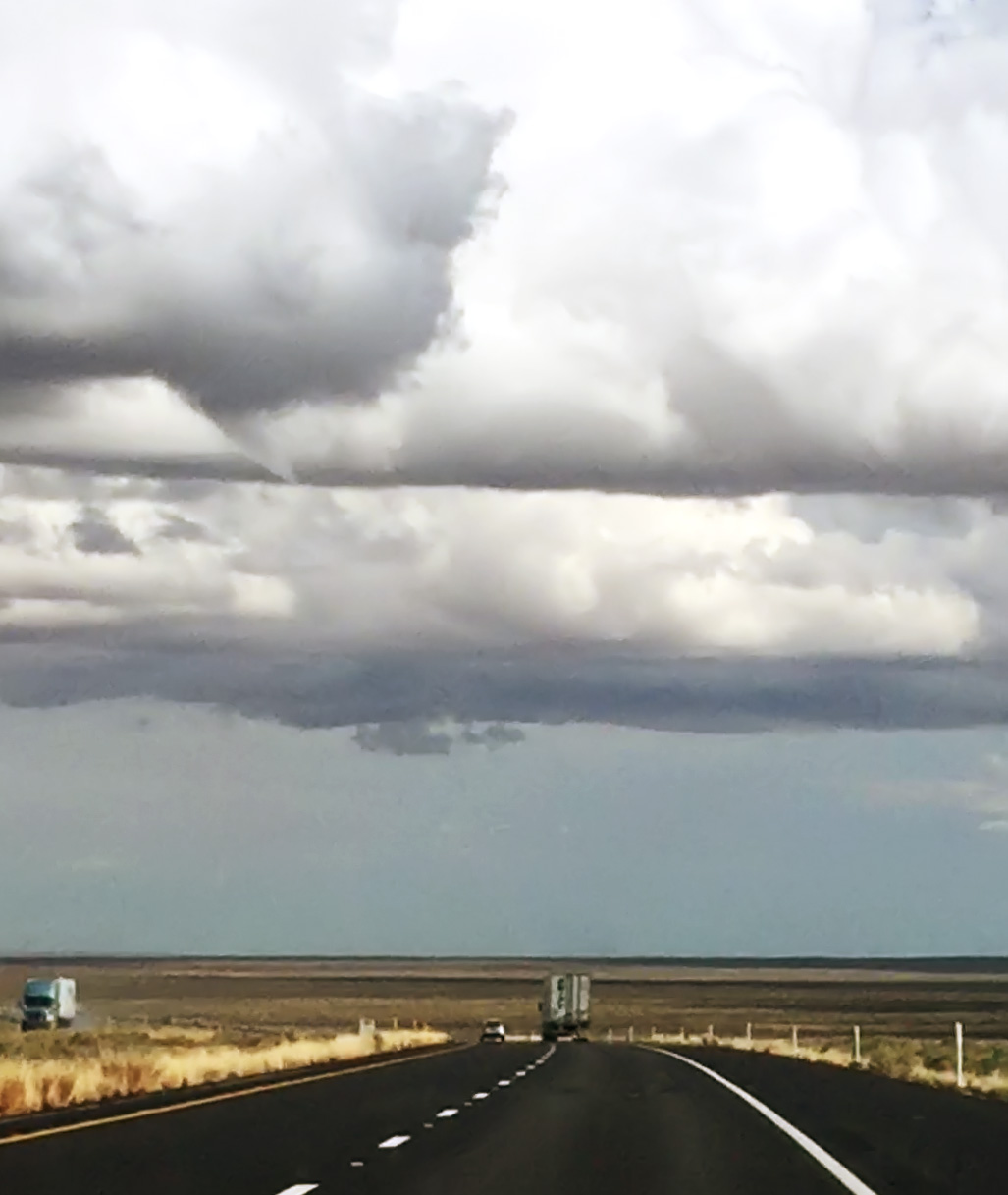
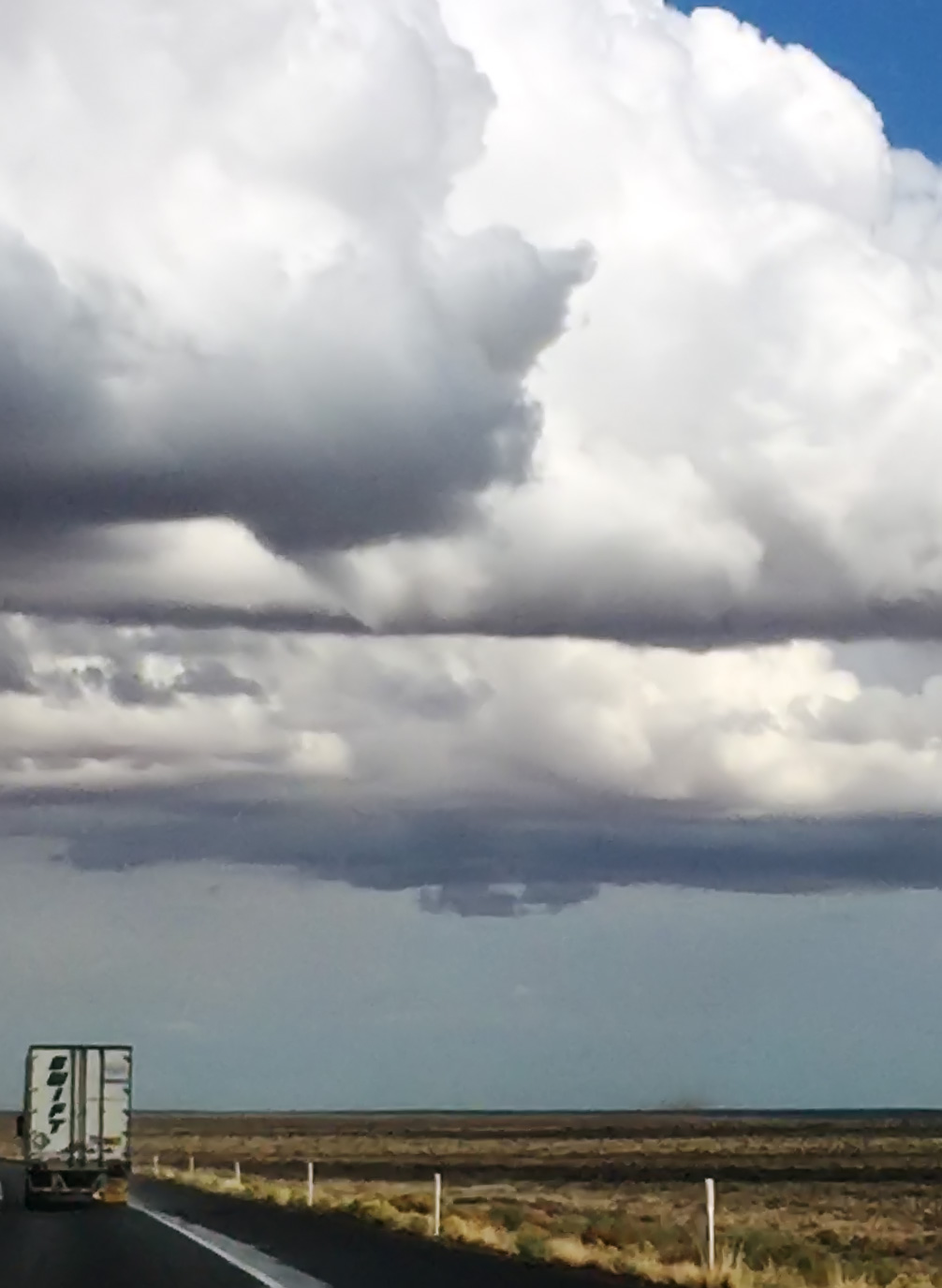
As I got near Buffalo Range Road, about 12 miles from the cell, it looked like a funnel was poking out of the southern tip of the base. So I started the cell phone rolling video on it.
— 2057Z — Developing funnel with possible dust on horizon above truck
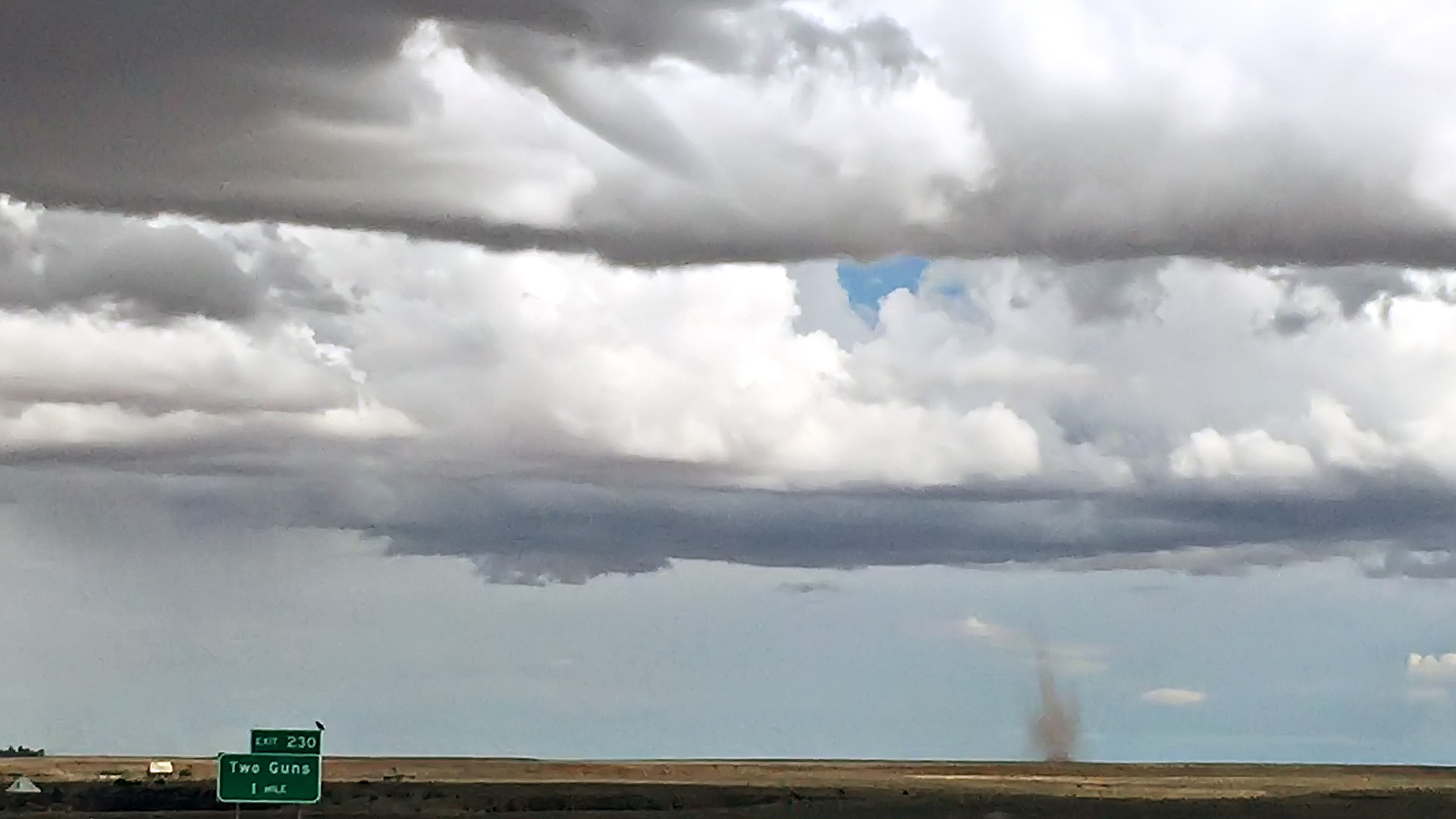
About a minute later, 2058Z, dust appeared on the horizon where the funnel was aimed, so landspout! You never know how much time you’ve got, but I didn’t want to pull over on the interstate. Fortunately, the Two Guns exit was just a couple more minutes down the road. Once I got there, I realized terrain to the west was going to hide the point of ground contact, but I couldn’t waste more time hunting down a better spot.
— 2058Z — Funnel and clear evidence of dust/debris
— 2059Z — Growing dust column with 1 mile to go to next stop
— 2100Z — Landspout strengthening beyond Two Guns
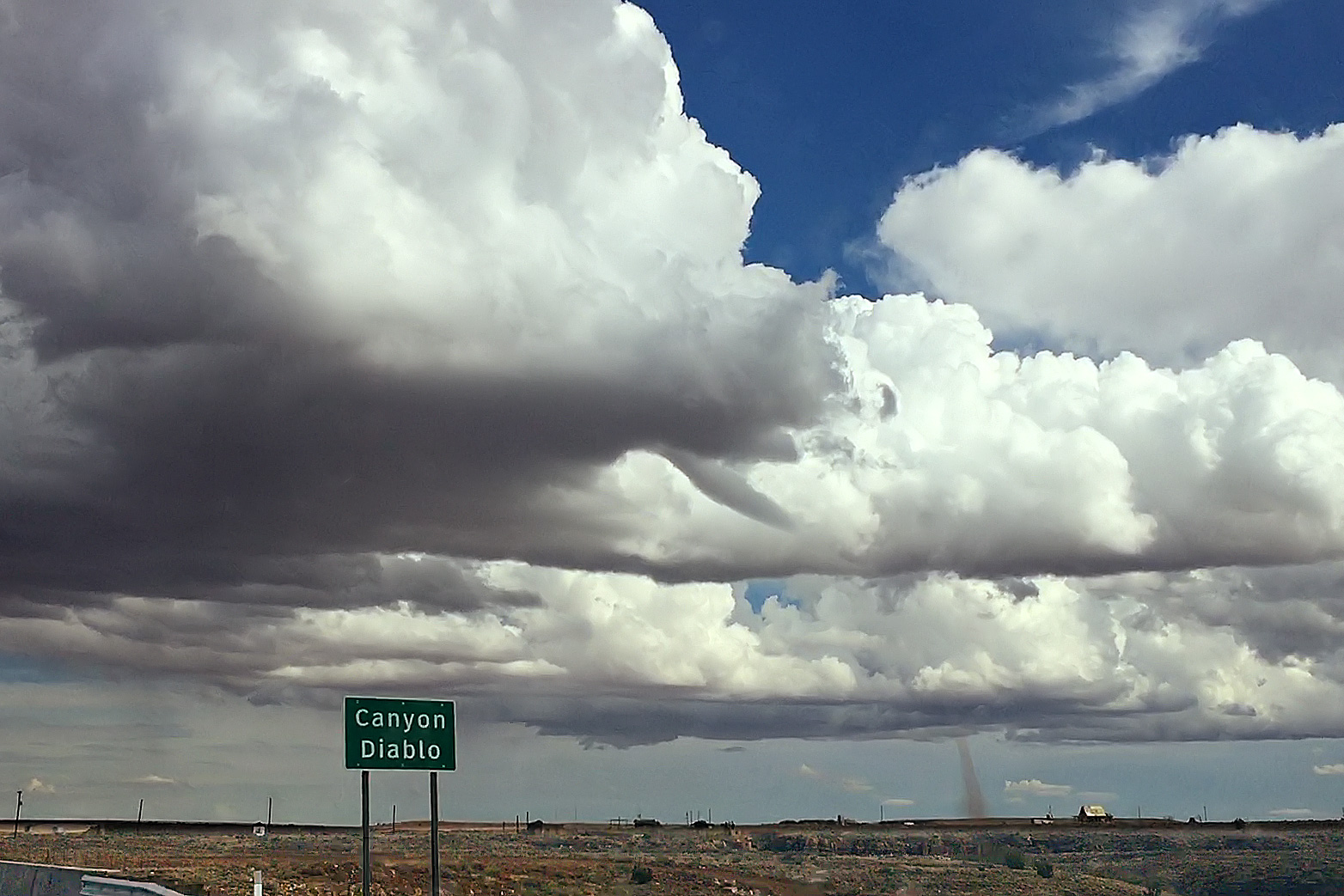
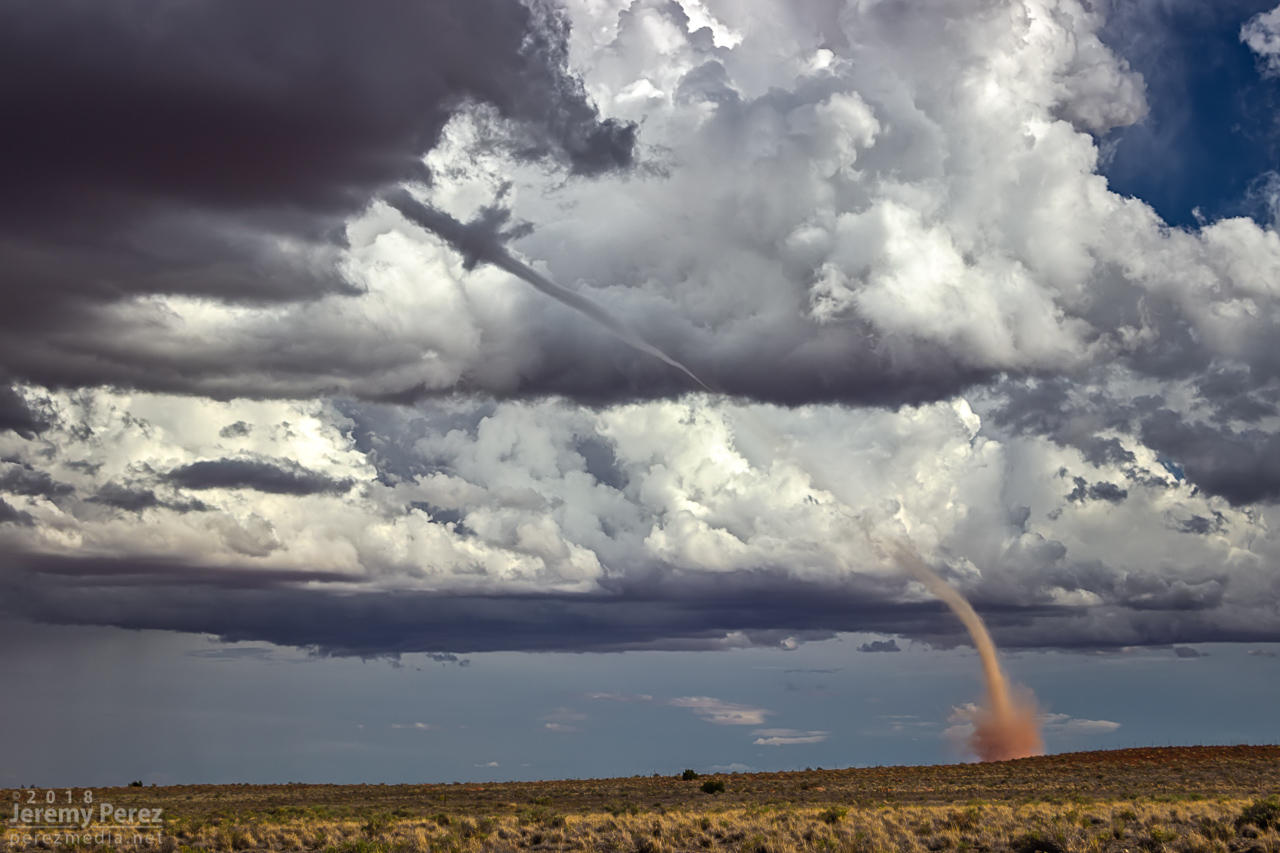
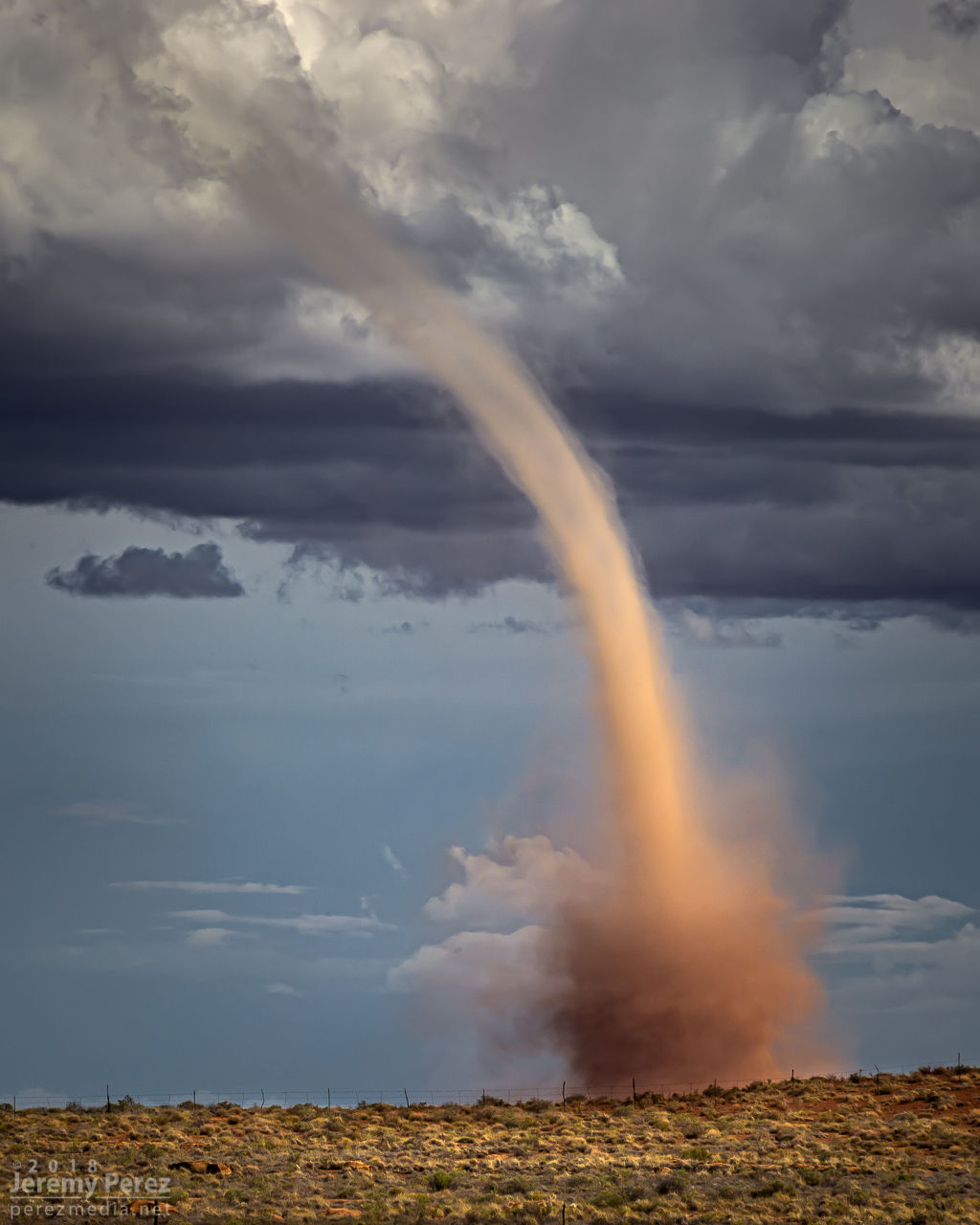
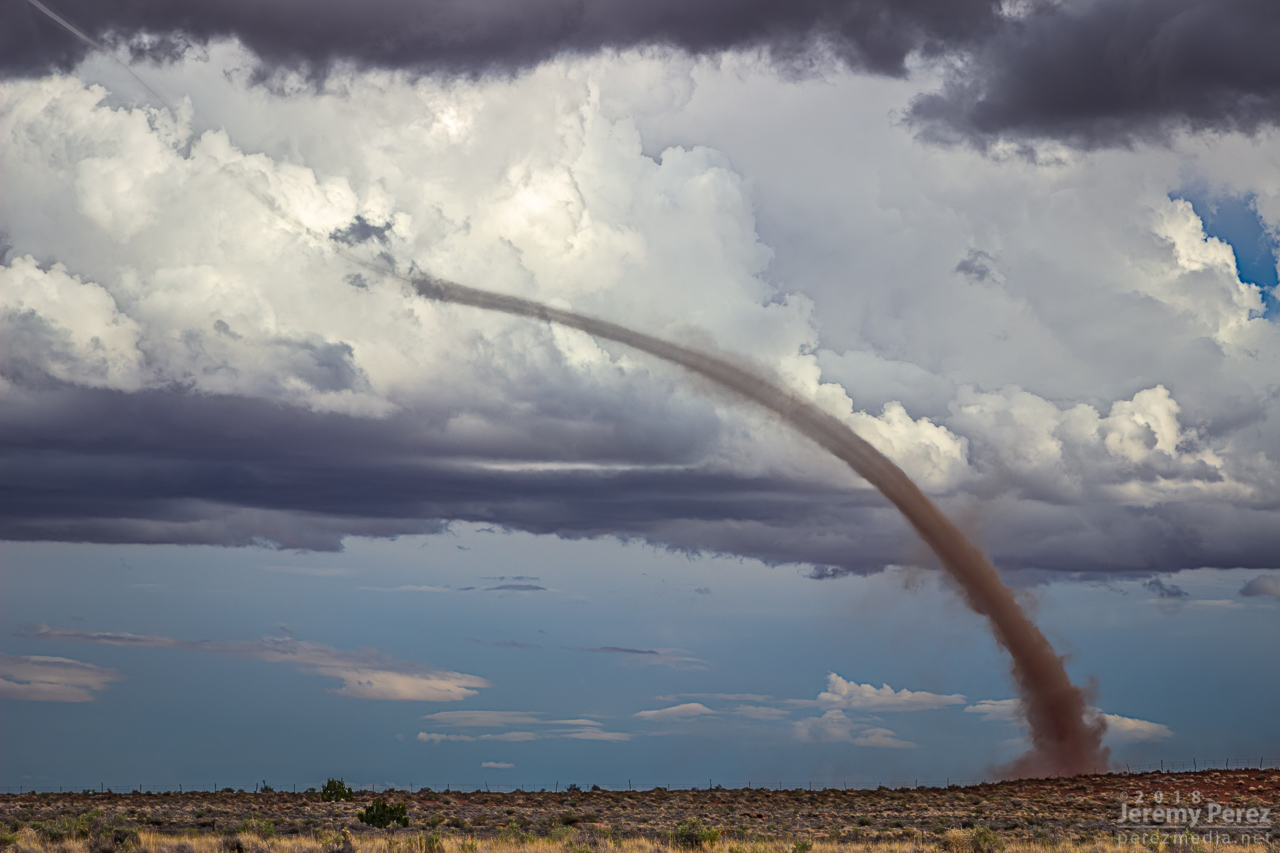
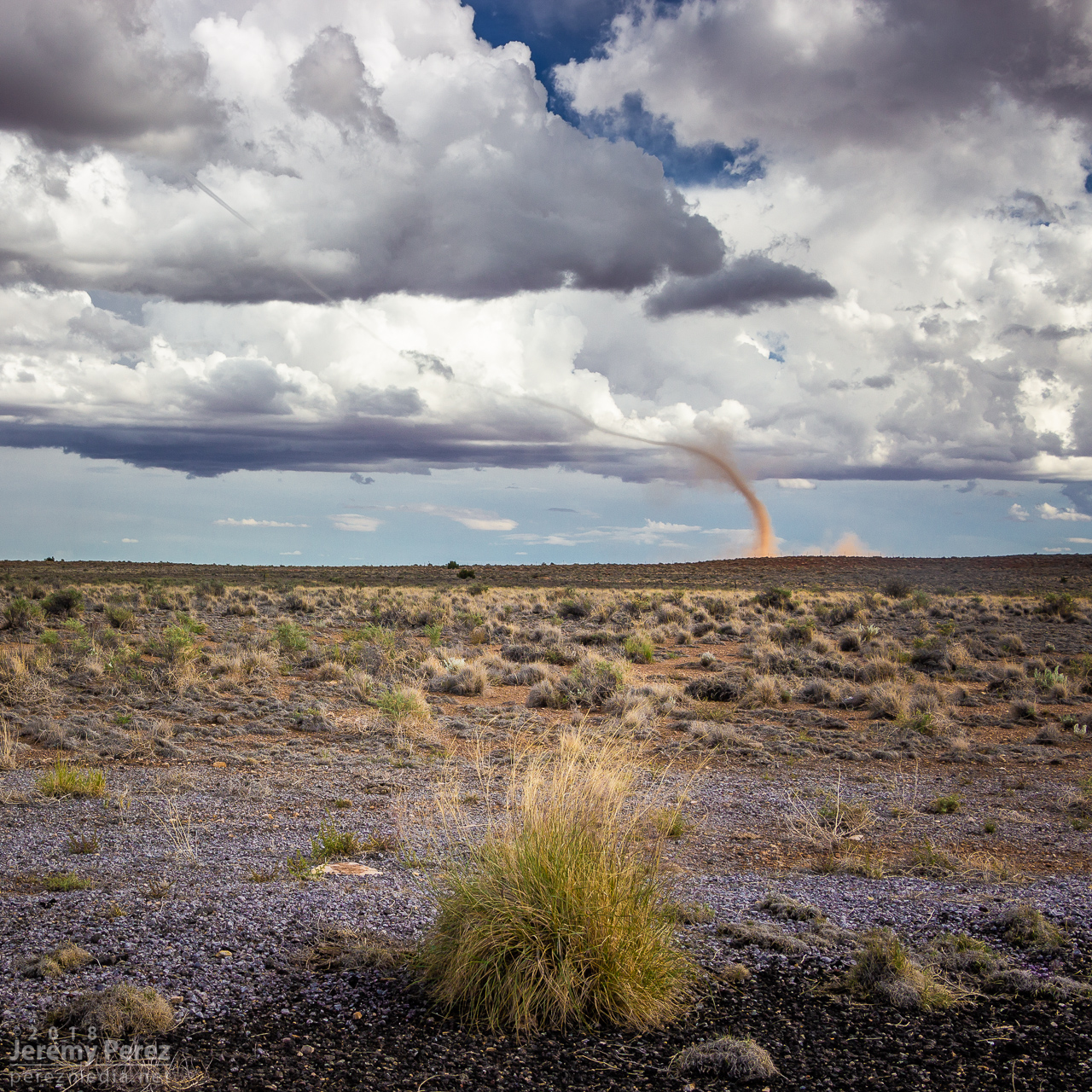
The condensation funnel gradually stretched down into the lengthening dust column. With the sun reflecting off orange dust and white vapor, it was more stunning than I could have hoped for an Arizona tornado. It’s one of the sights I imagine when heading out for a Plains chase — wondering if I’ll catch a high-definition, colorful rope-out among other things. And there I was, 30 miles from home, watching it happen on a Sunday afternoon.
— 2104Z — Looking east-southeast from the east side of Two Guns
— 2104Z —
— 2107Z —
Tornado warning polygon
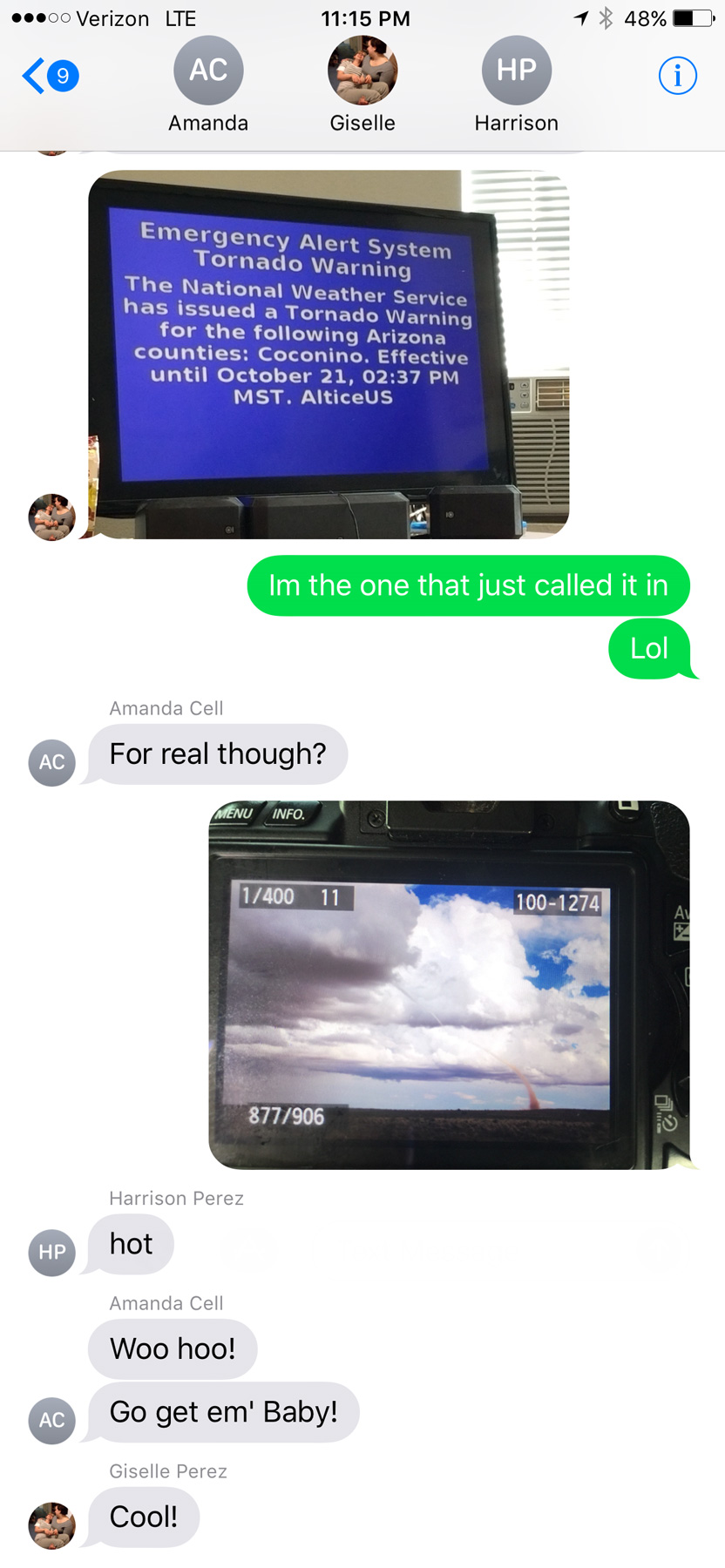
Family chat recap
While the storm continued drifting northeast, the base of the landspout drifted slowly southward, stretching the funnel longer as they separated. It dissipated after about twelve minutes, lasting from 2058-2110Z.
— 2108Z —
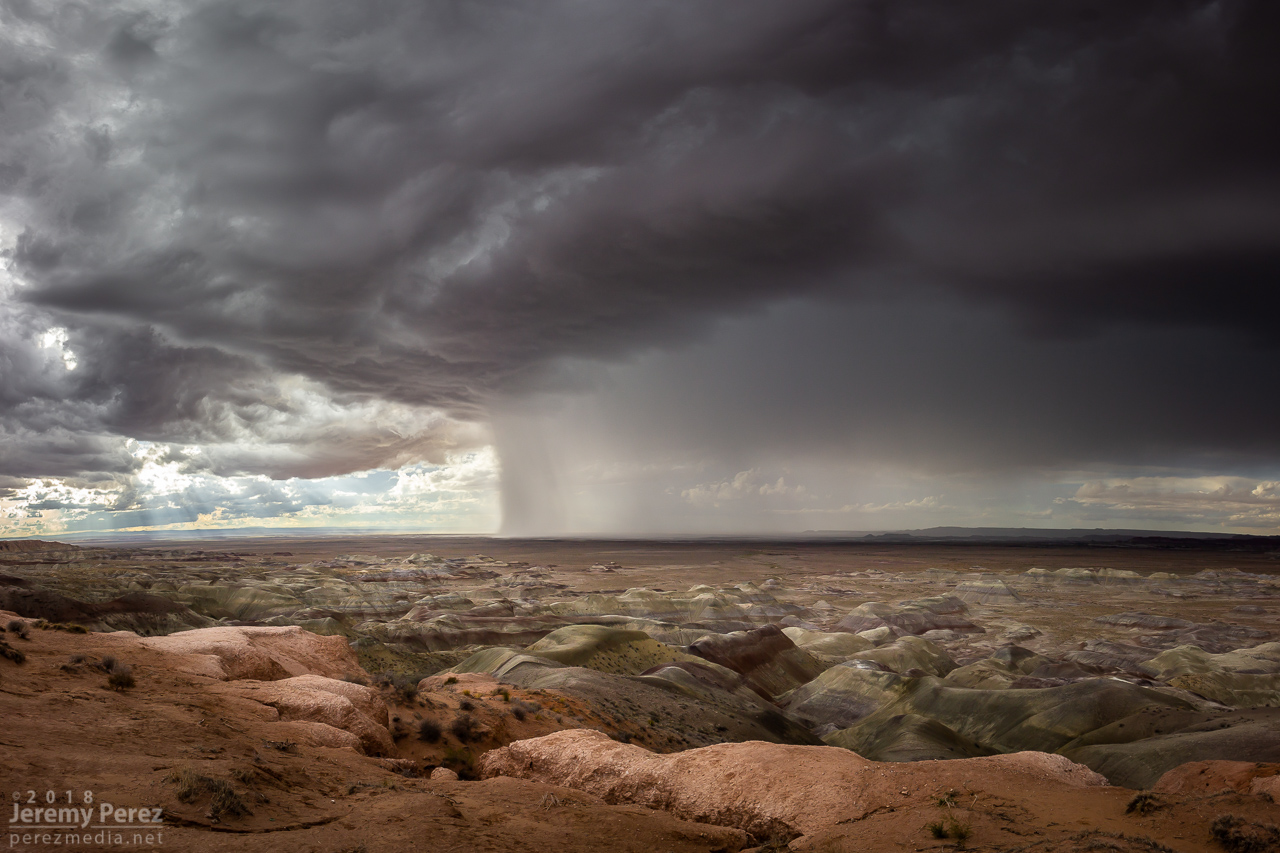
Once it wrapped up, I made my way up Rt 87 north of Winslow to see what new development might look like that way. I got some time lapse running at the Painted Desert Rim View and watched rain, hail and sunbeams roll across striped buttes and hills. Around this time I got a request from 12 News Phoenix for an interview. They were okay waiting a couple hours so I could finish up and get to a spot with better than 1x coverage. On the way back to Winslow, an isolated cell near Mormon Lake eclipsed the sun and while grabbing shots of that, I had a couple cars honk and wave as they drove by. I couldn’t tell who they were, but It kind of added to the feeling of being out on a Plains chase.
— 2310Z — Looking west-southwest from Painted Desert Rim View
— 0005Z — Looking northeast along Rt 87 at receding convection
— 0020Z — View to the southwest of an isolated cell near Mormon Lake
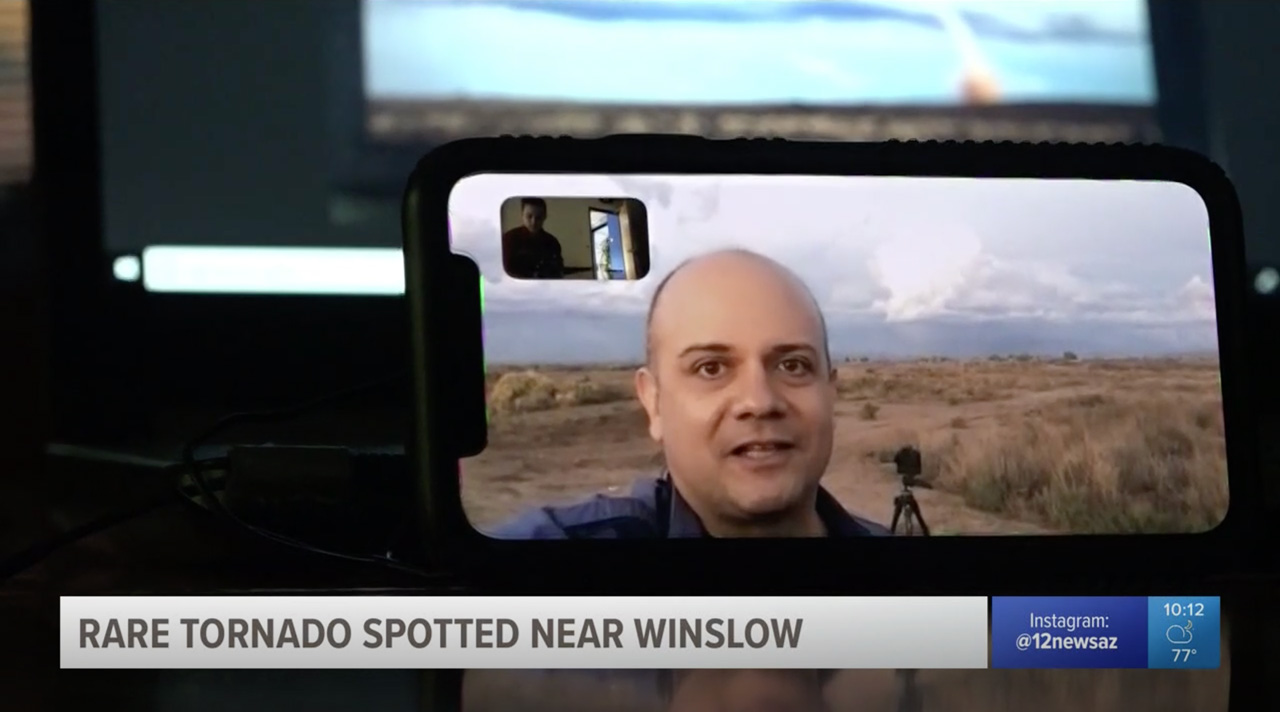
Down by Winslow, I grabbed a few last sunset shots and did a FaceTime interview with Ryan Cody. Funny to see a news camera set down on a desk and aimed at a cell phone to capture the interview. I barely watch broadcast news anymore, so these things are surprising to me.
— 0035Z — Last light on receding storms from north side of Winslow
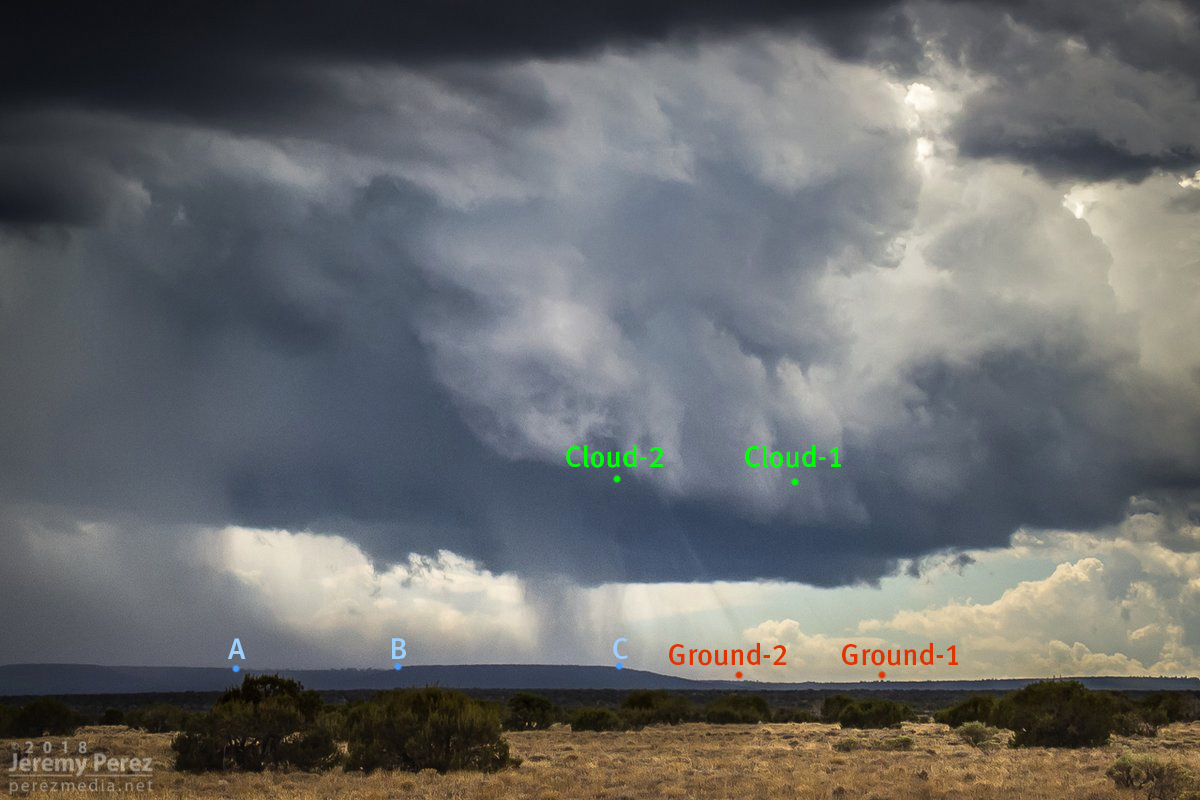
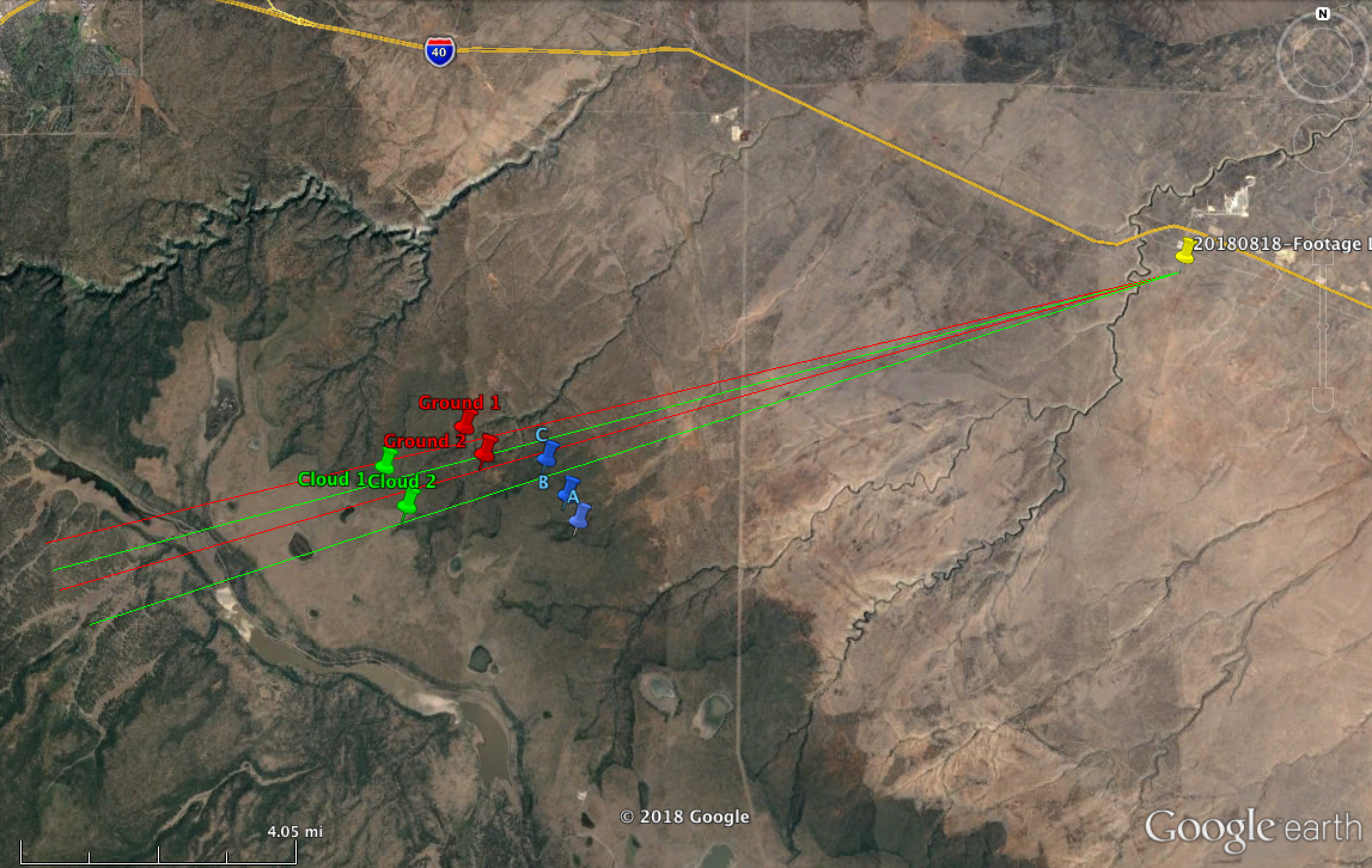
Based on information available at the time, SPC plotted the tornado report further north than I think it actually occurred. I drew up my line of sight in on Google Maps. Then using another series of shots from a visitor at Meteor Crater, I lined those up over the top of a recognizable structure which put it directly north of there. So that puts it over a rocky outcropping about a half mile east of Meteor Crater Road and 2 miles south of I-40.
Line of sight map of Meteor Crater landspout
Facebook reference photos for Meteor Crater reference view
Watching video later, it was fascinating to see the outer sheath of dust rippling downward around the smooth inner column. Such a spectacular thing. And then there’s the strangeness of chasing over eight years, a couple dozen tornadoes later, and suddenly in 2018 to finally get landspouts on three different chase days — two of them a half hour from home. Wish I could say I now feel more confident in being able to forecast and catch this special kind of twister. But no. The needle gets mixed to a different spot in the haystack each time. That really makes it rewarding when it pans out though.
Arizona is not prime territory for supercells. Moisture, instability, and shear don’t superimpose often. The tail end of monsoon season is when that exciting combo is most likely to happen. And it set up perfectly this year on September first. This wound up being my best storm chase in Arizona yet, and rises above a lot of Plains chases.
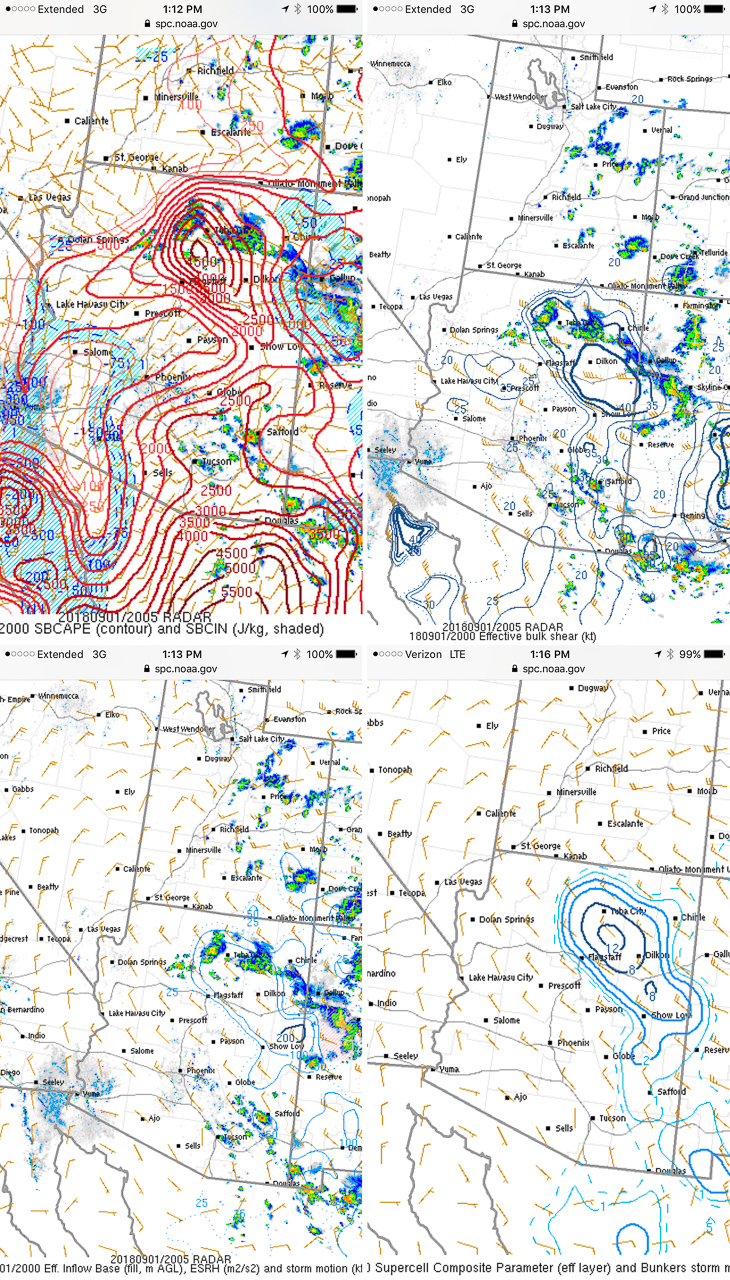
A few days before, GFS was sparking my interest, hinting at a shortwave moving over monsoon moisture. By two days prior, 3KM NAM was indicating enough instability, bulk, and directional shear for supercells with tornadoes as a potential hazard. The day before, John Sirlin and I discussed target options. The MRCZ area on the Navajo reservation looked good early on, with options gradually moving southeastward toward New Mexico later in the day. John wound up driving north overnight to avoid Labor Day traffic and was in the Winslow area to catch an early morning shelf cloud over the Painted Desert.
I finally got moving and was hanging out on Sand Springs Road northwest of Tolani Lake by 1830Z. The sky was clearing after the morning storms and new convection was bubbling along Hwy 89 north of Flagstaff and gradually moving into the Little Colorado River Valley. The new cells struggled for a while, but even in their meager state showed they wanted to shear downstream and spin.
— 1910Z — Convection building over the San Francisco Peaks
— 1941Z — Weak convection drifting over Sand Springs Road
— 1957Z —
— 2016Z — Mesoanalysis indicating conditions were primed for strong storms
By 21Z, a line of convection from Tovar to Garces Mesas was strengthening rapidly. And doing so further east than I was expecting. I raced to Tolani Lake and headed east on Indian Route 6820—a road I haven’t traversed before. It led me across dusty plains, mud pits, semi-dry washes, and encroaching dune fields as storms darkened to the north.
By 2130Z, I was about 10 miles east of Tolani Lake and the lead cell was directly north of me. It had an inflow tail, RFD cut and was showing a velocity couplet on radar. Fifteen minutes later, a wall cloud was evident, but contrast was poor and I couldn’t tell what it was doing. Dust was getting dragged into the storm, encouraging me to find spots to stop that weren’t obscured by trains of cascading dirt.
— 2113Z — Heading down Rt6820 as the eastern cell rapidly strengthens
— 2134Z — Structure taking shape on the lead cell, looking north from ten miles east of Tolani Lake
— 2145Z — Wall cloud taking shape
— 2147Z — Dusty inflow was an ongoing problem for visibility
— 2129Z — Velocity couplet developing on the lead cell
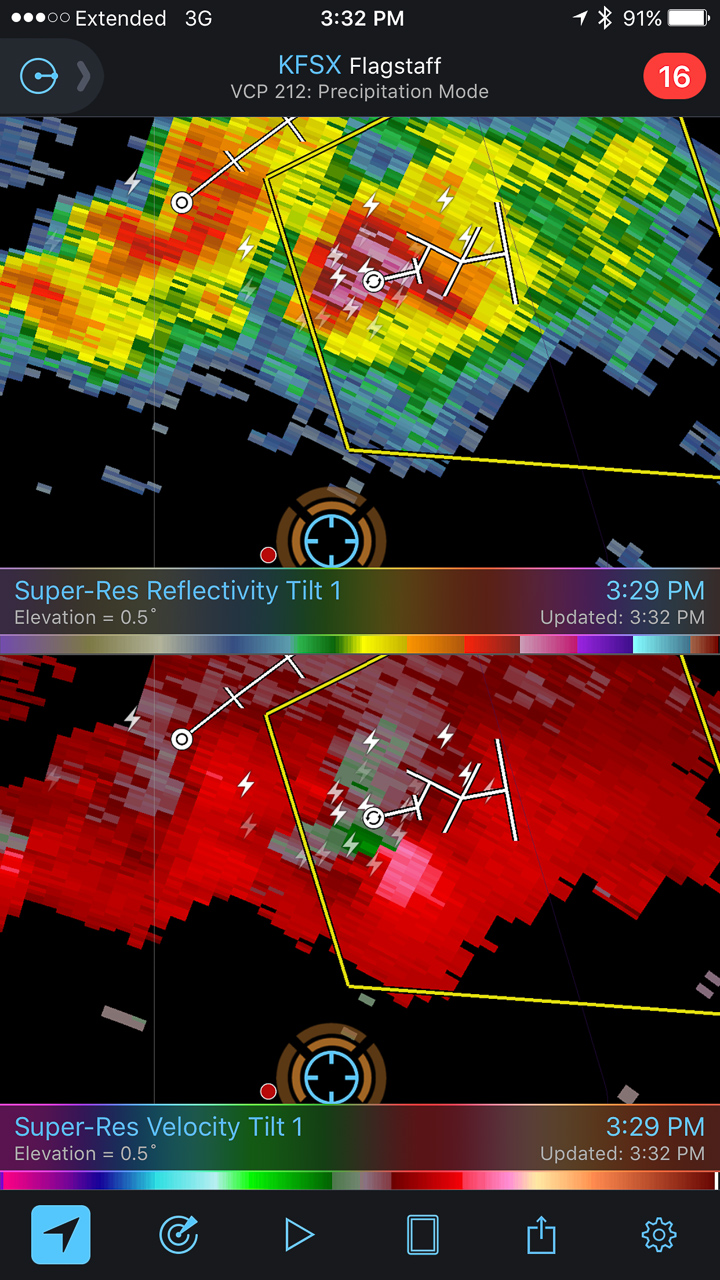
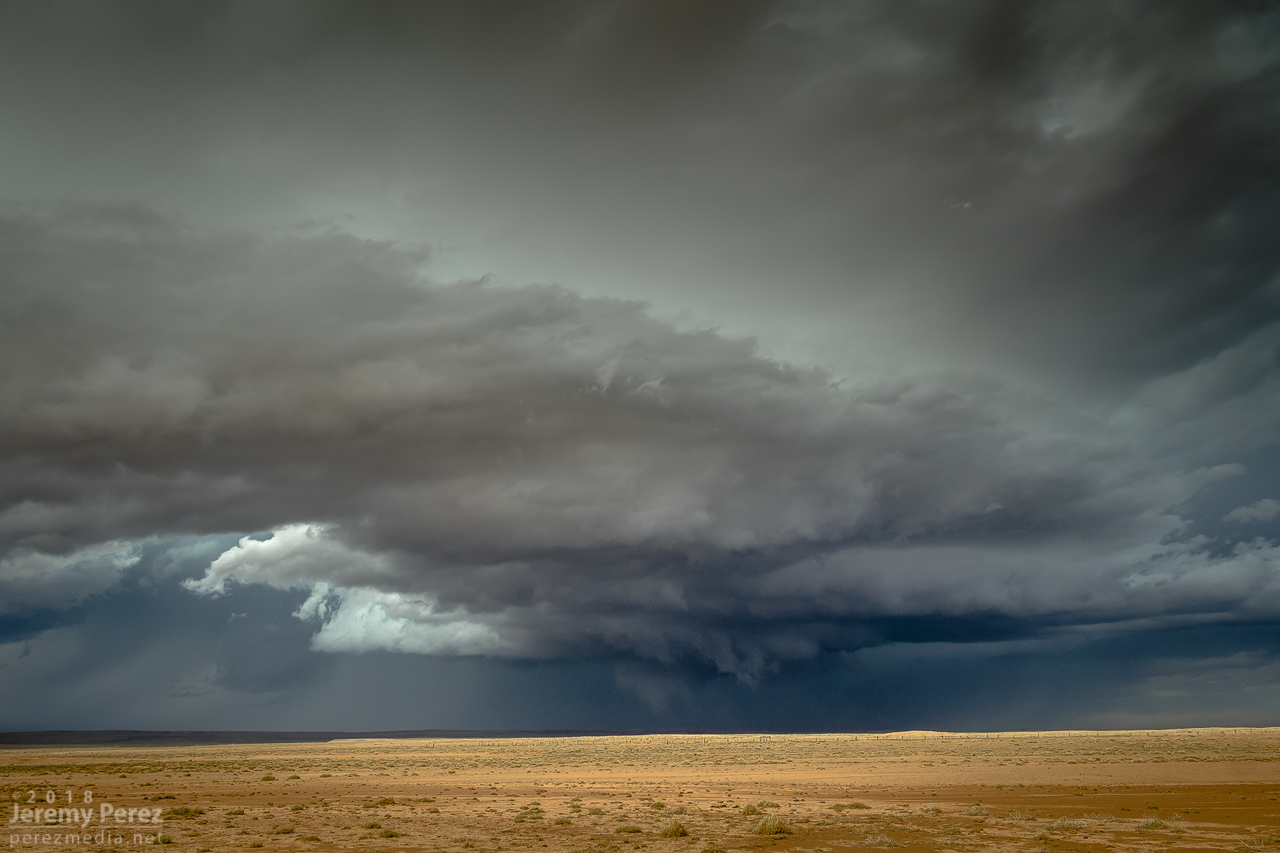
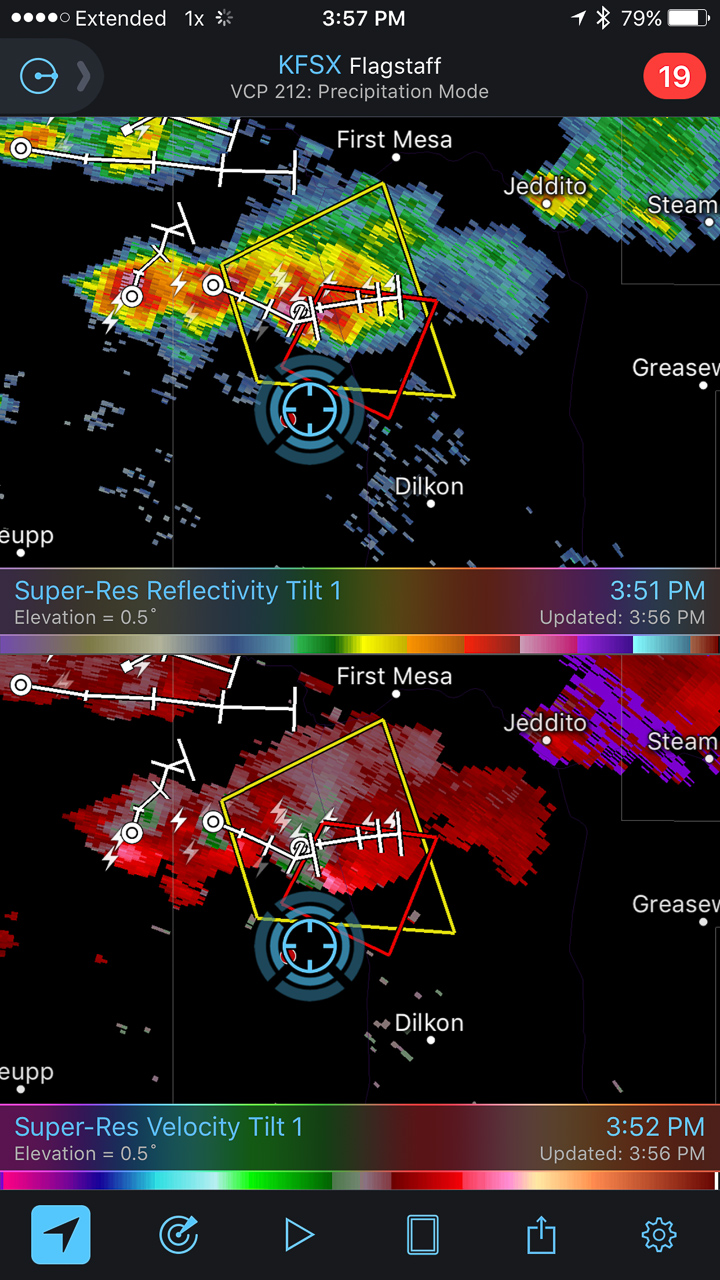
At 2147, the wall cloud got fairly pointy, but I was still too far out and squinting through a bright sunlight to tell what was going on. The velocity couplet intensified at this point and the storm received a tornado warning a few minutes later. I just kept shooting photos and video in hopes of enhancing contrast later to see what was back in there. I wish I could have tightened zoom on video, but sun was too bright to finesse using the LCD viewer, so I had to keep it wide. That’s happened to me before. I need to work out a solution for that.
— 2148Z — Wide view of the storm
— 2148Z — Close view of the wall cloud
— 2148-2152Z — Reflectivity/Velocity Scans with the storm at its peak
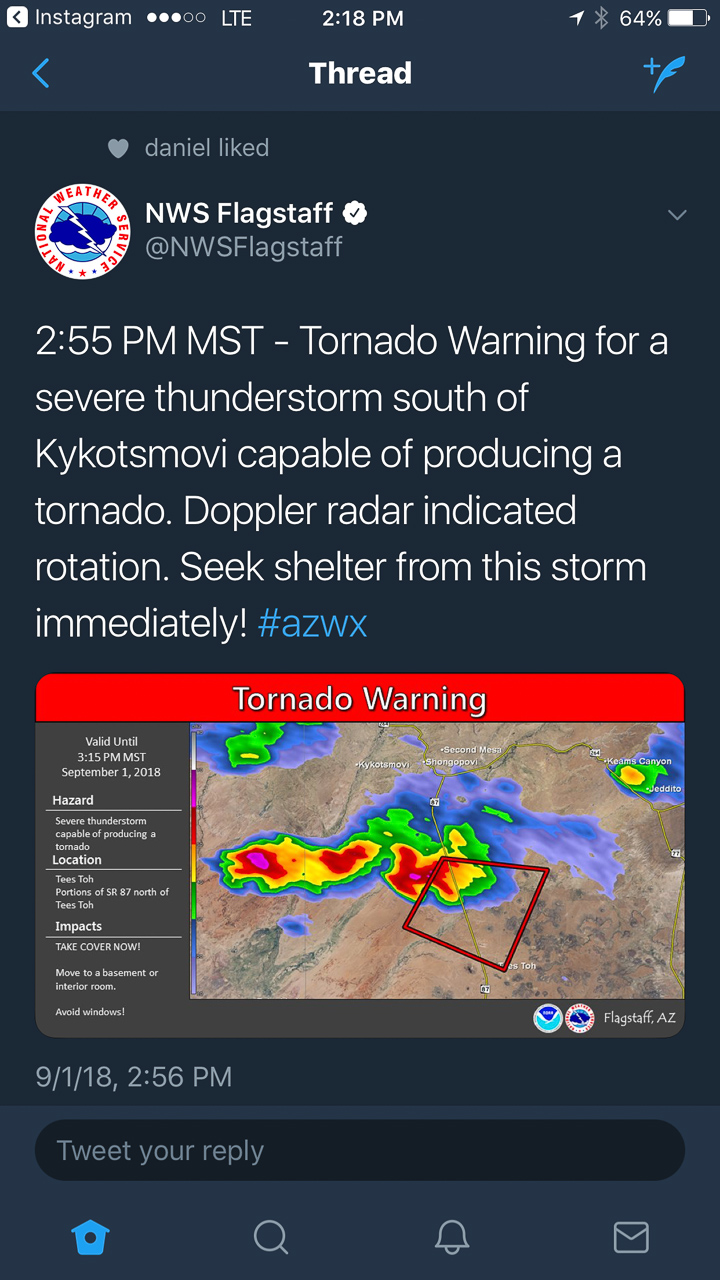
— 2155Z — Tornado warning issued by NWS Flagstaff office
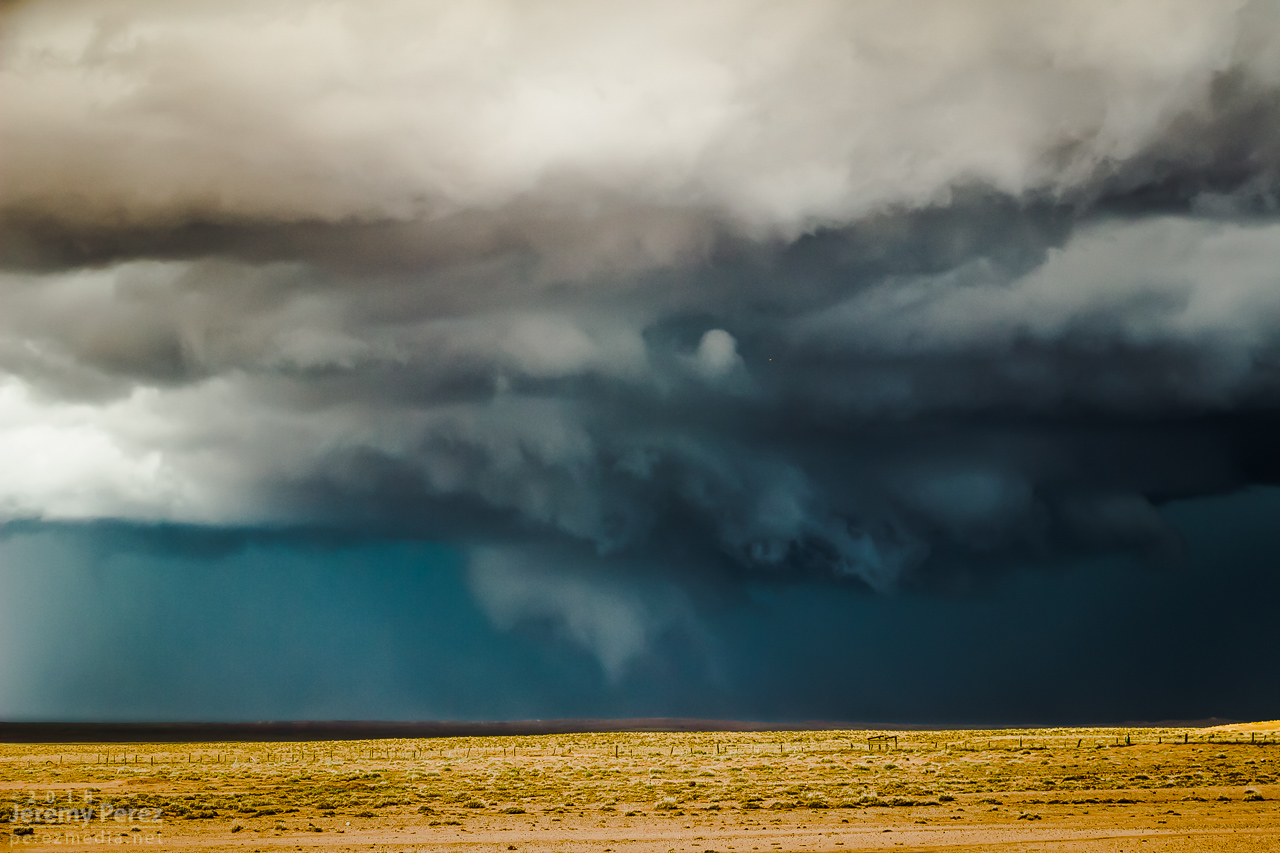
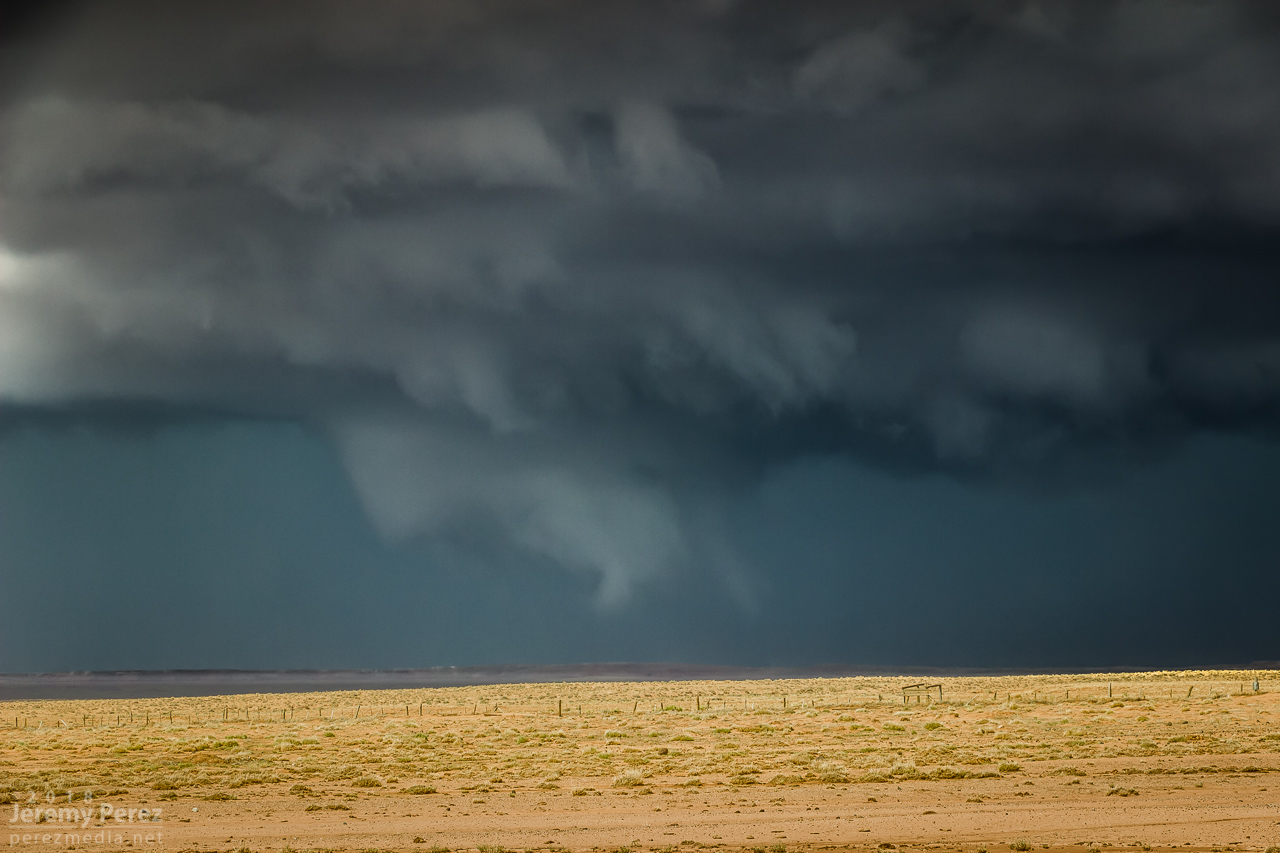
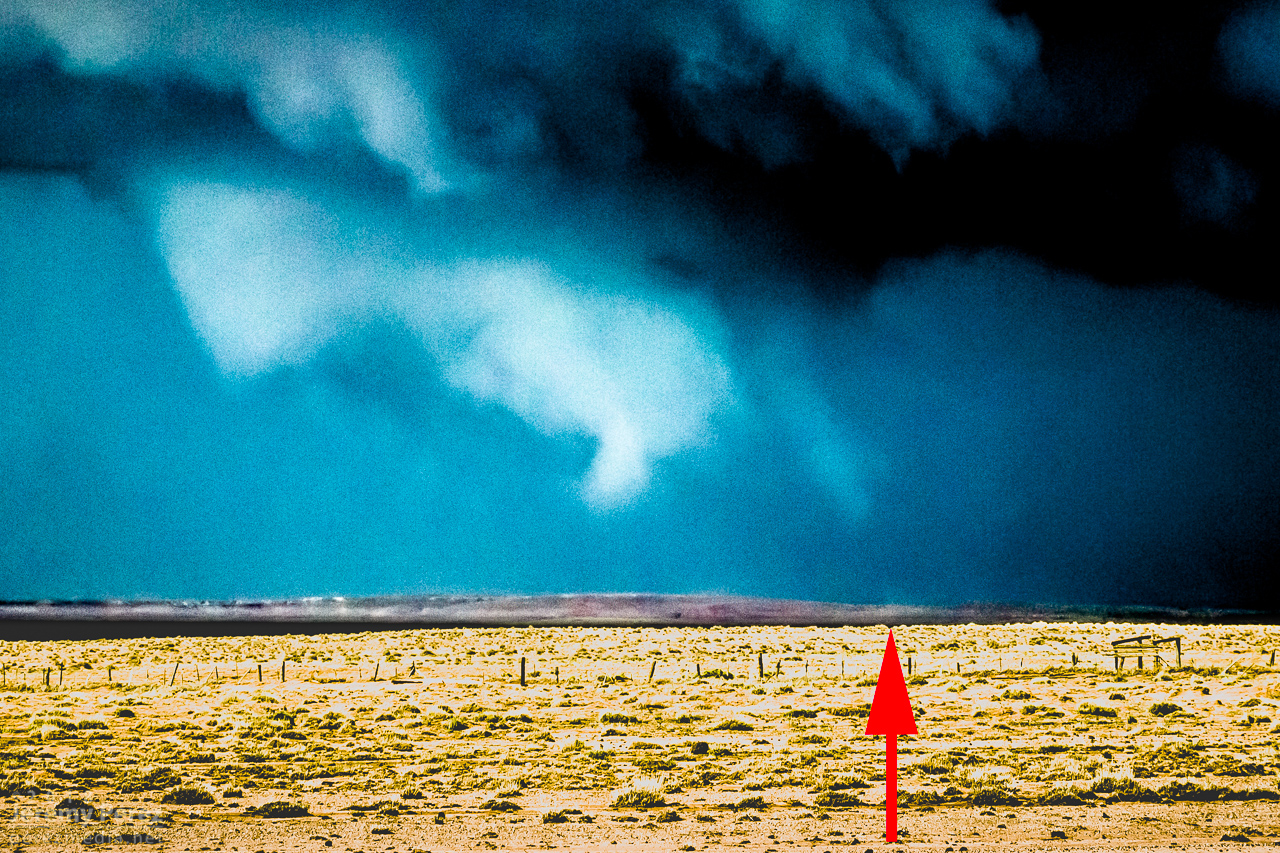
Pulling detail out of the shots and video later clearly showed rotation in the wall cloud. From 2147-2148Z, shots picked up a funnel rotating with the wall cloud. A couple zoomed images show what could be debris beneath the funnel at ground level. Right after this, the entire scene flooded with inflow dust and I had to move on.
— 2148Z — Zoomed view of wall cloud and funnel
— 2148Z — Contrast enhanced to show dust at surface
— 2148Z — Contrast enhanced 7 seconds later
— 2147-2148Z — Accelerated footage of rotating wall cloud 2147-2148Z
Meanwhile, over the last hour, John was right up under the storms, picking up at least one convincing tornado (to my eyes) at 2123Z, followed by other shots that I can’t wait to check out.
The RFD cut on the storm grew and continued to look promising, but I got detoured by a washed out section of road near Honey Spring and lost track of things making my way back to a different road. By 2213Z, the circulation had fully occluded and looked like a huge ice cream cone as a burst of hail and a high-based, roping funnel draped around it.
— 2152Z —
— 2205Z — RFD cut from a muddy wash near Honey Spring that was too risky to cross
— 2214Z — Occluded updraft and elevated funnel
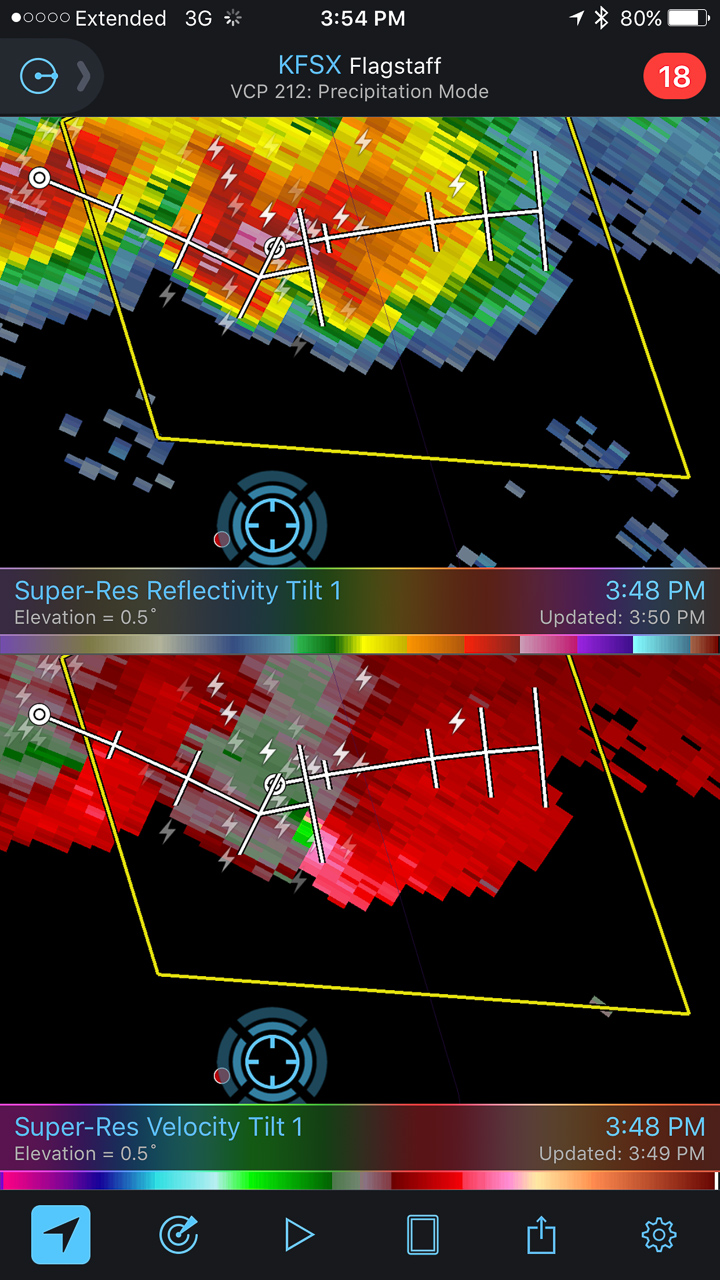
The entire time this cell was being awesome, two other trailing cells were also spinning away. The middle one wasn’t faring too well and seemed to be riding elevated behind the lead cell’s outflow. I figured the third in line would be dealing with the same thing. However, it managed to hop south far enough to get surface based. So, eight minutes after the great ice cream cone view, I glanced over my shoulder and saw an awesome cow catcher RFD shelf scooping out of its base. Over the course of about five minutes, it picked up a shaggy wall cloud/tail cloud combo.
— 2221Z — RFD shelf/rooting base beginning to develop on the trailing storm
— 2223Z —
— 2229Z — Wall cloud/tail cloud developing
— 2218Z — Reflectivity/velocity of lead and trailing cell along with struggling middle cell
It’s both an awesome and frustrating problem to have two beautiful cells competing for attention with spectacular volcanic plugs taking turns hiding them with each turn in the road. The lead cell was moving into lower instability and weakening, but still looked awesome and I didn’t want to lose it. So I kept after it, figuring the trailing cell was headed my way anyway. I just needed to get to a spot where the terrain would let me see them both.
— 2229Z — Trailing cell vs. encroaching terrain
— 2244Z — Lead cell vs. encroaching terrain
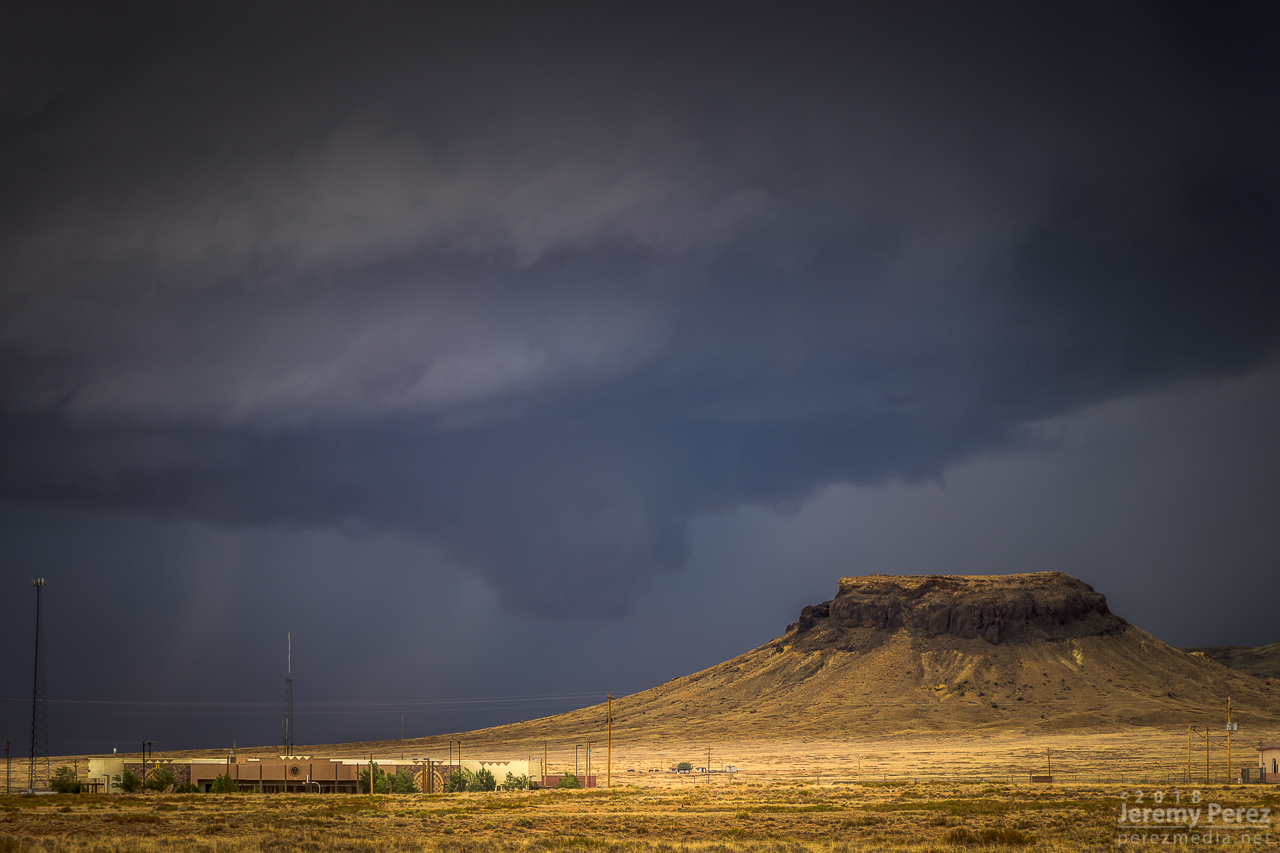
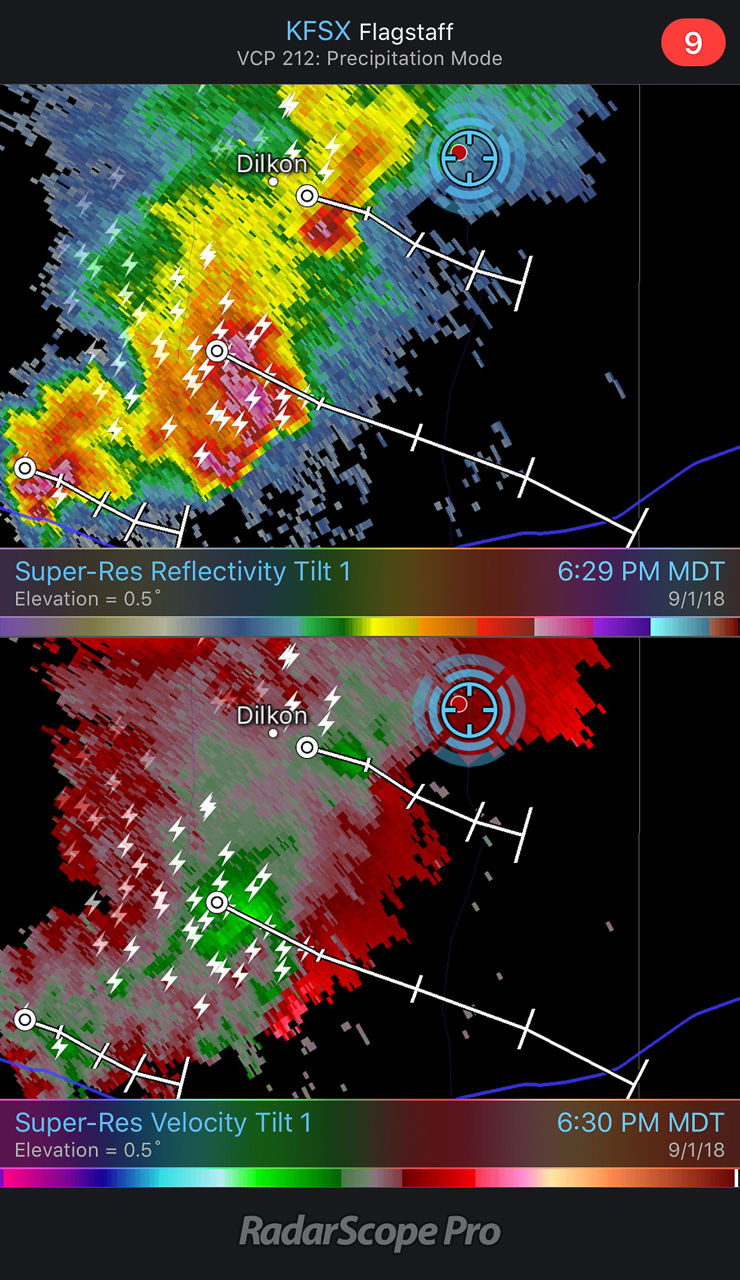
I finally found that spot just east of Dilkon. The lead cell was losing its battle to remain surface based. But before it went fully elevated, it wrapped up one last occlusion. Not as beefy as the previous one, but still lancing out with one last funnel.
— 2249Z —
— 2310Z —
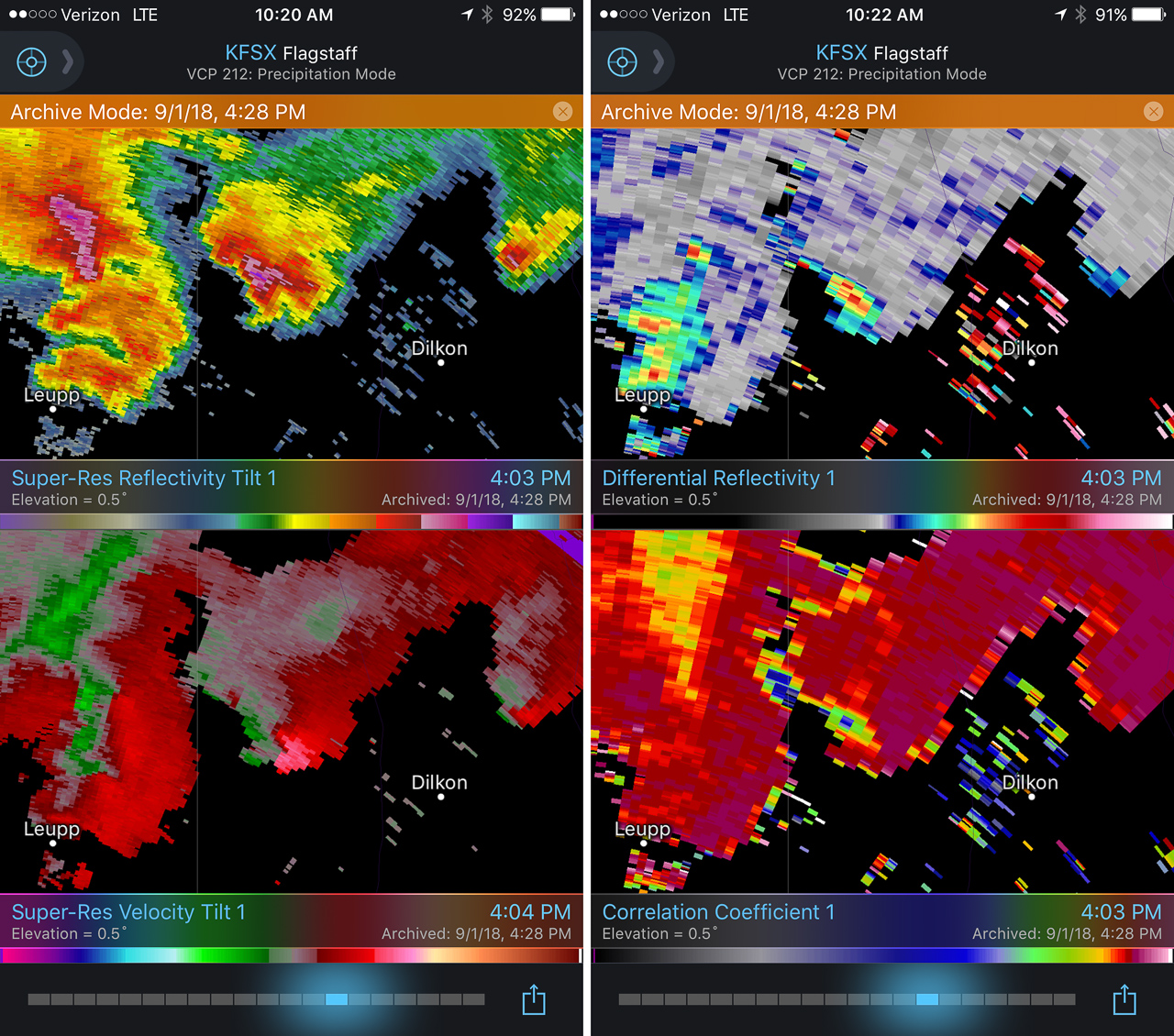
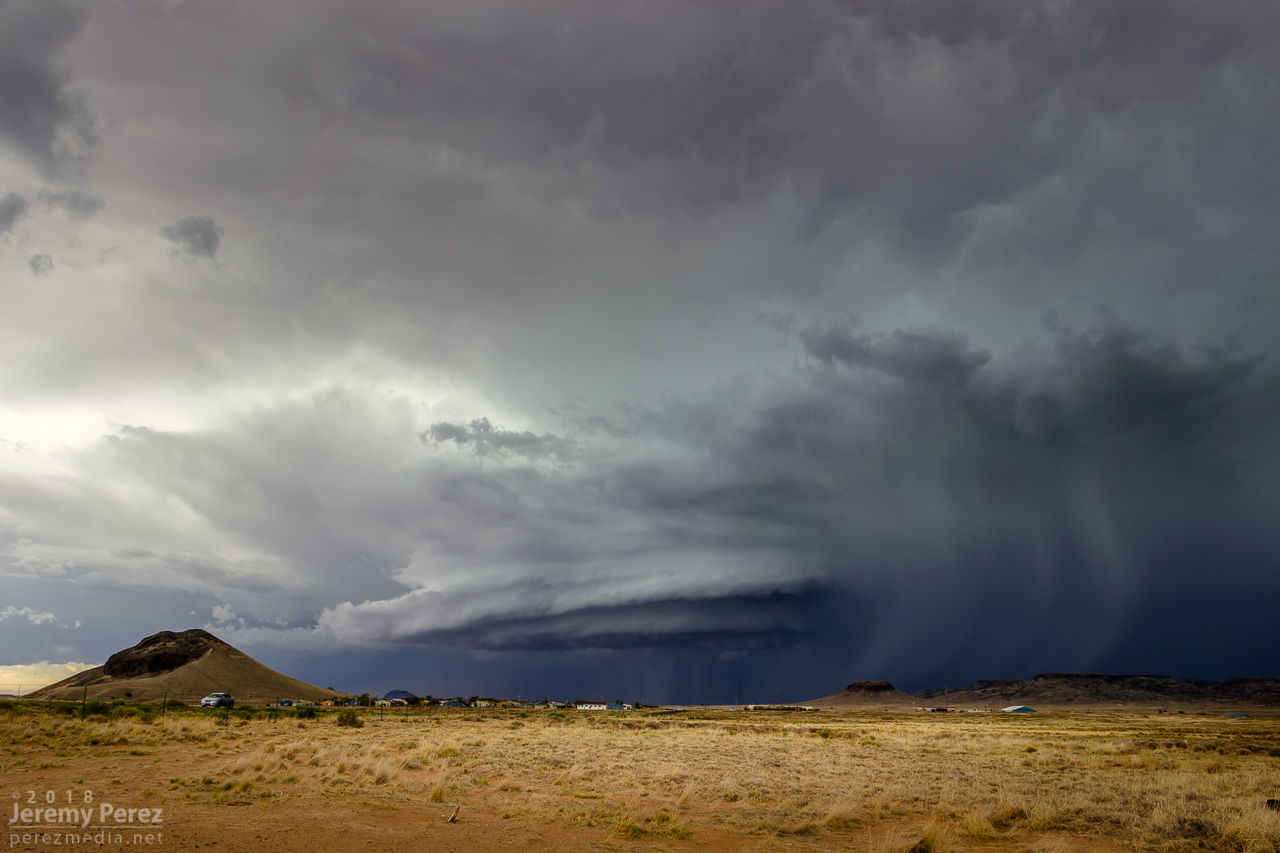
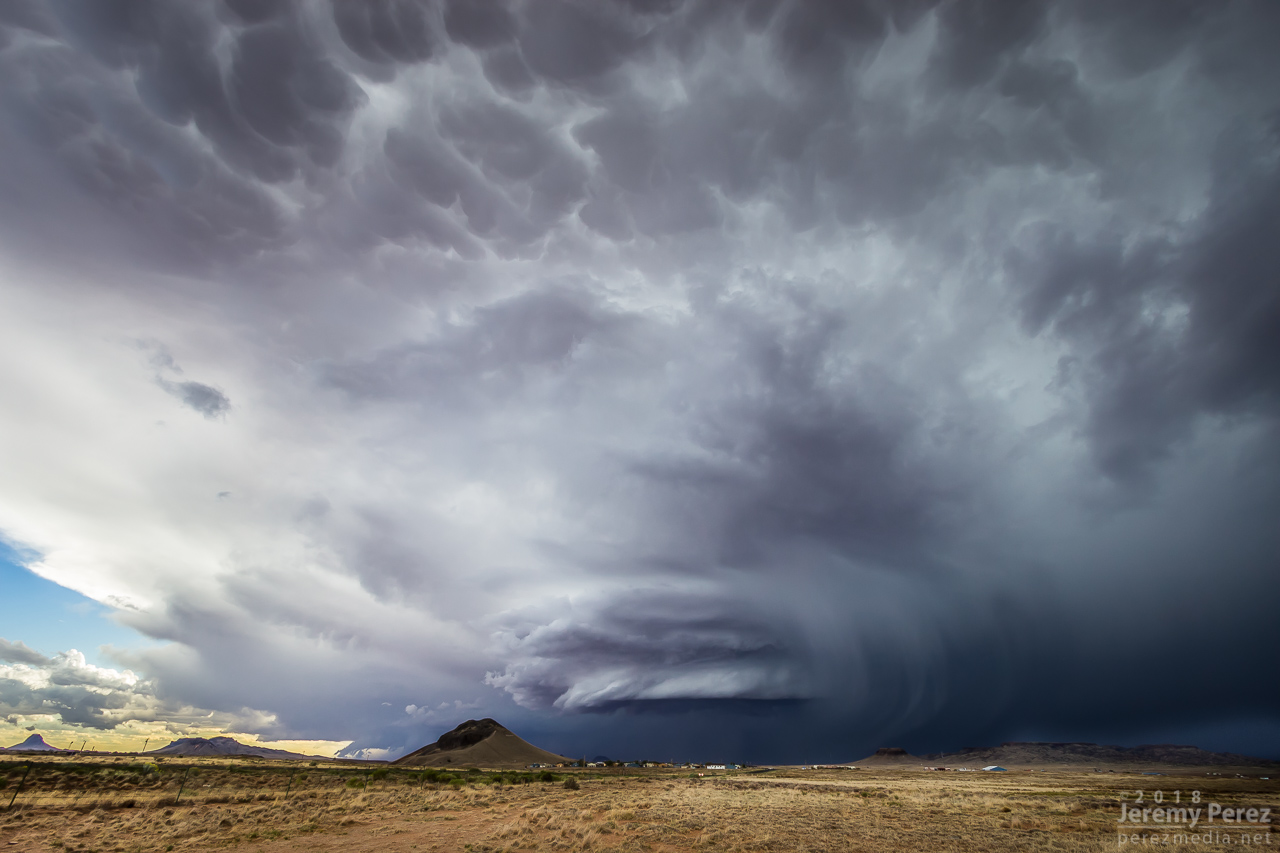
Meanwhile to the west, the trailing cell was getting a classic, sculpted look. At 2307, I realized a knobby wall cloud was dipping down out of its base. It was tough trading focus between the two storms, and wish I had been shooting the trailing one just a few minutes sooner, since reviewing radar later showed a low CC value under that circulation at 2304Z. Would love to have a few zoomed shots at that point.
— 2308Z — Trailing cell and wall cloud
— 2308Z — Tight view of wall could
— 2303Z — Reflectivity, Velocity, Differential Reflectivity, and Correlation Coefficient
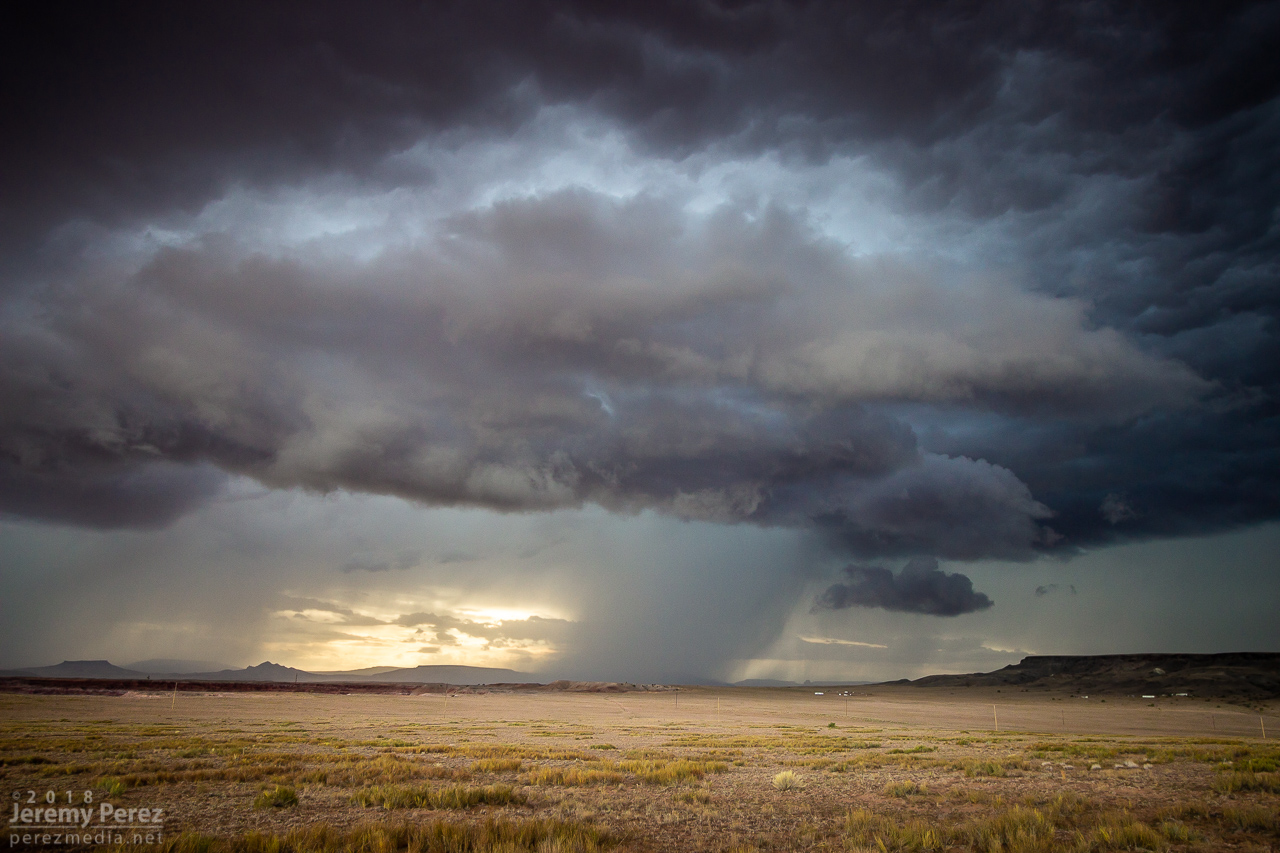
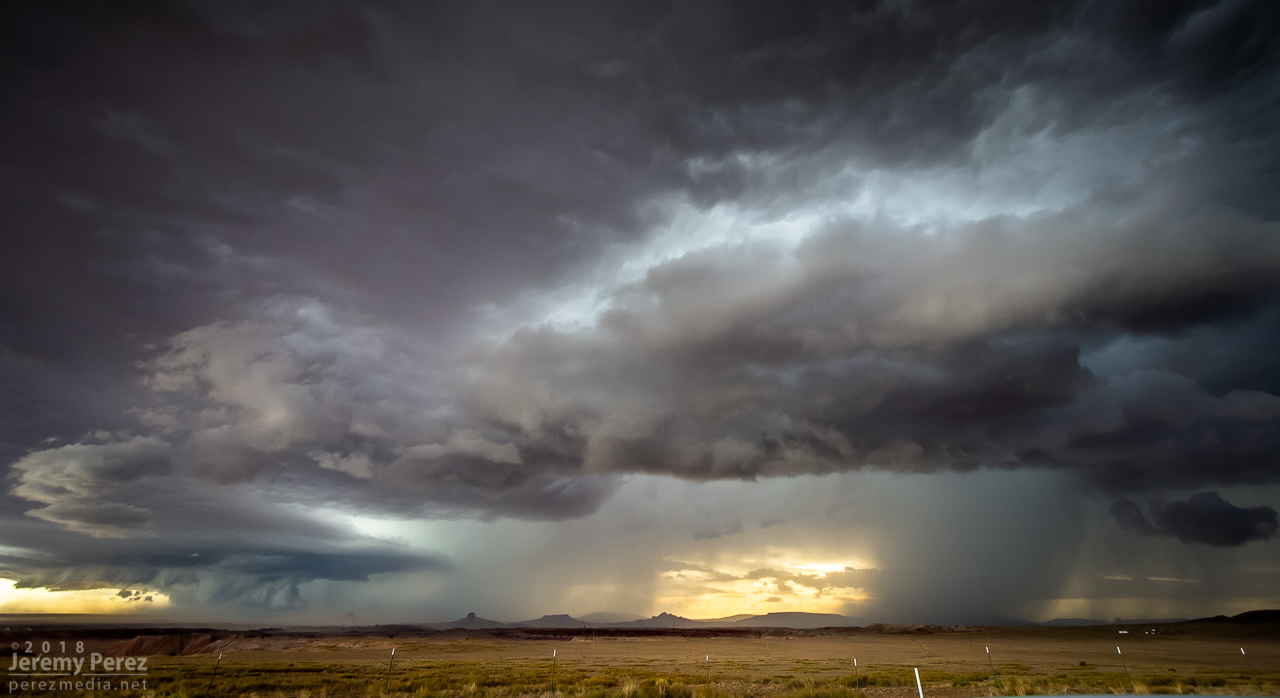
As the lead cell withered away, I set up for a time lapse of the trailing storm as it approached. It was a perfect spot with the stacked base spinning, morphing, spitting lightning, and draping feathers of precipitation as it aimed slightly to my south.
— 2326Z — The trailing cell is now the main show as it slowly approaches
— 2336Z —
— 2351Z —
— 2323-2357Z — Time lapse of approaching supercell from Dilkon
As it moved in, a new line of convection had filled in and was advancing quickly, shoving a low, gnarly shelf cloud as it tried to catch up to this spinning monument of rough pottery in front of me.
— 0007Z — Lead cell now with a line of storms hot on its tail as seen by shelf cloud hugging the horizon to the left
— 0024Z —
— 2312Z — Reflectivity/Velocity of line of storms rushing in
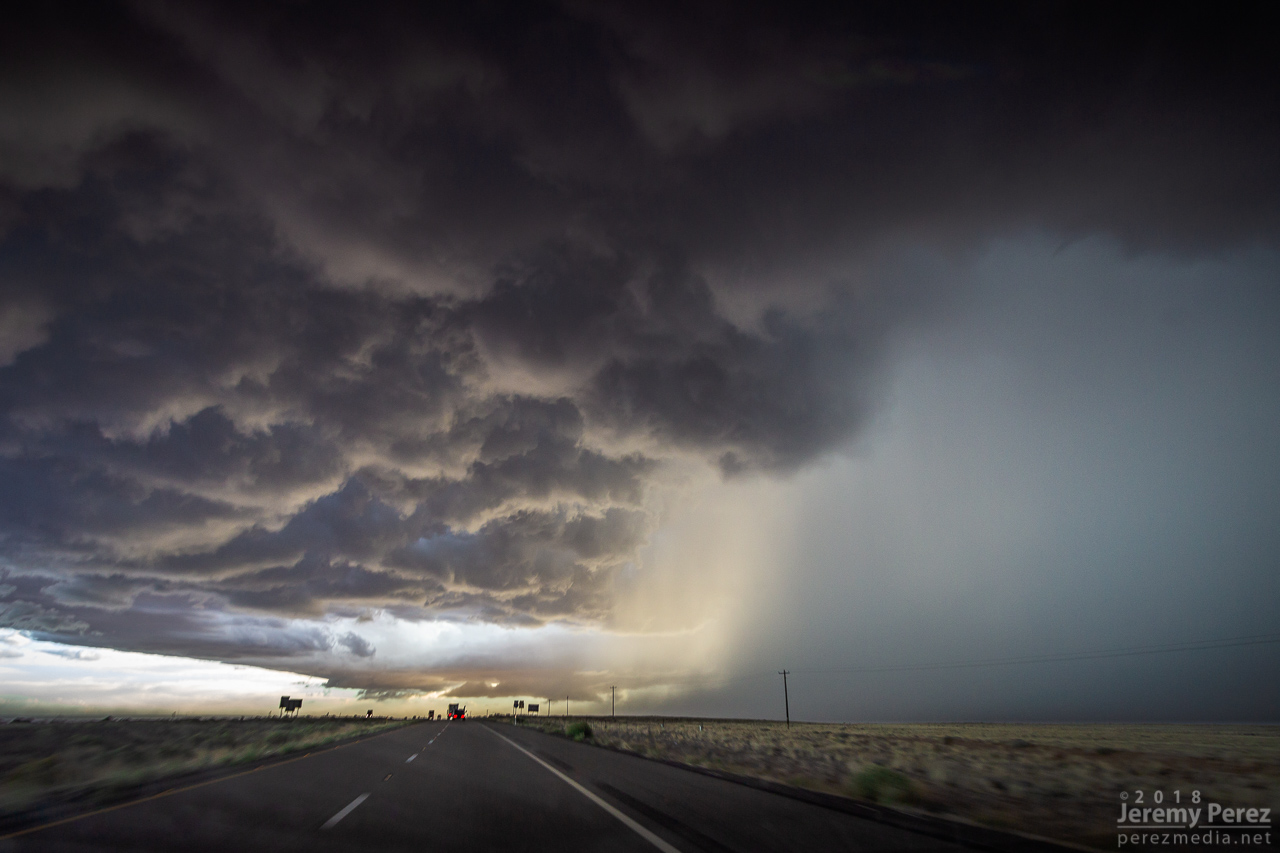
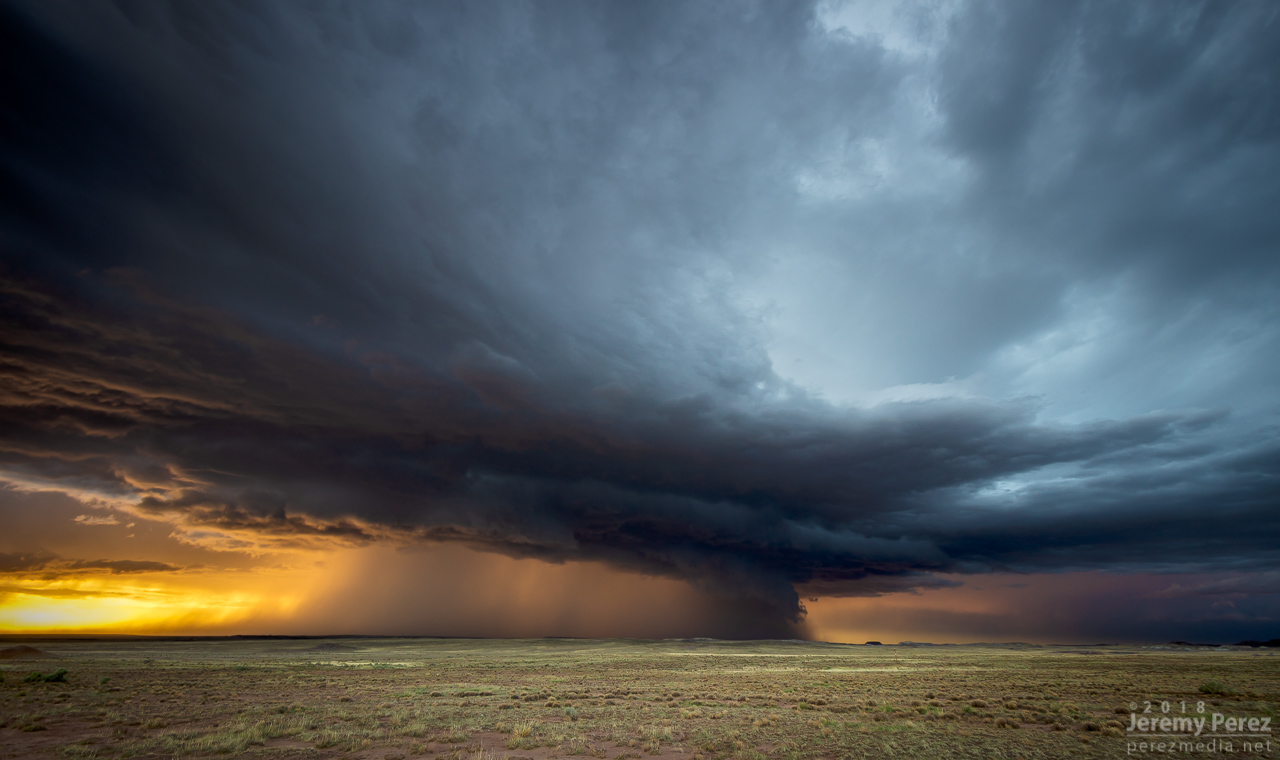
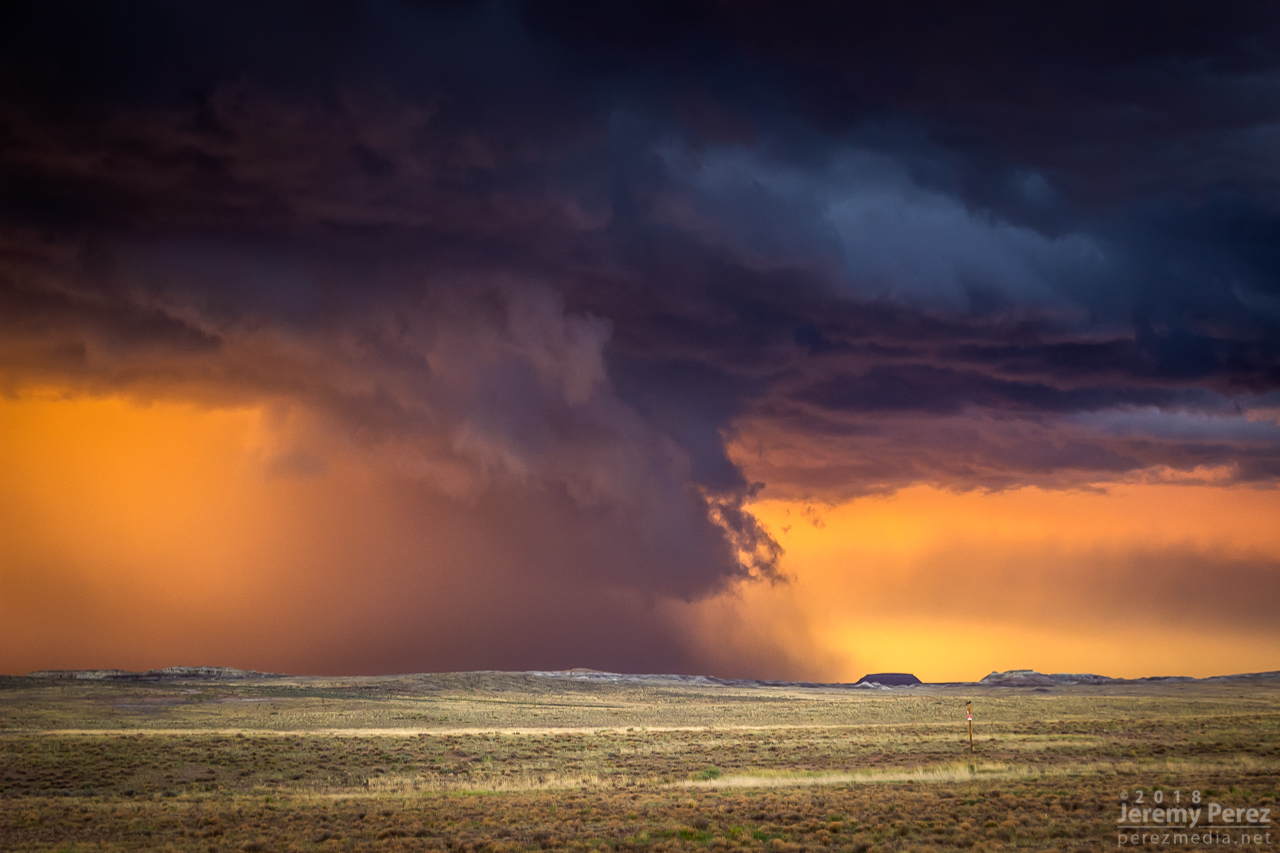
Staying ahead and in good position with that isolated cell seemed like a simple thing. I was planning to jog south on Rt 77 to Holbrook to get parting shots of it and pick up whatever new developments were inbound. But radar was showing me that the trailing line was getting serious, loaded with some big hail, and quickly expanding. I realized if I didn’t start hustling, it might cut me off from my planned route south, and punish my wife’s car in the process. So I only had time for quick stops or through-the-windshield shots as that isolated cell started to gust out and merge with the approaching line of storms. It wish I could have spent more time along that road. It looked down on an expansive, almost alien landscape with warm, late afternoon light flooding beneath approaching storm bases and greenish cores dumping on blackened buttes and red cliffs. Such a fantastic view.
— 0042Z — Once great supercell now dying out
— 0043Z — Panoramic view from Rt 77 as the hail-filled line of storms rushes in
— 0030Z — Reflectivity/Velocity of my new predicament for heading south
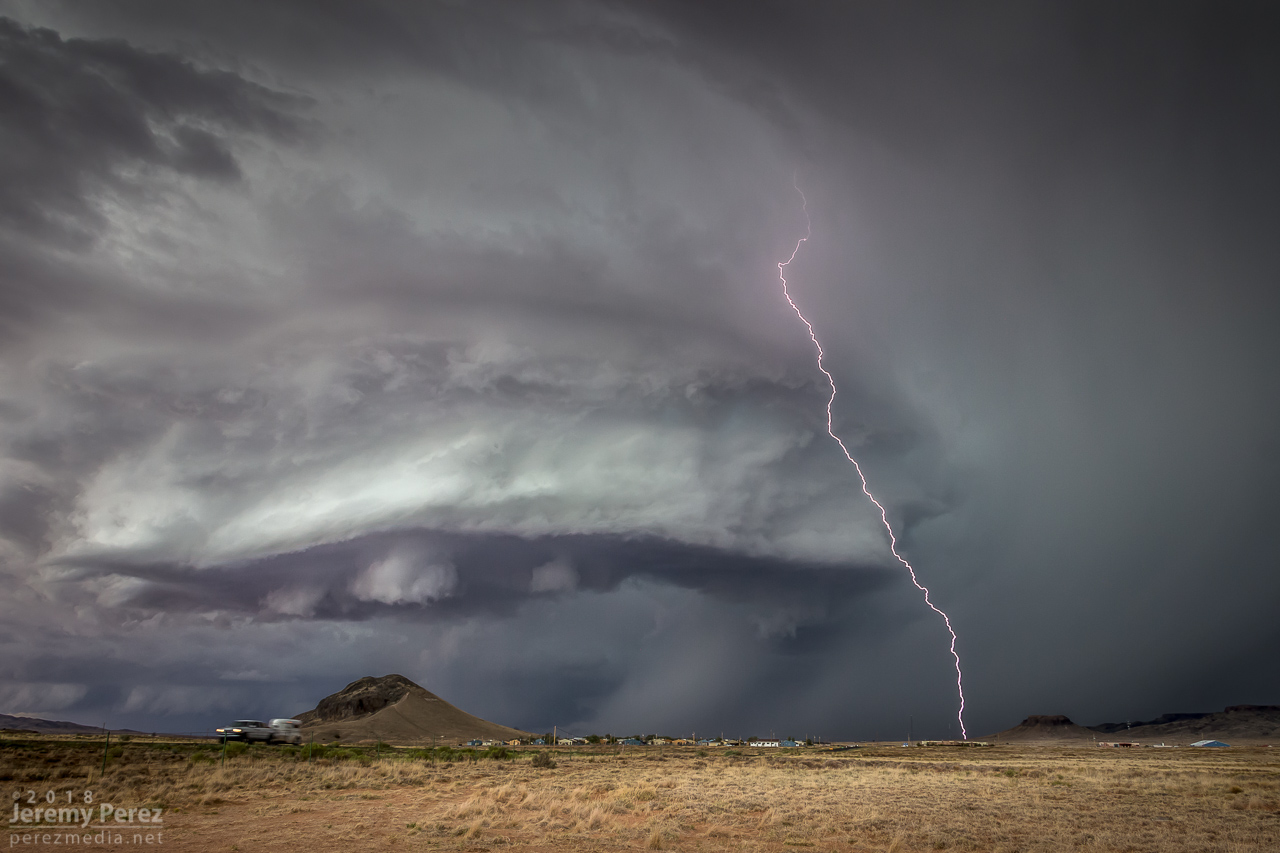
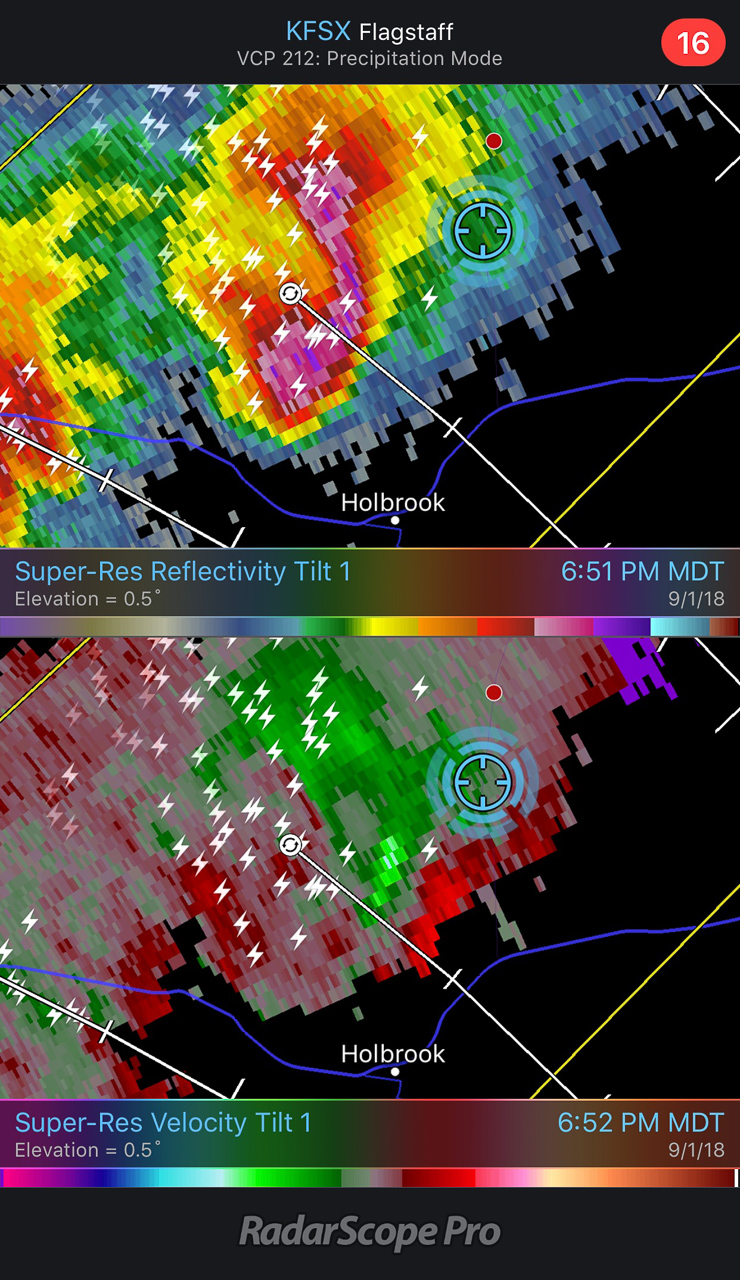
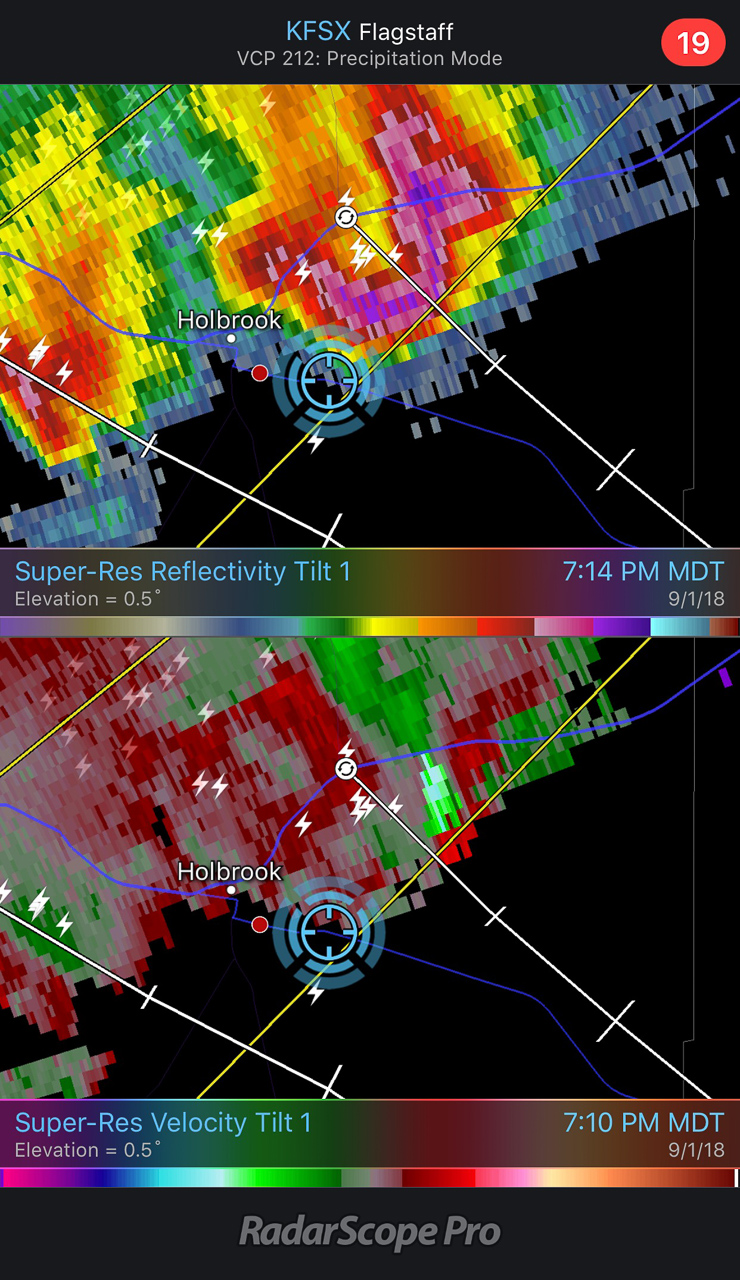
With just a few miles to go before reaching I-40, radar showed that line of storms accelerating into a bowing segment with a very menacing load of hail. I wanted to get onto Hwy 180, but to do so, I had to head southwest on I-40 into Holbrook before catching 180 back east. I had a tough call—either bail east at I-40 to escape the looming core, or jog in front of it to get to 180. When I got there, it looked like I had enough time to spare and I made for 180. That turned out to be a very tense six miles. The wind was picking up ahead of the dark, towering column of hail, and bits of ice were starting to hit as cars and trucks began hesitating, not sure what to do. I finally breathed easier as I got around the curving arc of monstrous ice and heading back east on Hwy 180. The views were incredible again. The bowing segment was reorganizing and developing a mesocyclone as it sailed over Sun Valley. The core looked fierce as the sun lit it in orange highlights agains black shadows. Around this time, the travel stop where I had to make that tough east-west decision was getting torn up by baseball size hail.
— 0103Z — Menacing wall of hail rapidly approaching my route to Holbrook
— 0134Z — Bowing segment has organized back into cellular mode after dropping baseball sized hail east of Holbrook
— 0135Z — Tight view of sunlit core and rugged shelf cloud
— 0051-0114Z — Reflectivity/velocity of baseball filled bowing segment
The big hail-maker continued onward to the east, spitting lightning as it departed. Further to the west, another cell was working on a weak mesocyclone of its own. Not as persistent and strong as the others had been, but still winding up a beautiful storm. As sunset and twilight deepened, the lightning from that cell served up a perfect combo of purple strikes on an orange and yellow sky.
— 0136Z — Sunset on Hwy 180 with a weaker cell trying to drape an inflow tail across the setting sun
— 0151Z — Lightning dropping out of the core of the stronger cell to the east
— 0153Z — More from the core of the east cell
— 0214Z — Western cell gusting out with a spectacular lightning display against the twilight sky
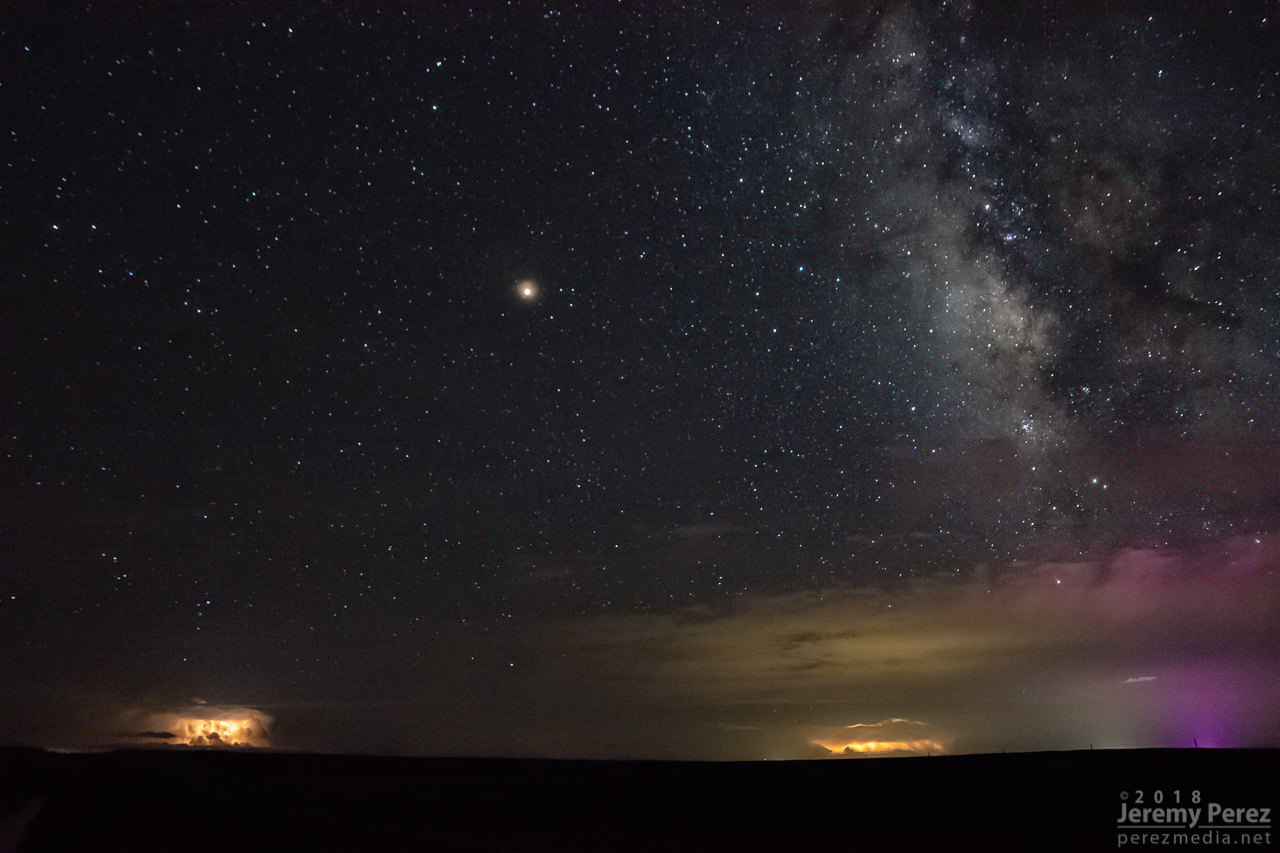
A short time later, John and I caught up and shared a few stories and LCD previews before heading off to attempt some final sprite photos. No sprites for me, but still a serene view of Mars and the summer Milky Way drifting westward as distant storms flicked light across bubbling cloud tops and coyotes yipped amid the surrounding hills.
— 0346Z — Mars, Milky Way, and flickering storms 130 miles to the south from Hwy 180 southeast of Holbrook
This started as a pretty simple, 20 mile local chase that wound up overperforming. The day featured northwest flow with storms firing on the higher terrain and moving along the Mogollon Rim which is oriented northwest to southeast. I headed east of Flagstaff on I-40 and drove down a dirt road to a vantage point less than a mile south of Twin Arrows. I was trying to catch the collision between a cell building south of Flagstaff with a fresh outflow boundary to its southeast. Sometimes these dish out some pretty structure before everything fills in. I figured I’d try some Lightning Trigger shots while I was at it.
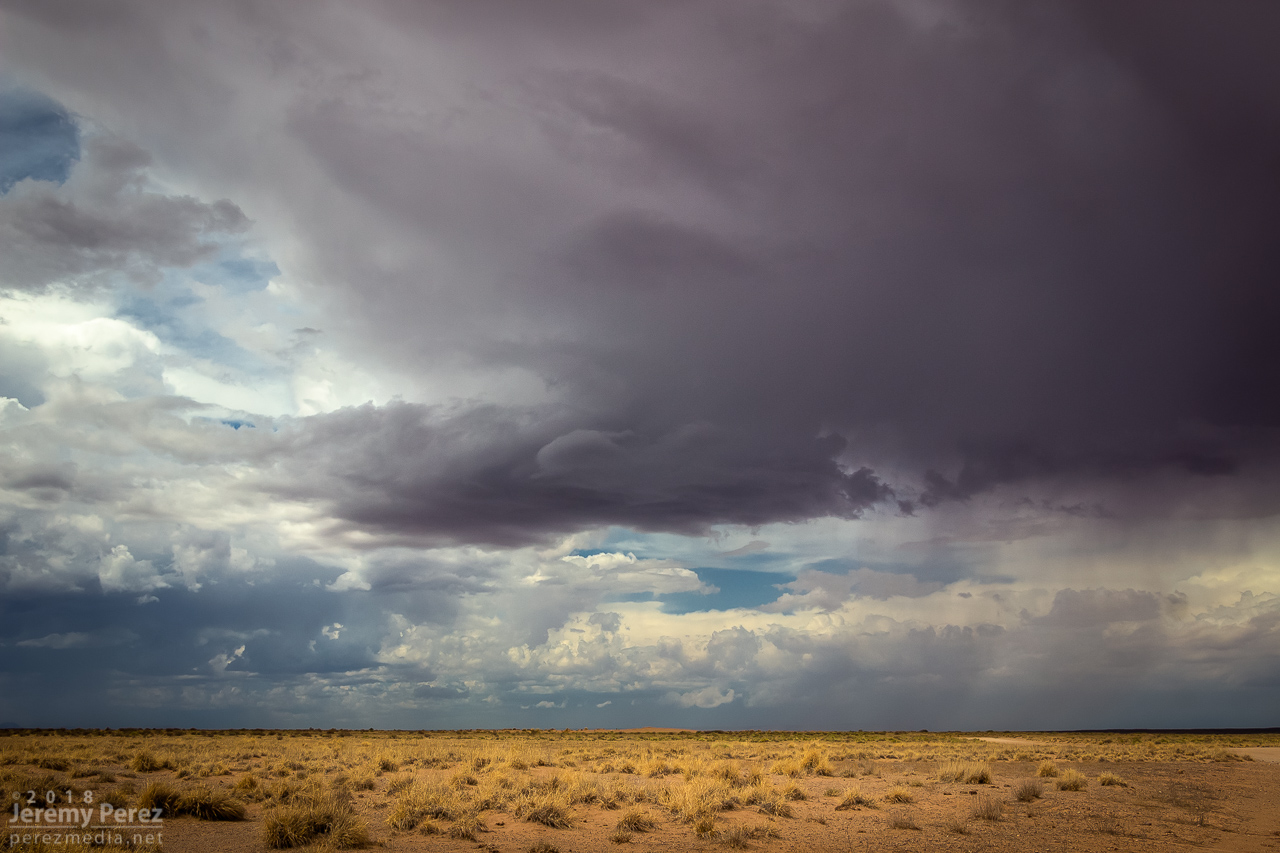
The growing cell was a thing of beauty by monsoon pop-up standards, with a solid updraft fist punching a big ripple into a doughy anvil.
— 12:36PM / 1936Z —
As that cell approached the outflow boundary of the dying storm downstream, it sprouted up a choppy arcus cloud, but that was about it. Not quite what I was hoping for, but there was still plenty of afternoon left and I thought maybe something closer and further north would light up.
— 12:44PM / 1944Z —
It wasn’t long before another cell went up near where the previous one had started, and from then on, it seemed Anderson Mesa was going to be the tracks for a steady train of storms cruising southeast. By then, another Arizona chaser, John Sirlin, had situated himself about a mile and a half further south and was watching from a good hilltop vantage.
Storm chaser, John Sirlin, parked at the next hilltop
Over the next hour, I noticed that storms were picking up laminar striations in their bases and had a couple eye-catching silhouettes taunting me from 11 miles away.
— 1:19PM / 2019Z SSW of Twin Arrows —
— 2:00PM / 2100Z SSW of Twin Arrows —
— 2:01PM / 2101Z SSW of Twin Arrows —
— 2:10PM / 2110Z SW of Twin Arrows —
As that last funnel looking thing materialized, another storm had taken root northwest of it and was growing stronger. It was being led by a lowered, shelfy base while the trailing core looked cupped and hollowed out. I was noticing thin rain shafts on this and previous storms that kept catching my eye, but I wrote them off.
— Earlier pair of rain shafts 12:47PM / 1947Z S of Twin Arrows —
This new storm started to develop broad anti-cyclonic rotation on its north side but eventually picked up a tighter cyclonic couplet and a decent wall cloud on the opposite/south side of the core. And that core was gradually hiding the action. I wish I had been out on Lake Mary Road watching this, but road options require a huge commitment. Investing in a 35 mile drive through mostly trees to get to a probably-not-long-to-live storm with an unobstructed view 11 miles away is a tough call to make.
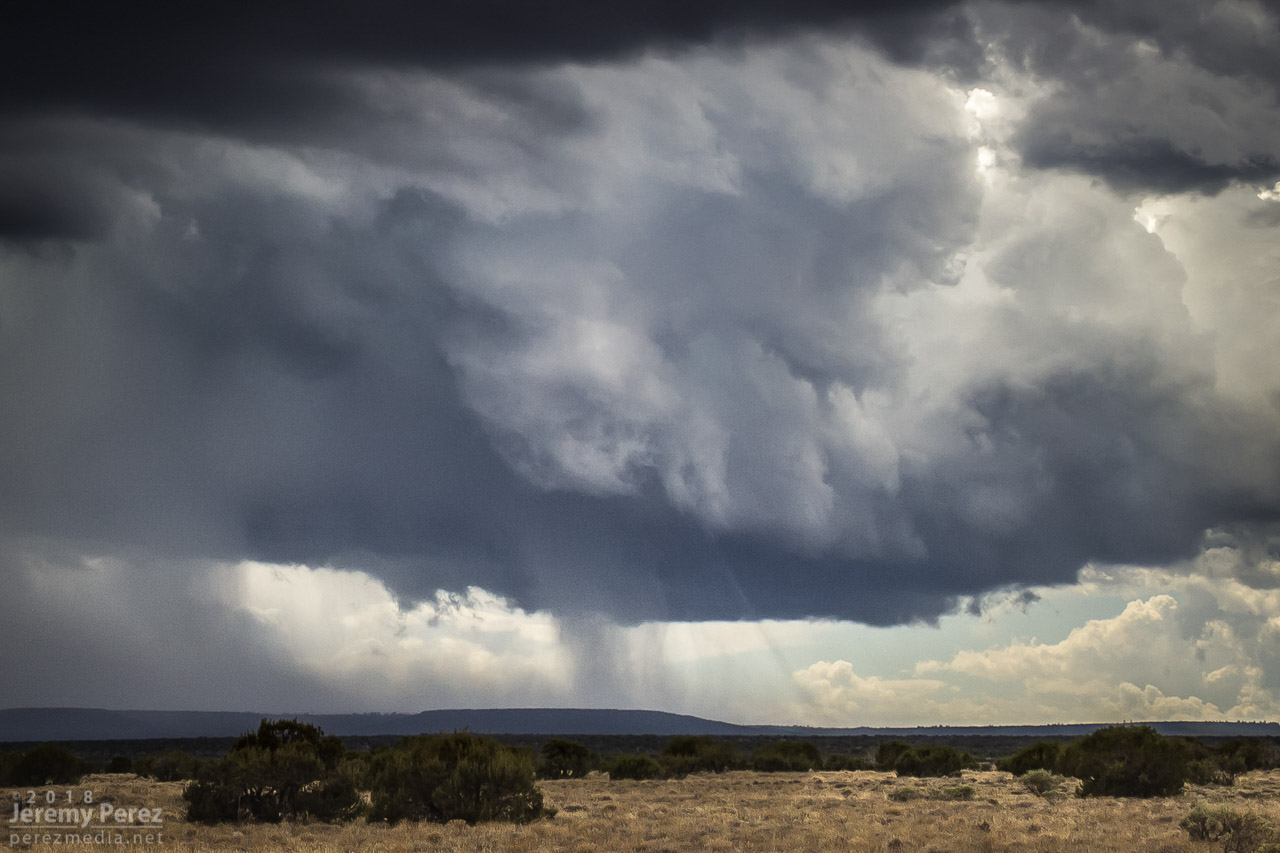
About the time rain popped up overhead and chased me into my car, I got a message from John asking “Did you get it?” Cold chill time. What did I miss? The pic he sent afterward showed a close up view of one of those ‘rain shafts’ stretching out at a 30 degree angle from the storm. I was time lapsing the cell at that time, and figured I should have caught the feature I wrote off. We finished watching a couple more cells develop and chatting with another chaser that had set up in the area, Nick Pease.
— 3:18PM / 2218Z severe-warned storm —
— 4:10PM / 2310Z last cell over Anderson Mesa —
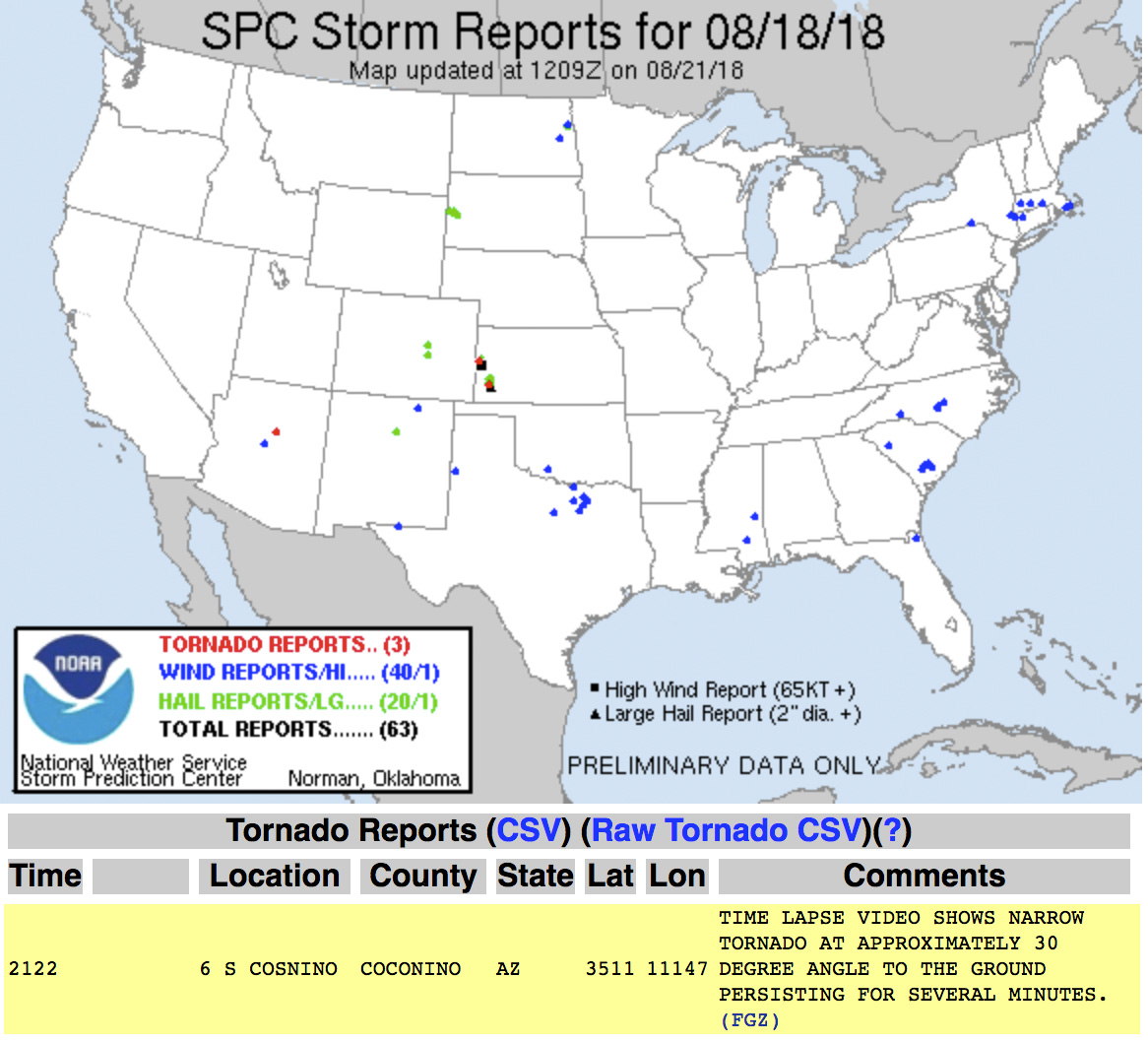
Getting home and processing the shots, sure enough, that thin feature dangled cloud to ground, getting pulled along with the anticylonic rotation for about 6 minutes. In addition to John’s shot, I posted the time lapse and a line-of-sight map for the Flagstaff NWS office to review. Their assessment aligned with John’s earlier heads-up and the SPC storm report was updated to plot it as a landspout tornado.
— 2:26PM / 2126Z landspout about 12 miles SW of Twin Arrows —
Definitely not the hit-you-over-the-head variety that we saw in Colorado a few months ago, but it was pretty rewarding to finally document one in Arizona.
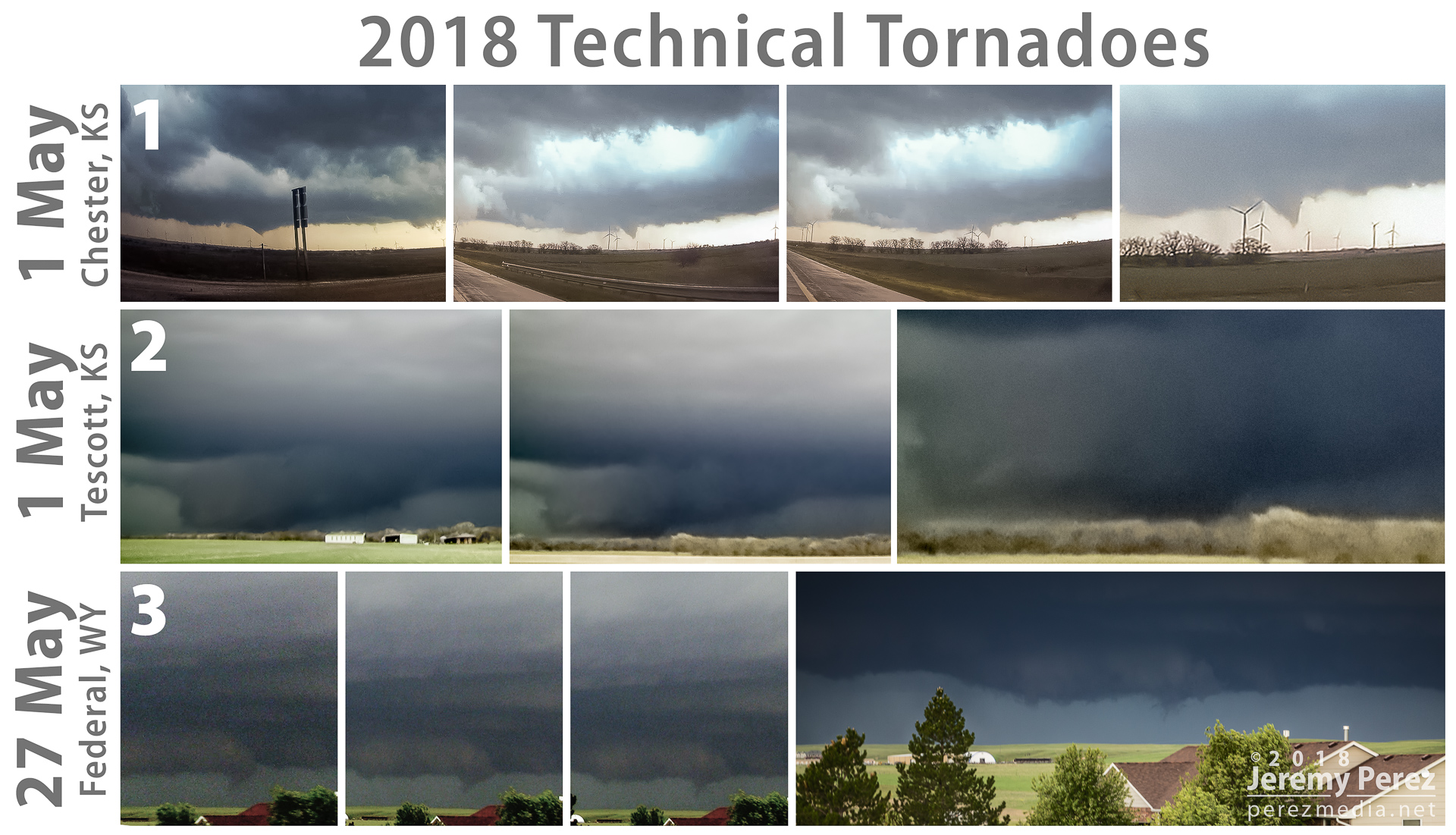
When it comes to tallying tornado sightings, I've landed on two categories -- legit tornadoes and technical tornadoes. Those latter ones come up when I scour and enhance my video and still photos later, pair them up with confirmed tornado reports and imagery and notice that I managed to catch either funnel or debris in my footage. I've also lumped in a couple cases where I've spotted funnels that I suspected at the time I was seeing them, but wrote them off, only to find out later they actually had been tornadic. These are three from this past chase season.
May 1: Chester, KS tornado
I picked up the funnel for a couple minutes on the dash cam without realizing it. In the moment, I was more concerned with staying out of the hook as we cruised down I-70 and wasn't noticing the new circulation handing off further east. Only after seeing the report and checking vs. my time stamps did I notice it on the video.
May 1: Tescott, KS tornado
I was in a great spot to see at least the first minute or so of this one if I had just waited. But I got anxious that the storm was going to get away from us and wanted to get in a better intercept location near Bennington. So I wound up jumping back on I-70 about 30-60 seconds before it touched down. I had my window-mounted video camera recording the wall cloud, but the hills were way more of an issue than I realized they'd be. I got a few frames where the dark edges of the wedge were visible between hills, beneath the wall cloud.
May 27: Federal, WY tornado
Just after catching a beautiful rope tornado north of Cheyenne, I was about to reposition when I noticed the new wall cloud had a fang dropping down on its leading edge. I started tearing cameras out of the car and got crooked video of it just as it was at its pointiest, and a still photo just as it was degenerating. I figured it was probably just a scary looking scud tag at the time and disregarded it. Reports, photos and time stamp comparisons later identified it as being tornadic.
With those, my count for 2018 is:
3 tornado days
8 legit tornadoes
3 technical tornadoes :)
I've also got a what-the-heck-nado from May 2nd, but that's a story for another time.
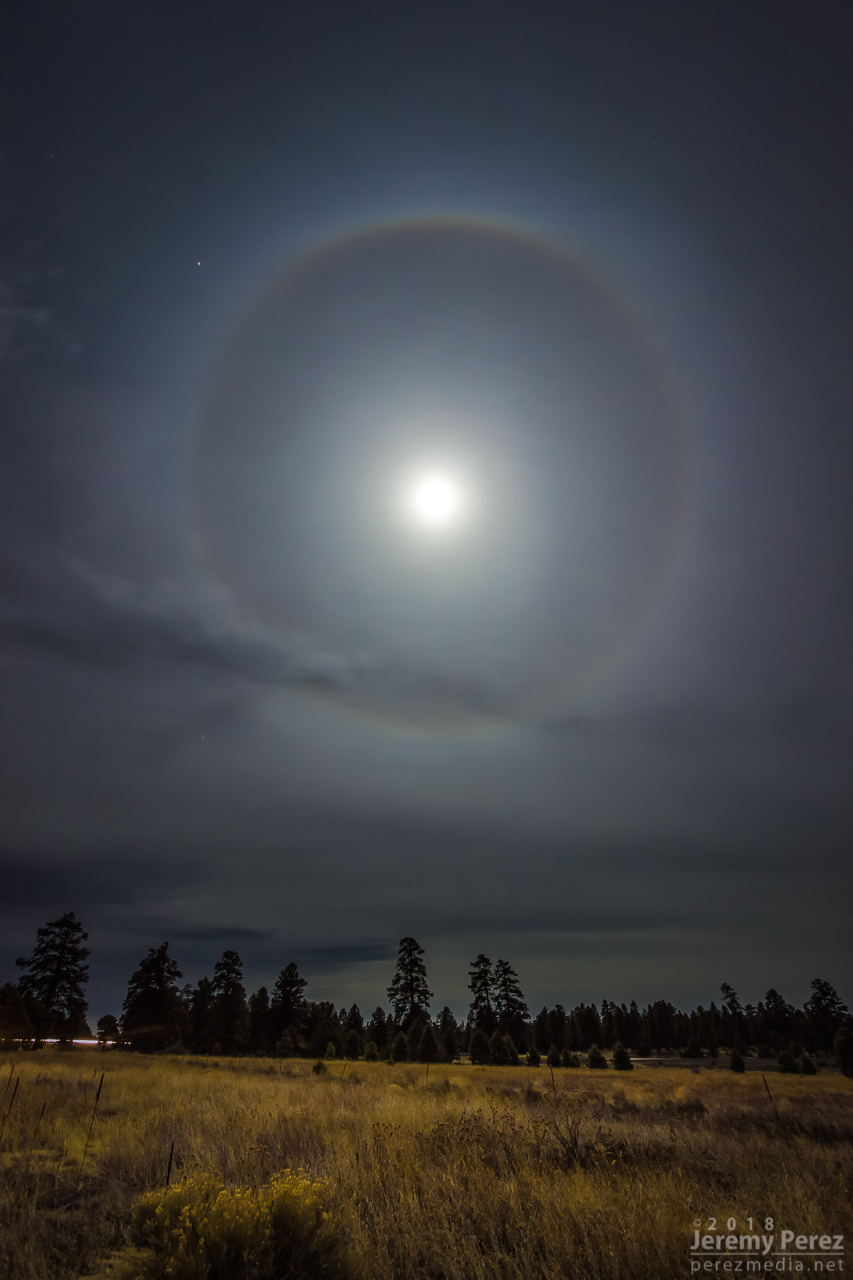
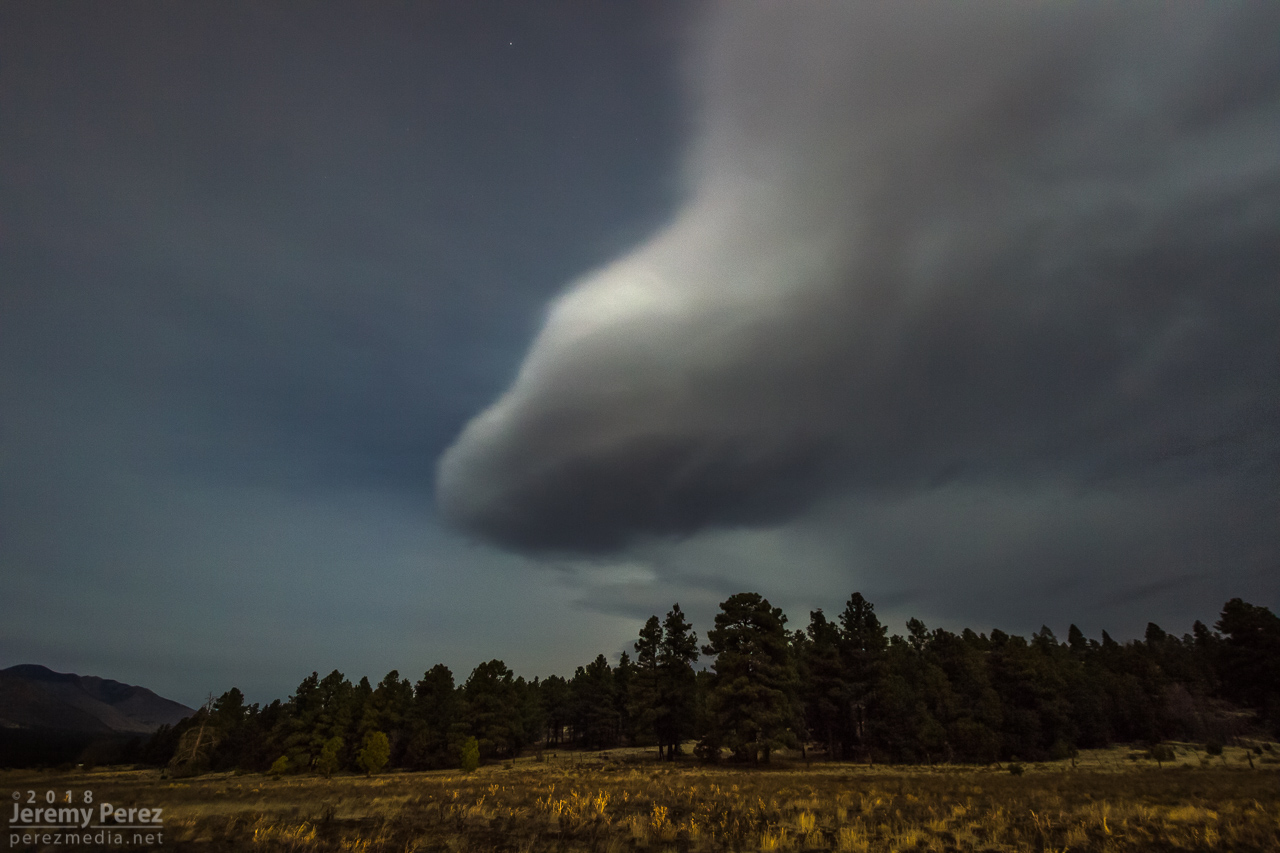
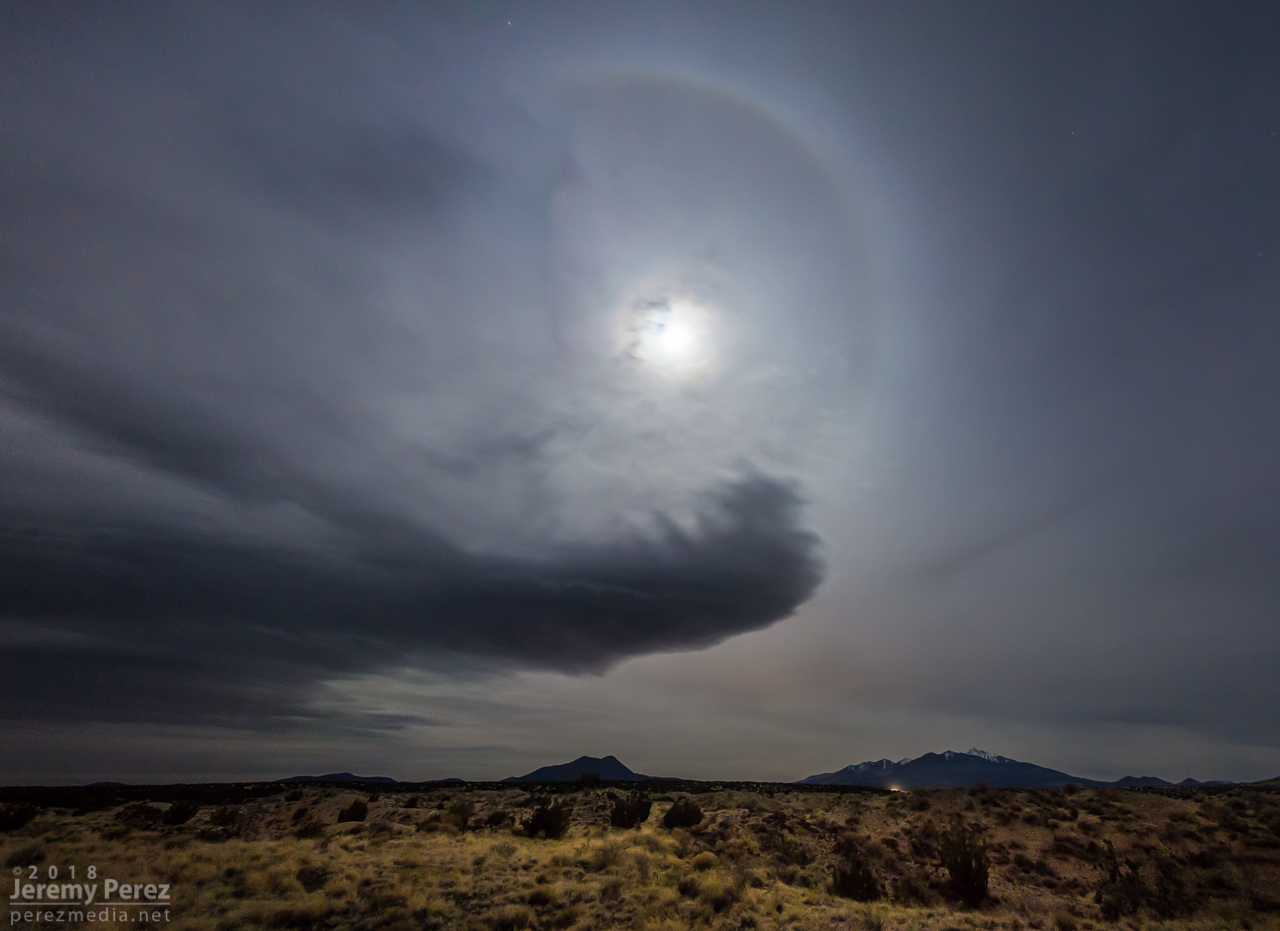
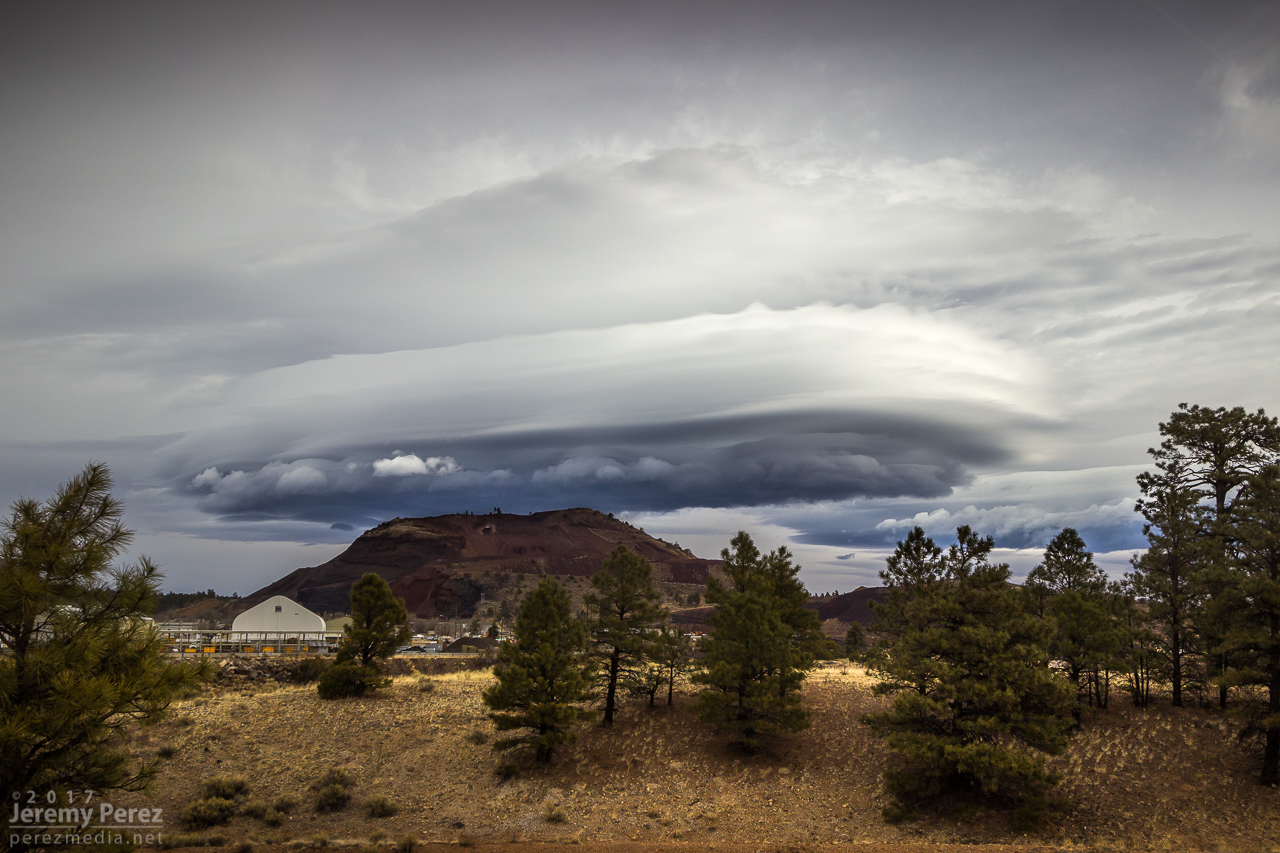
We had an excellent sky combo over Flagstaff last night. The full moon was blasting a halo into thin cirrus, and a lenticular cloud was blooming to the east of the Peaks. I started on Route 66 east of town a little after midnight to get some shots. The halo was really intense at that point.
180 degrees in the other direction, the lenticular cloud was looking nice and marshmallowy in the moonlight.
For a couple minutes I wondered if I should try shooting and stitching a massive panorama to capture the halo and lenticular together. I decided that would be really frustrating to compose decently and a lot of hard work later. So I moved on up Highway 89 between Sunset Crater and Wupatki. That managed to get both of them both features paired up with the Peaks.
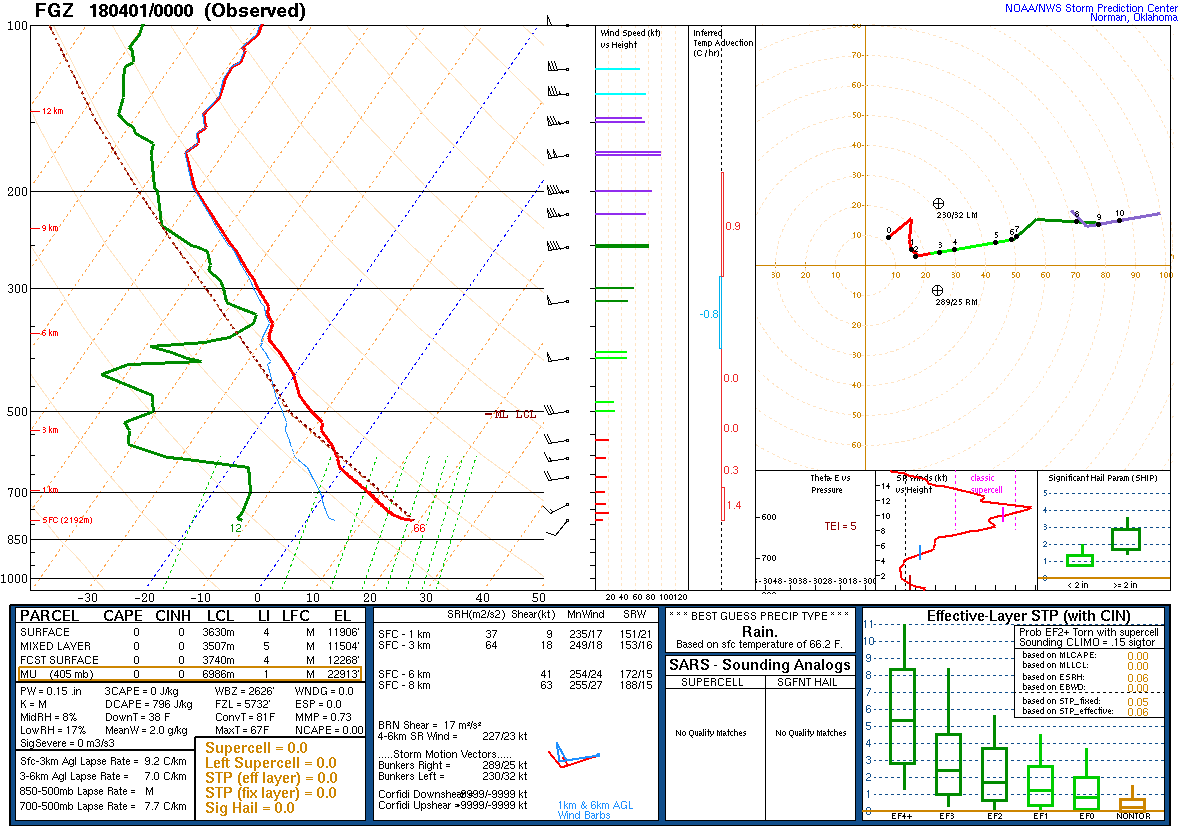
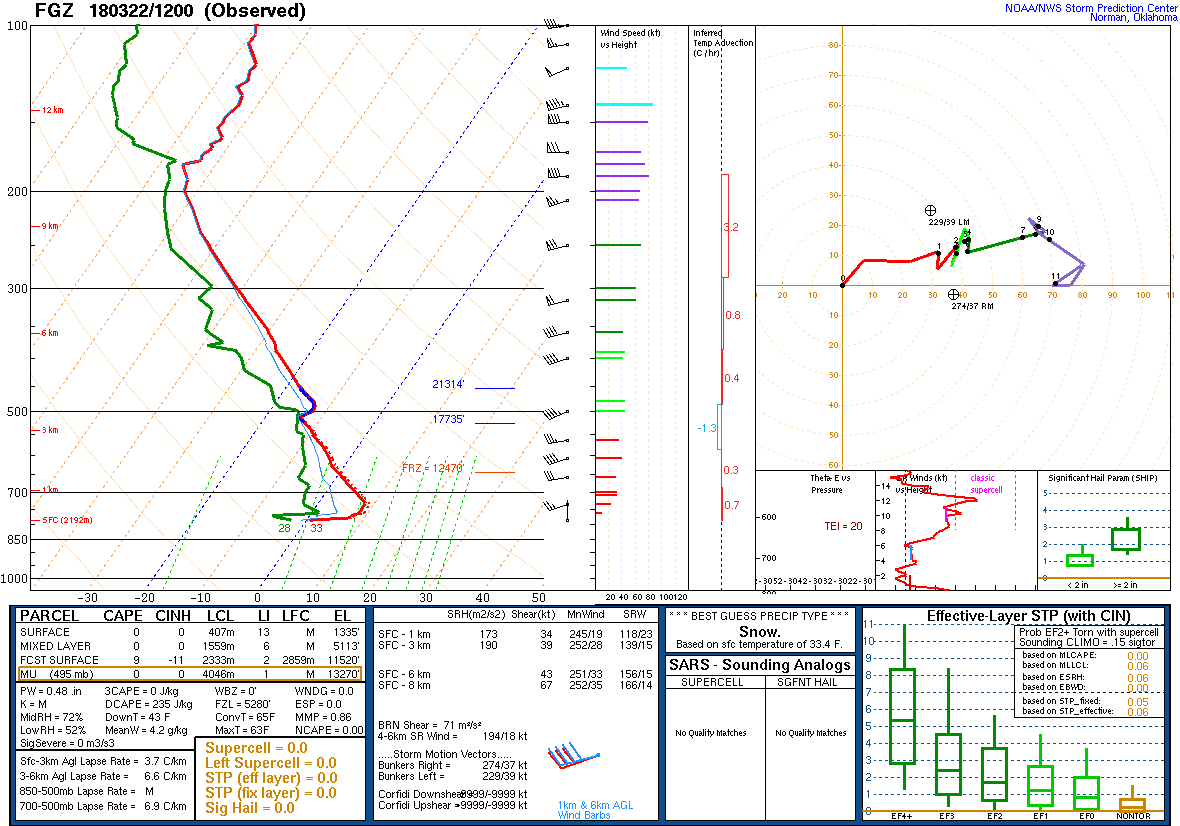
The FGZ sounding from about 7 hours earlier shows a stable air mass with strong, unidirectional wind out of the west and a moist layer up at 350mb. The slight inversion on that sounding is a bit below the moist layer — not sure what that means, since it’s been above the moist layer in a couple previous cases.
This morning, I got treated to this tubular breadstick-of-a-lenticular-cloud. Almost always seems I'm in a hurry to get somewhere when I spot these. I had to stop for at least a few minutes to grab some shots.
It finally got me thinking how I could attempt to forecast these in advance. They tend to form downwind of the San Franciso Peaks in advance of an approaching trough...but not reliably. Seems to me that it probably isn't as straightforward as 'moist, stable air flowing over a mountain'. I pulled up this morning's sounding and plotted soundings for a couple previous days when I had photographed them.
What stood out to me so far were some common traits:
Elevated terrain feature - to generate eddies
Upper level winds around 40-50 kts with 15-25kts near terrain feature - sufficient wind speed to convert horizontal terrain interaction into sufficient vertical motion. The San Francisco Peaks reach to about the 650mb level, so I'd watch for winds beginning to pick up around that level.
Roughly uniderectional upper winds - to support laminar flow
Stable air mass - to avoid mixing and further support laminar flow
Dew points within 5°C of saturation at one more points in the upper air mass - to allow air to condense when it is lifted from terrain eddies
Dry air in lower levels - to allow clear visibility to lenticular cloud features
[edit 31 March 2018: a couple additional bullets added below, courtesy of feedback from John Sirlin]
Shallow inversion above mountain - seems I did see this on a couple soundings, so I'll be watching for that too.
Orientation of flow to terrain feature - For terrain that is elongated, look for greater likelihood when flow is perpendicular to this feature. I haven't watched for this with the San Francisco Peaks since they're fairly symmetrical, but should be something evident with flow lofting over the Mogollon Rim.
I want to play with those options when I get the chance now, to see how repeatable I can get with seeing that combo of elements leading to lenticular clouds. Is there a limit to how slow flow can be at the terrain feature? Does flow at 650mb even matter for the Peaks or does it still get captured if 500mb flow is strong while winds below are weak? If upper level wind direction varies by more than say 30 degrees, does it wreck the effect? What if there is a tiny bit of elevated instability - at what point does it start to interfere? How far from saturation can dew points be and still be expected to condense into lenticular clouds?
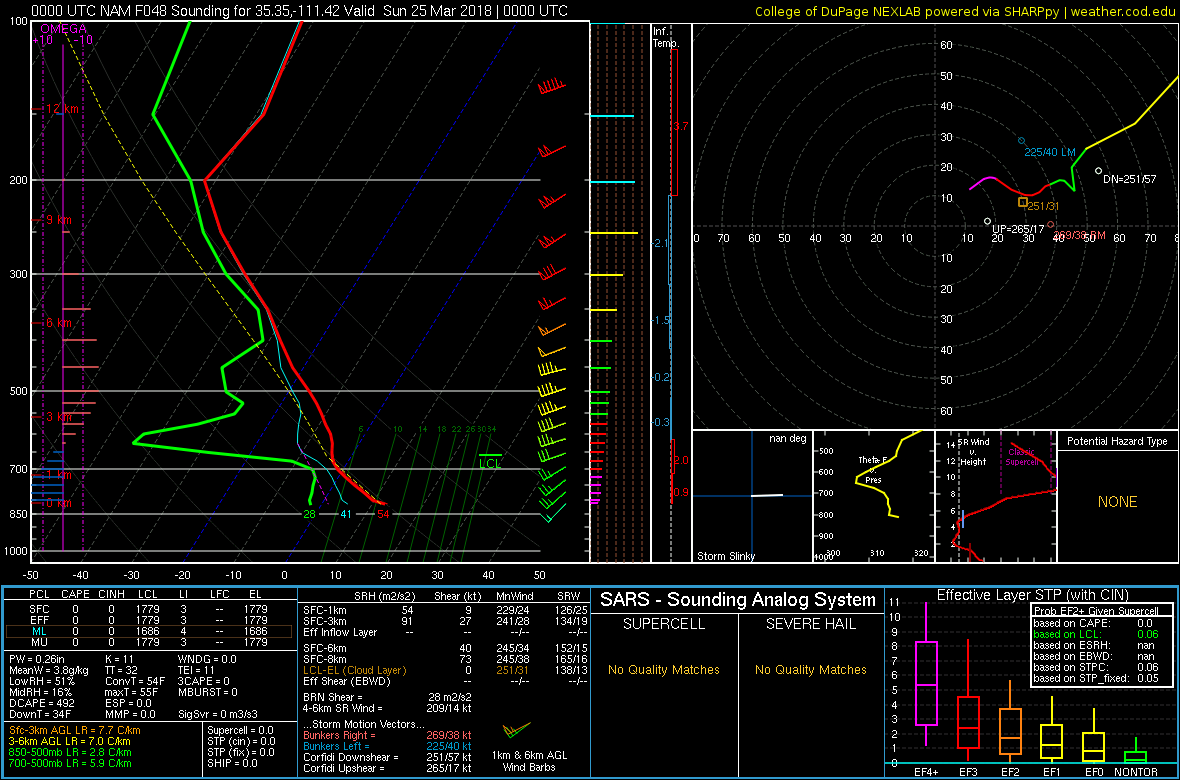
With those options in mind, I pulled a NAM forecast sounding for this Saturday afternoon. If that forecast pans out, it could make for some lenticular action that afternoon with perhaps a cloud cap just above the mountaintop and possibly a high altitude wave off to the east-northeast. I'll keep an eye out and see how wrong I am.
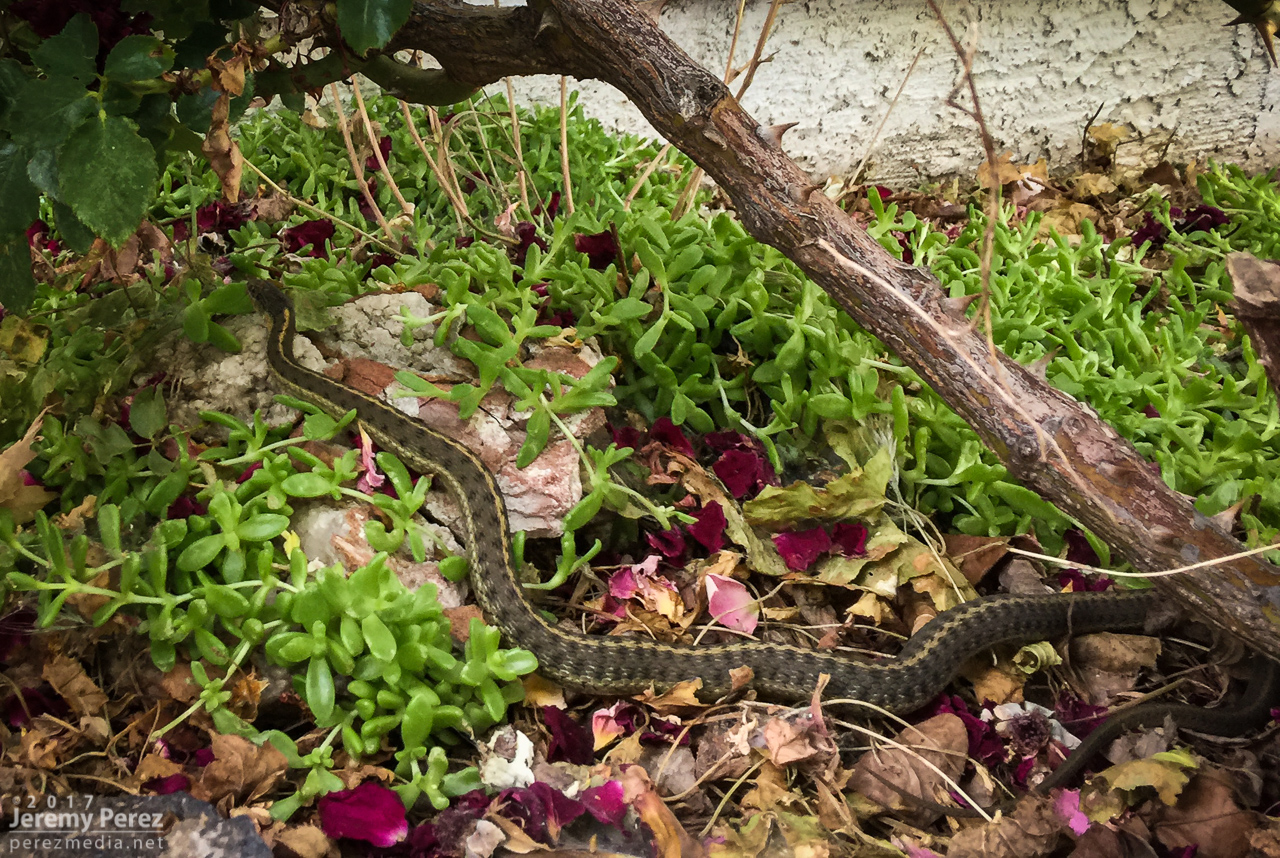
Three months ago, we found a garter snake roaming the rose bushes in front of our house. I was really surprised. It’s been a long time since I’ve seen one in the wild, but I can only recall ever seeing them near creeks and other healthy water sources. With all the cats and cars around in town, I figured he was a really lucky critter. He musked when I first picked him up, but never bit, and that was the only time he ever tried to skunk me or anyone else.
First sighting beneath our rose bushes
Doing a little research after that, I ID’d him as a Wandering Garter Snake — Thamnophis elegans vagrans. He’s about 24 inches long and I’m guessing male because the tail after the cloaca doesn’t quite seem to taper for about an inch or so.
I haven’t had a pet garter since I was a kid and had forgotten how awesome they are. He’s just an exceptionally beautiful snake. Bright eyed with a slight olive green tint up top and pastel bluish green gastrosteges beneath—and glossy like a moving ceramic sculpture. We handle him regularly and he is completely comfortable with that—always on the move, exploring and flicking, never snippy or skittish.
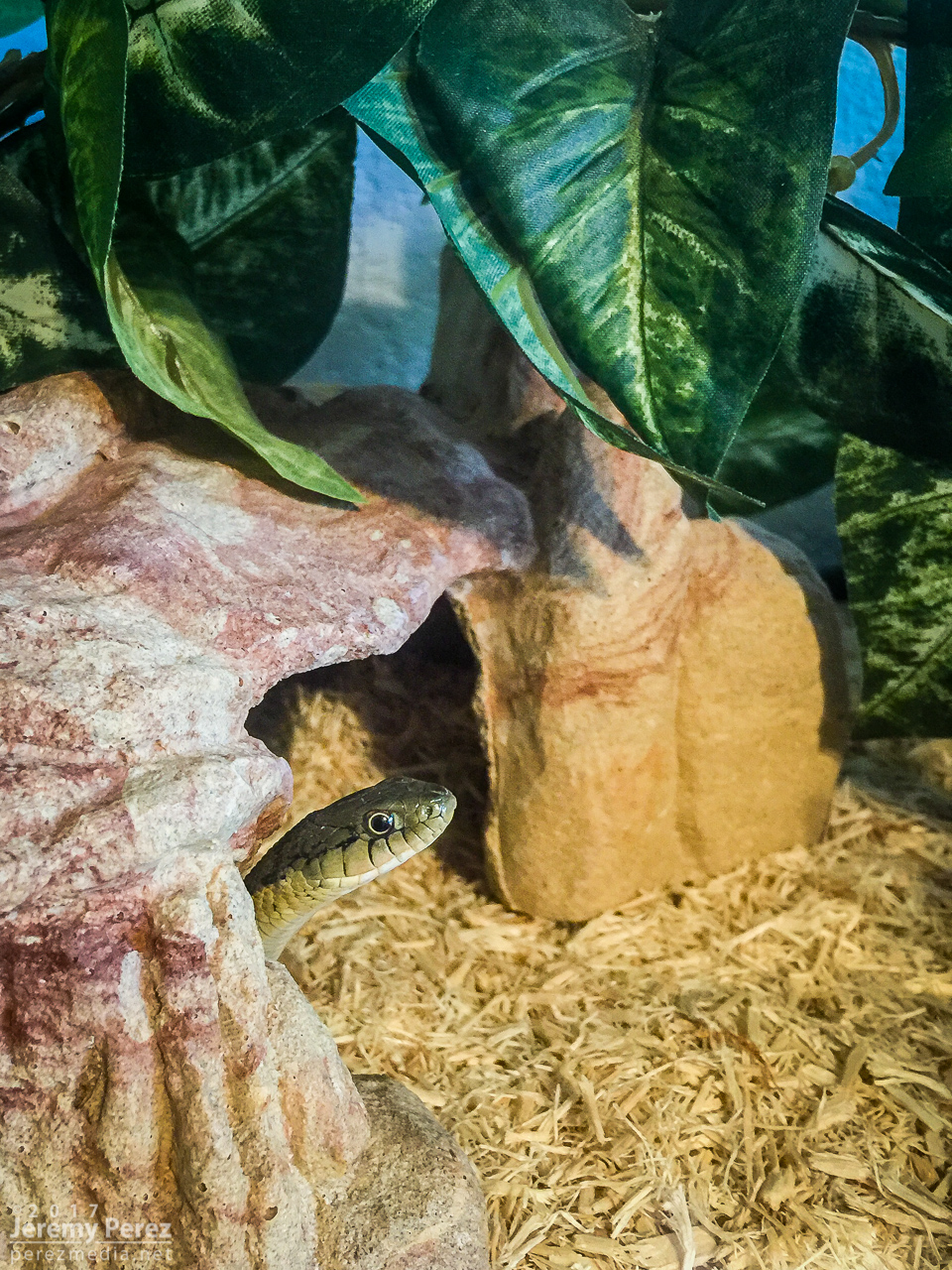
He spent the first few weeks in a small 7-ish gallon tank, but is now set up in a better 20 gallon tank with trimmings to hopefully make it as pleasant for him to live in as it is for us to watch. We’ve had friends through the years that have had milk snakes, boas and kings, but I haven’t yet seen any that compare to watching a garter just constantly moving and grooving, stretching and reaching around their environment.
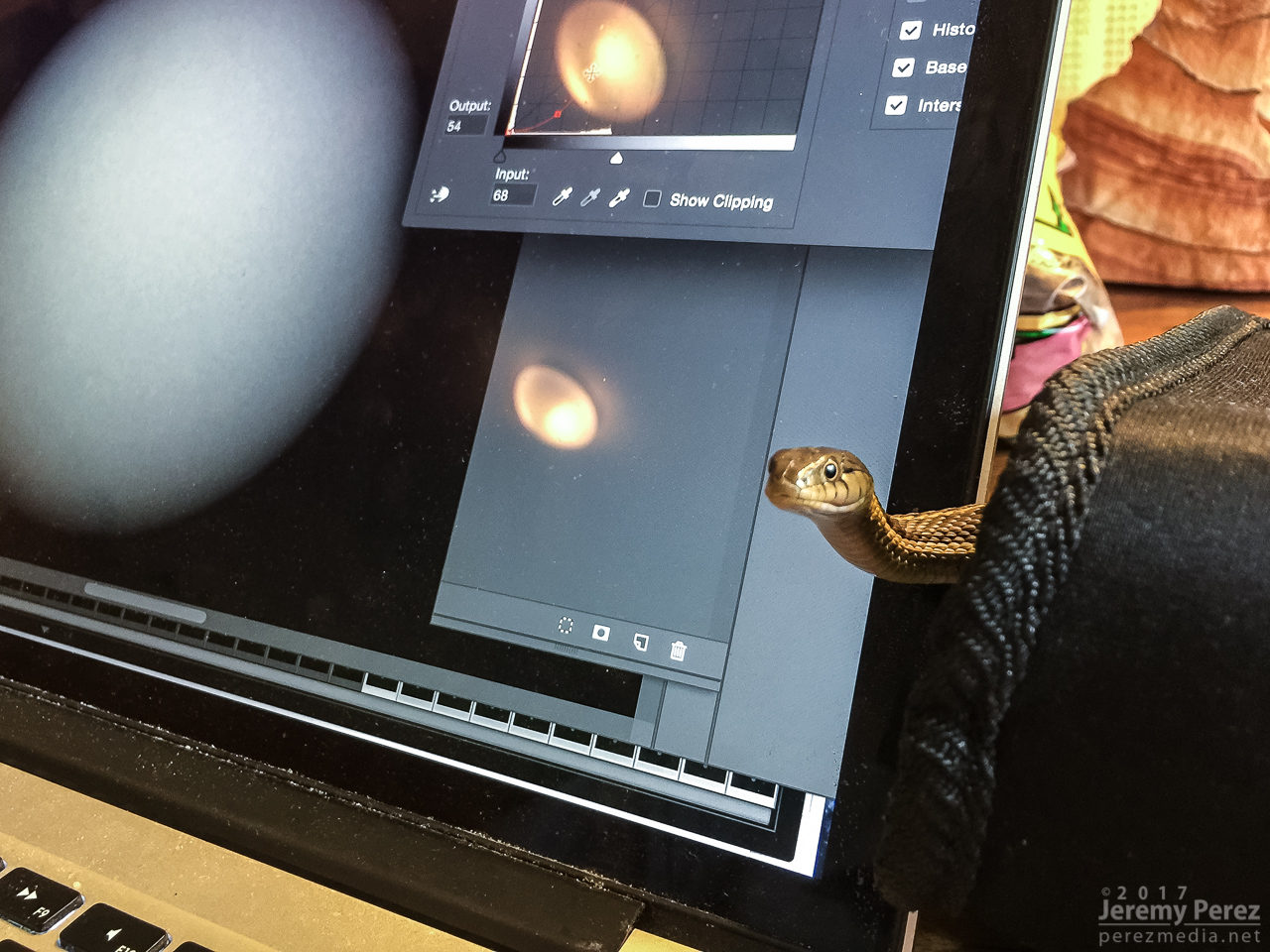
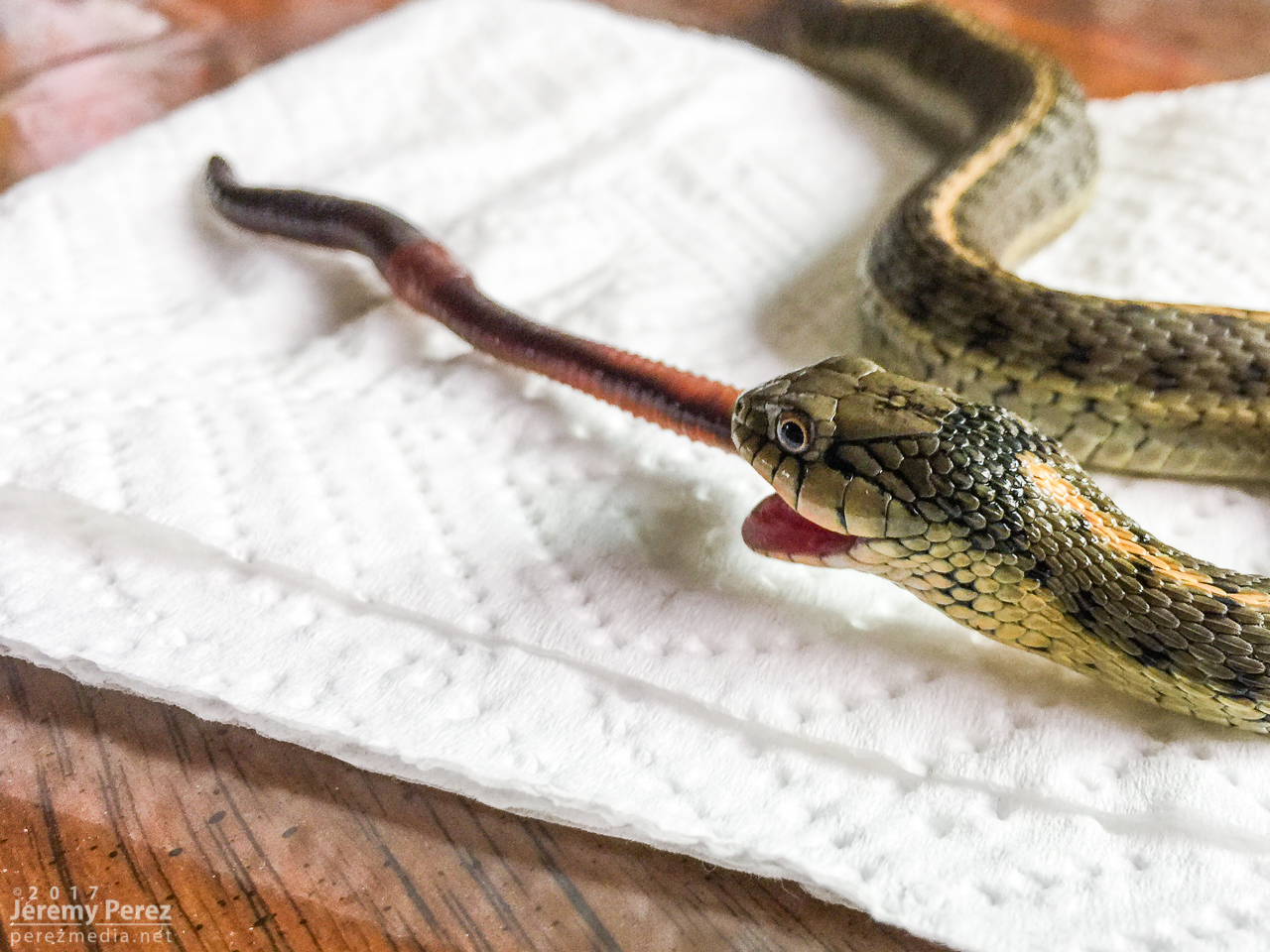
We have some extra faux-vine leaves and a climbing rock that we bring out and set on the table a couple times a week to let him crawl around and explore different layouts. Sometimes one of us will sit there and play or work on the laptop while he takes an extended tour. That’s where I had been feeding him too—big earthworm on a paper towel in the middle of a temporary table garden. A little vitamin dusting on the worm once every couple weeks. He was ravenous the first couple months and at times would scarf his meal before I even had a chance to put him down.
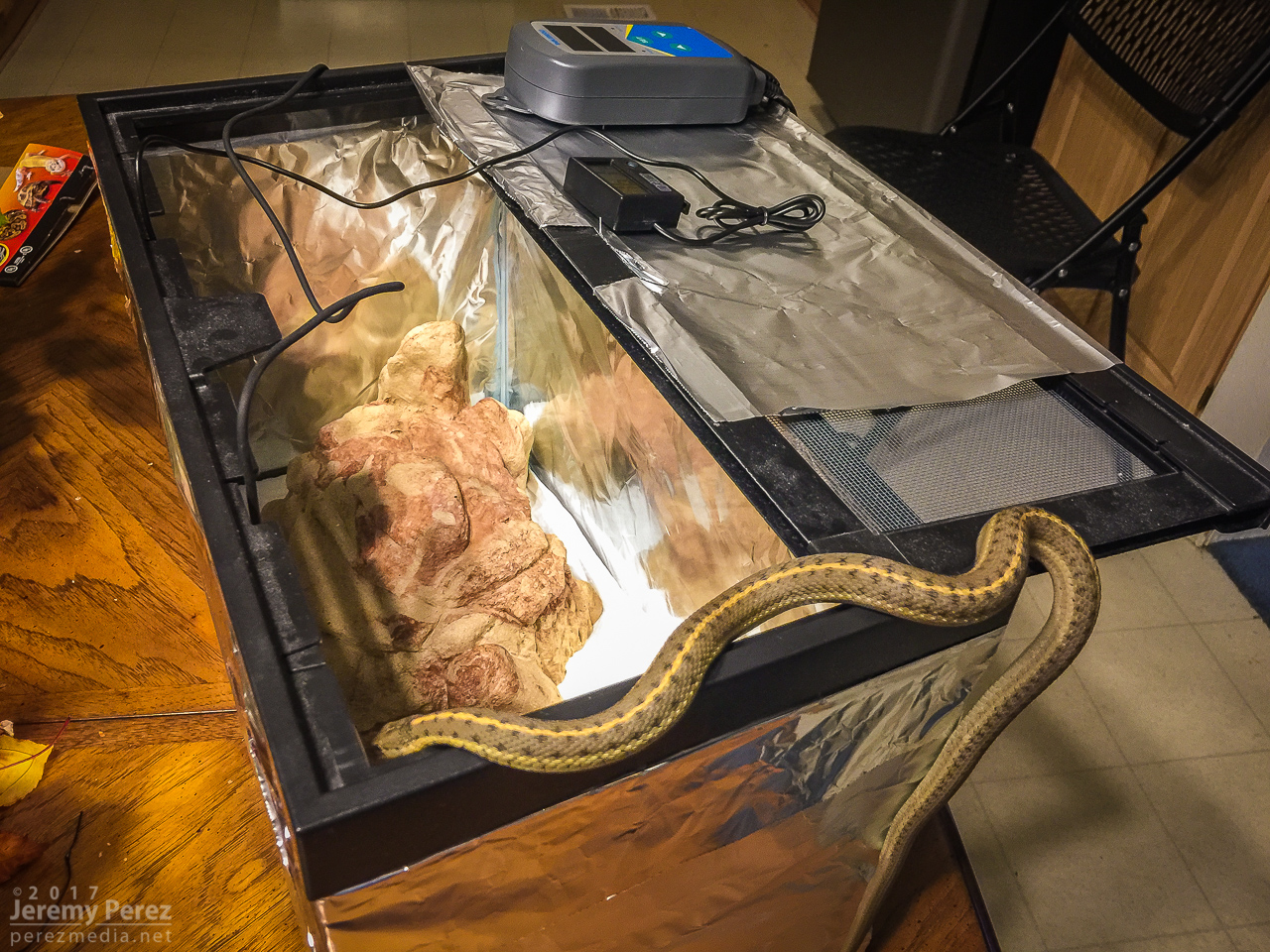
He shed twice in the first two months, but what I feared has now happened. He stopped eating in September, and has gone into enhanced exploration mode, so I figure he’s hunting for a good brumation spot. I’m afraid he’ll lose too much weight if I try to avoid brumating until it’s too late. So I picked up a thermostat and separate heat mat to set him up in the smaller tank, out in the garage for I guess a couple months to reset the belly clock.
Randall checking out the freshly assembled brumation hideout
I’m really afraid we could lose him to that process. But definitely don’t want him starving himself at higher metabolism in our indoor temperatures either. I wish I could be confident that after a couple months of not eating and warm temperatures I could be sure he’d figure it out and start chowing down again…but as far as I know, he could get sick and die of malnutrition first. So I guess I’m giving brumation a shot. The cage is covered in foil to keep it dark, thermostat programmed for 50 degrees F, water dish and cover added, and snake in residence. We’re starting with two or three days indoors to start the dark. Then out to the garage for cooler temps. We’re going to miss watching him roam and flounce around for a couple months.
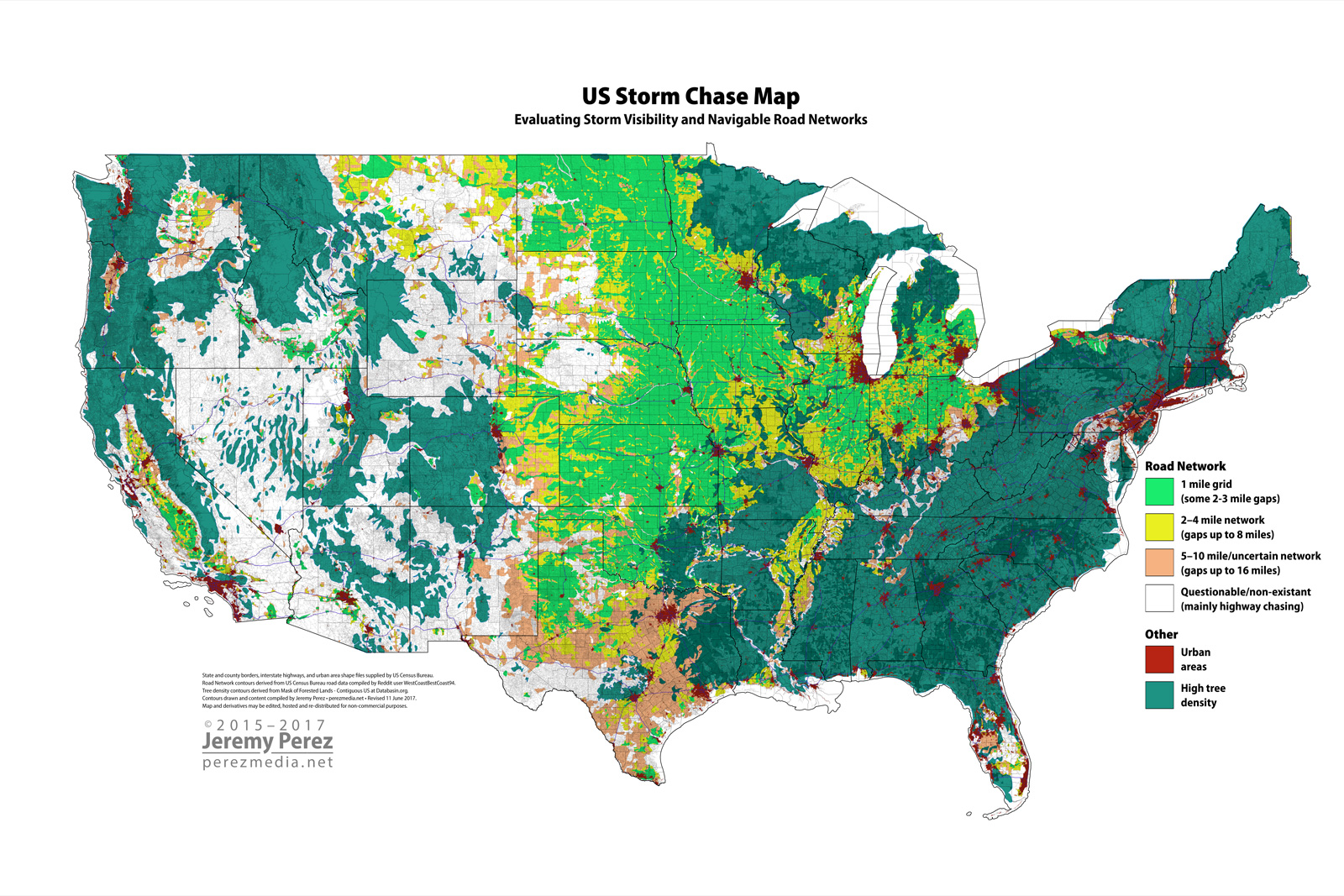
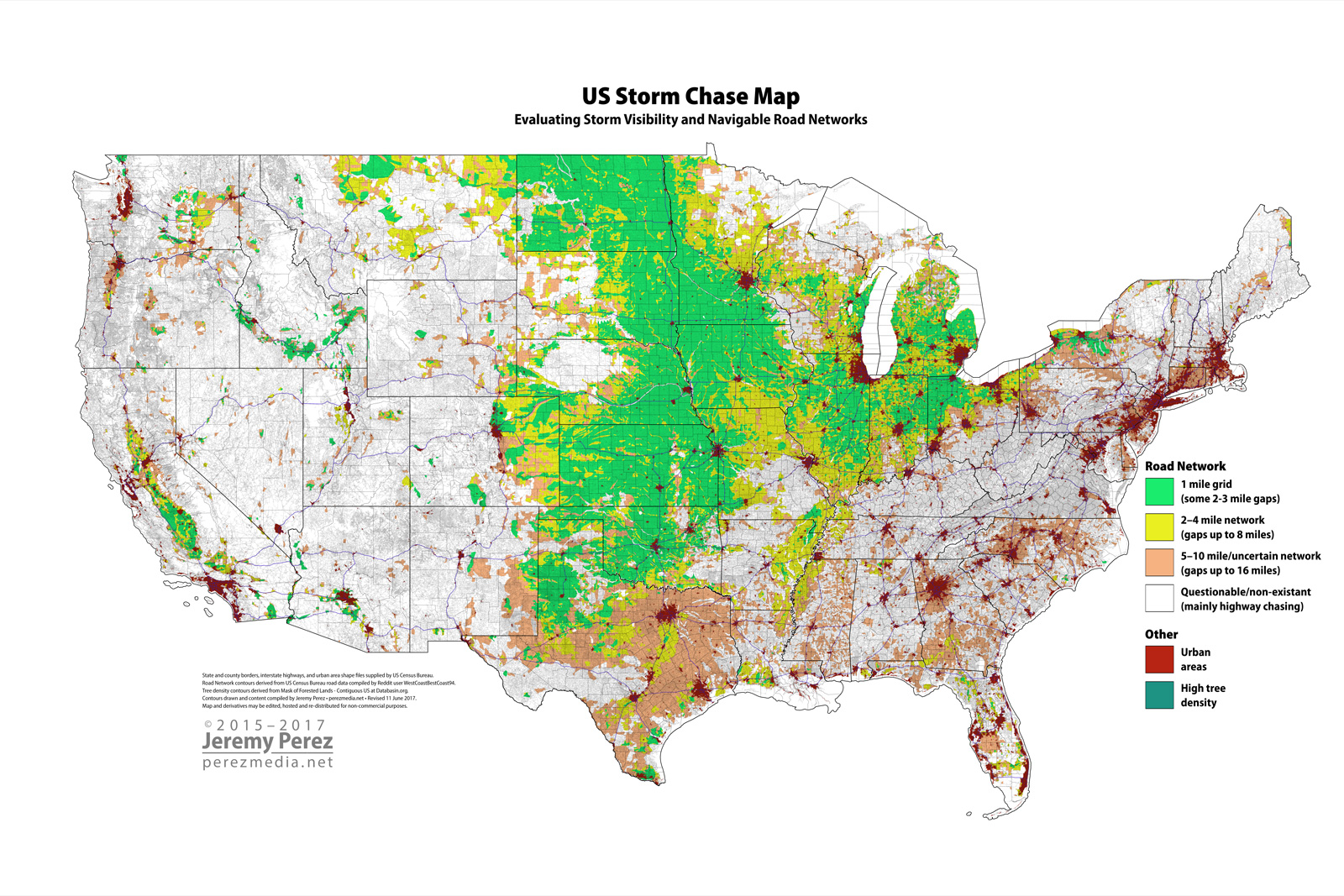
So this update is kind of late for the 2017 season, but I wanted to get it out there anyway. This adds info for the remainder of the western and eastern US. I also got permission from the Reddit user WestCoastBestCoast94 to include the road image he generated, so that underlayer has been included. This mostly shows up as gray patchiness at lower resolutions.
The map is based on my visual assessment of the road network. So there's a fair amount of subjectivity in there. At a variety of points, I'm positive people could find things that aren't spot on. Texas was questionable in a lot of places, because of how often the road grid there is rotated 45°. At available resolution I couldn't visually tell if those networks were truly gridded or not, so they got knocked down in quality due to uncertainty. Mainly, I tried to err on the side of pessimism if I couldn't tell for sure how well gridded the network was.
Despite that, I've been pretty satisfied with how it's held up in areas where I've chased. The area in northwest Oklahoma/Barber County Kansas definitely checks out as sketchy. There are some tough road choices too in the less networked area in north Texas along the Red River; but then some pretty decent zones in the Mississippi flood plain. The map gave me confidence with a setup that looked like it could produce in that flood plain and I caught a tornado near Grady, Arkansas last year because of it. Some day, North Dakota shall call, and I will answer. Original detailed discussion about the map and process for creating it is found here: 2015 US Storm Chase Map Project
Links to high-res versions are included with the low-res images below:
The maps may be distributed/reposted for non-commercial purposes. Please preserve the watermark, and I'd be grateful a link back to this site if possible. If you would like a full-resolution copy (13,500px x 9,000px), please get in touch at the email address in the header of this page.
I hadn’t been forecasting this day to death…not even close. I was pretty much keeping a lazy eye on it for any option for strong storms as low pressure worked its way into southern Arizona. SPC had marked out southeast Arizona and southwest New Mexico for marginal severe probabilities, but a quick check of HRRR this morning hinted at some fun further north in the Little Colorado River Valley.
Six overlapping runs of HRRR helicity swaths
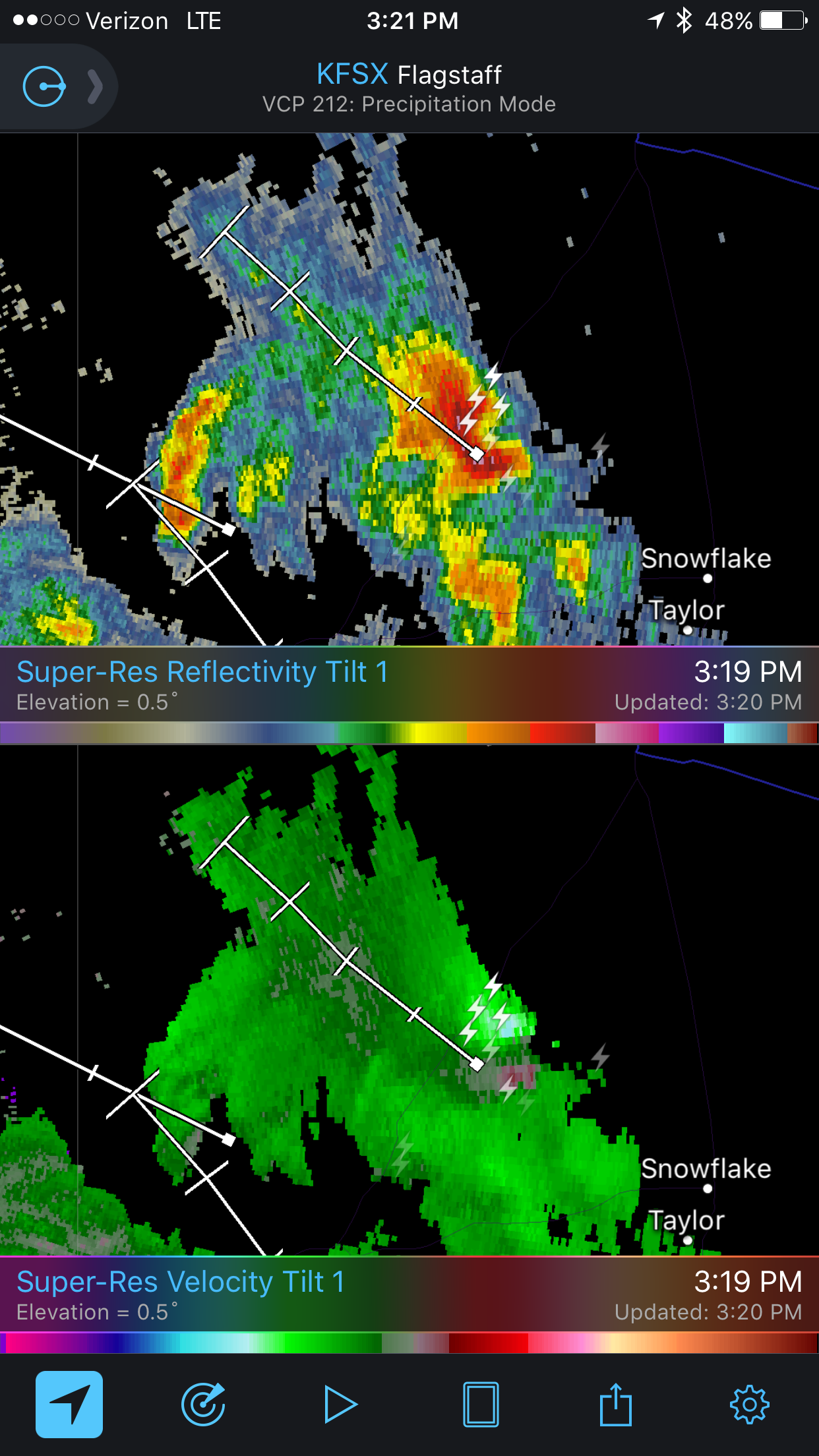
Several runs were pretty consistently bringing up to 750 j/kg SBCAPE, 20-40 knots of 6km shear, low 50 degree dew points up into the LCRV. Those runs were also consistently laying down decent helicity swaths across I40 between Winslow and Holbrook. As the day wore on, dew points looked like they might cross the 50 degree threshold. By 2PM, convection was starting to strengthen south of Holbrook, so I took off to sample the goods.
And what goods there were.
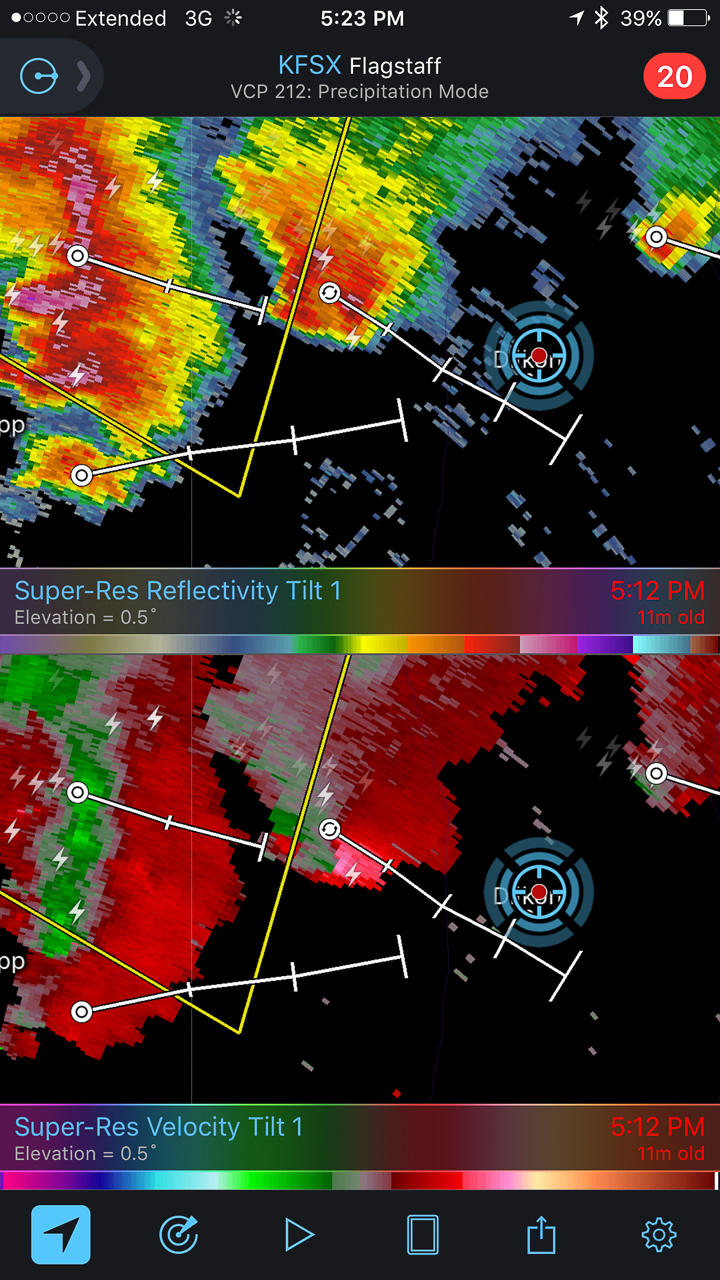
As I headed east, one cell took over and picked up a very nice, cyclonic velocity couplet as it drifted north-northwest.
Reflectivity/Velocity Radar at 3:19PM (2219Z)
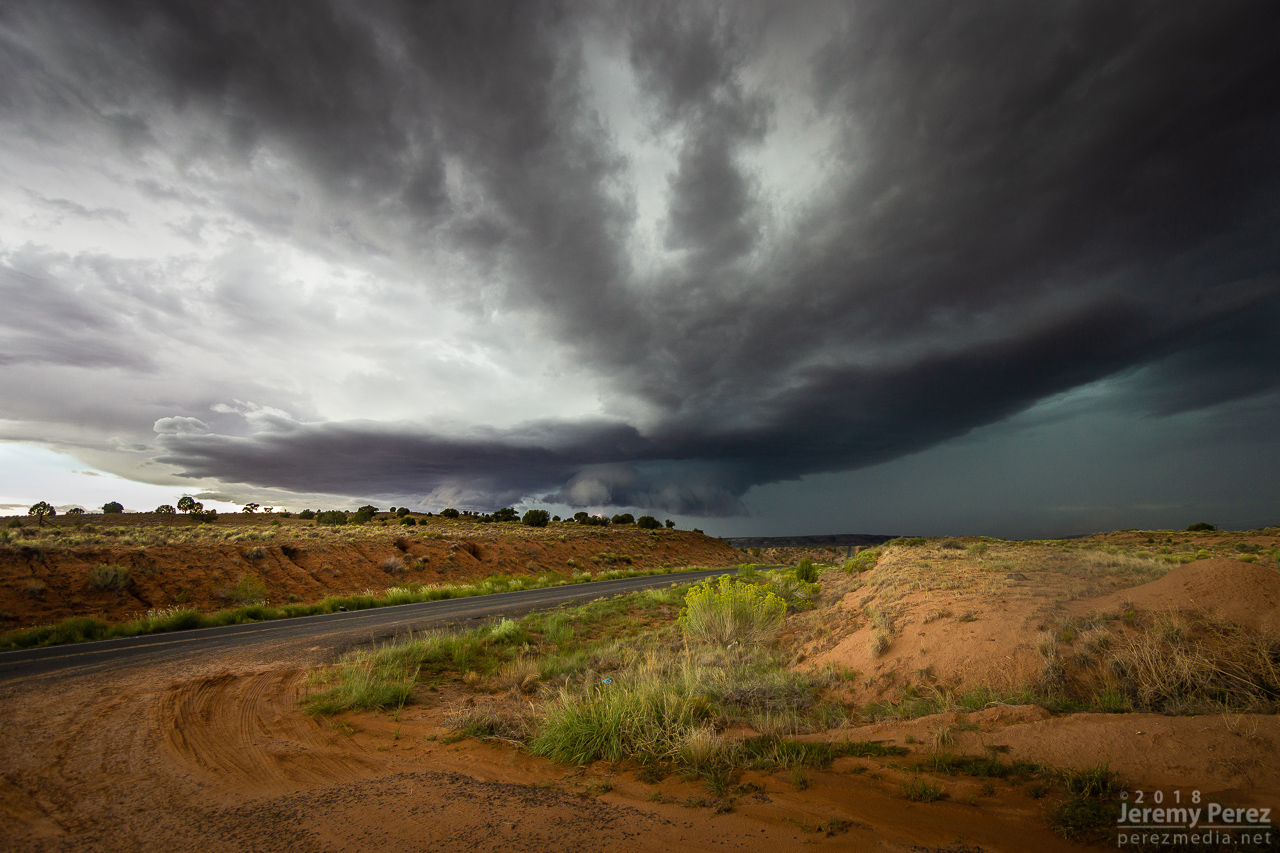
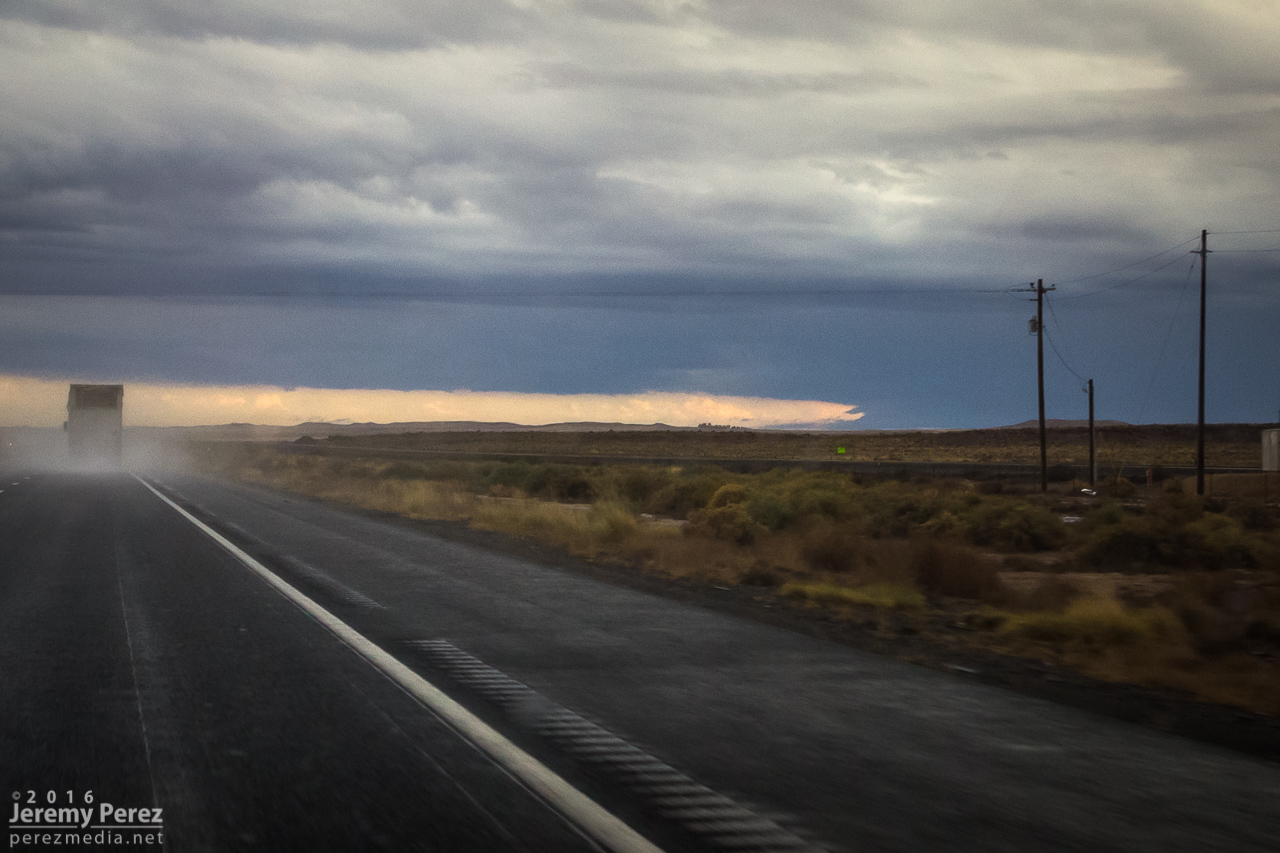
By the time I was within 50 miles, I could start to make out a couple layers of bell-shaped lowerings sweeping beneath the lurking darkness of the storm. As good as the couplet looked, I was pretty sure the storm was peaking and I’d probably missed the best.
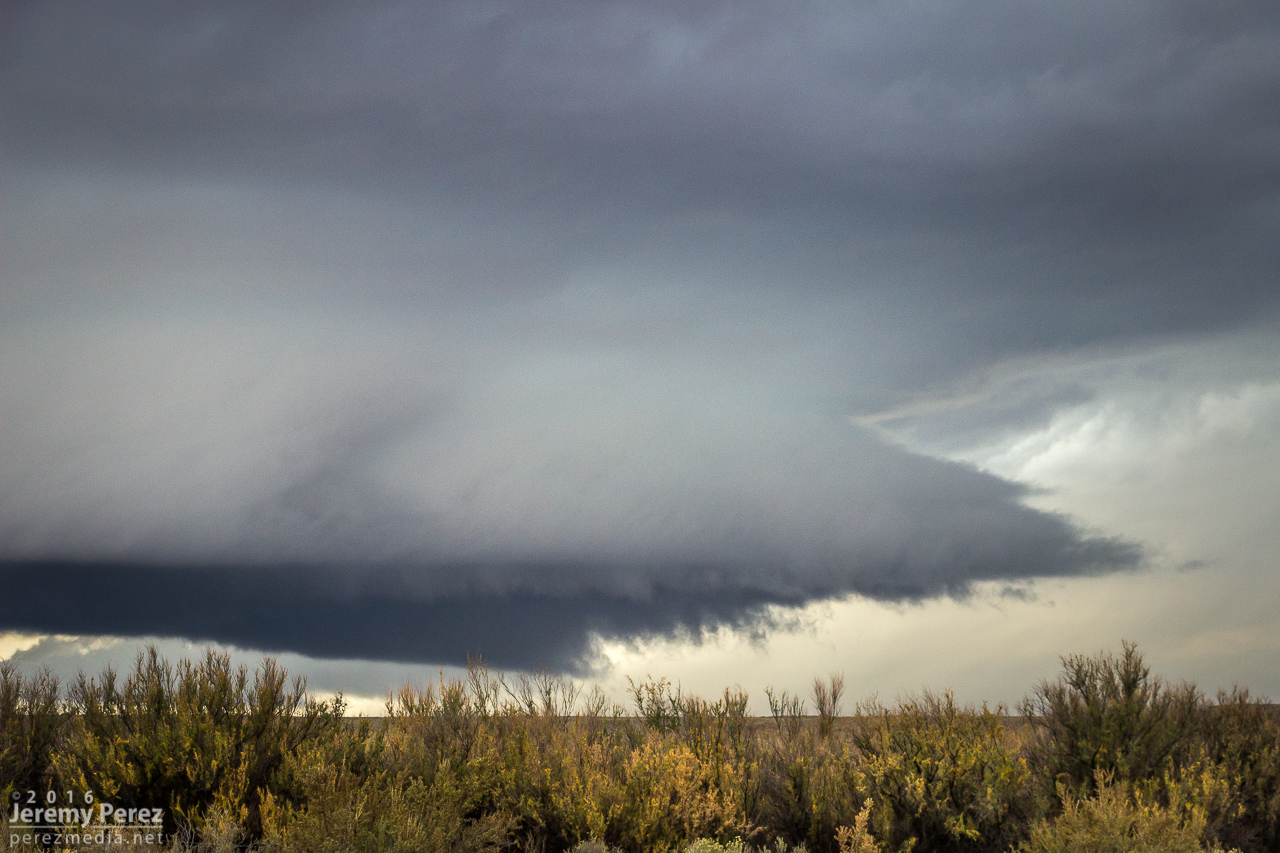
Distant view of the storm base looking east from I-40 (2246Z)
Looking southeast during a quick stop at Hibbard Rd. before continuing east (2302Z)
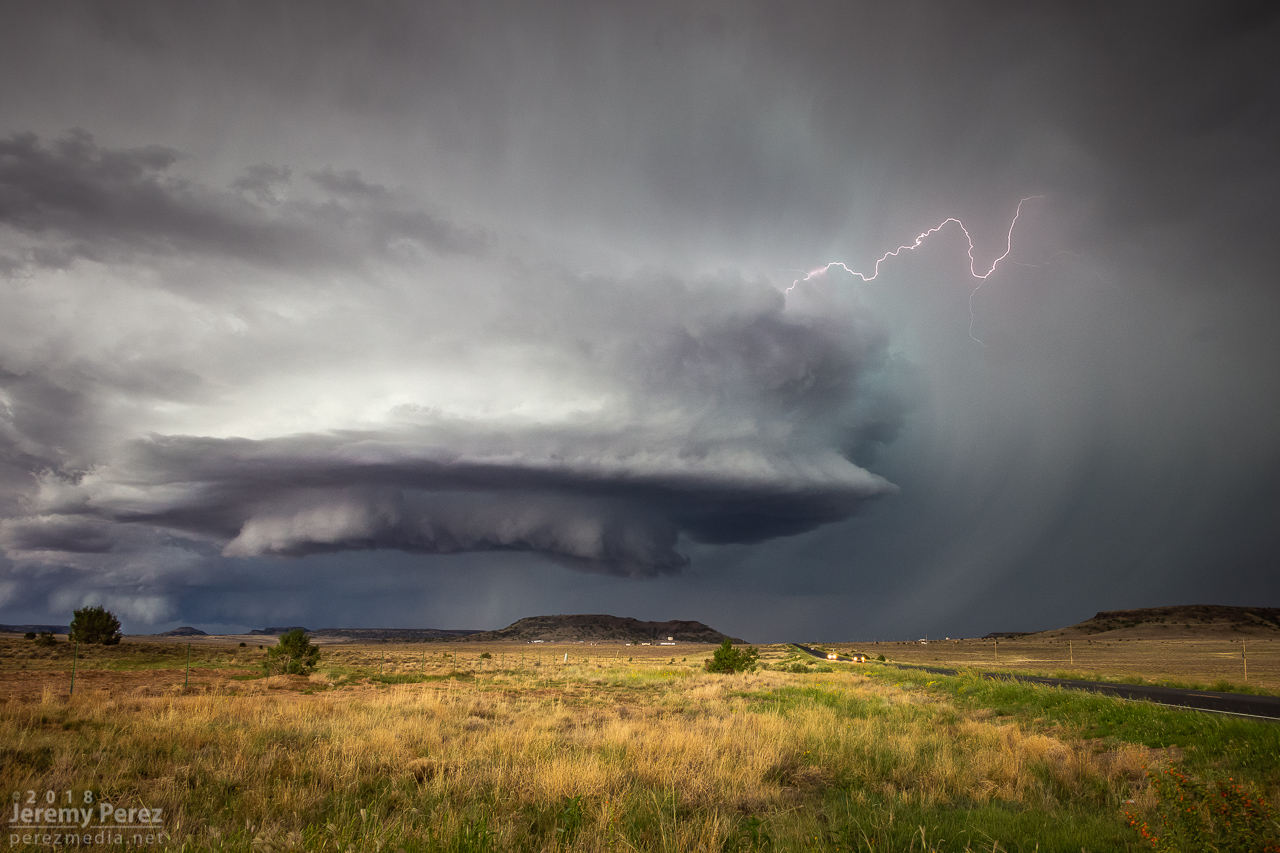
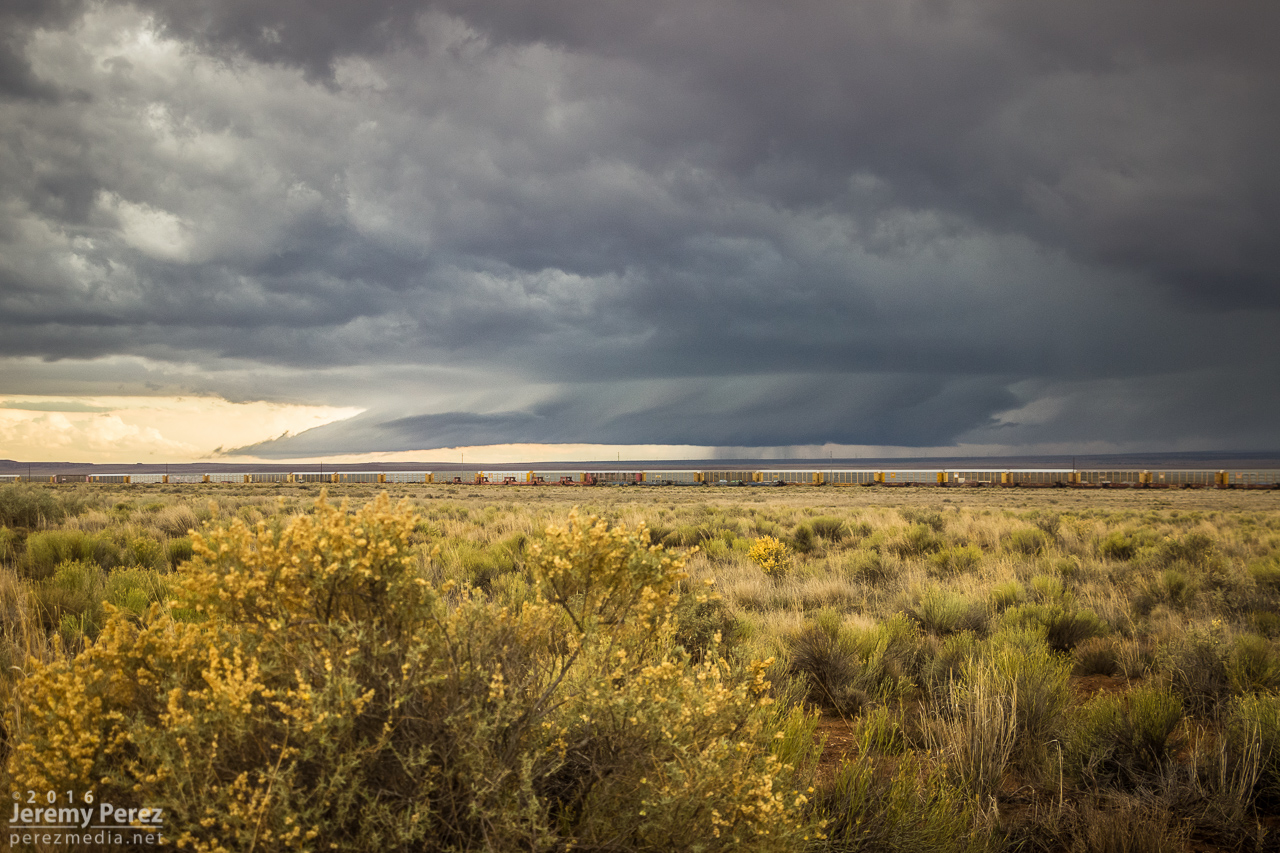
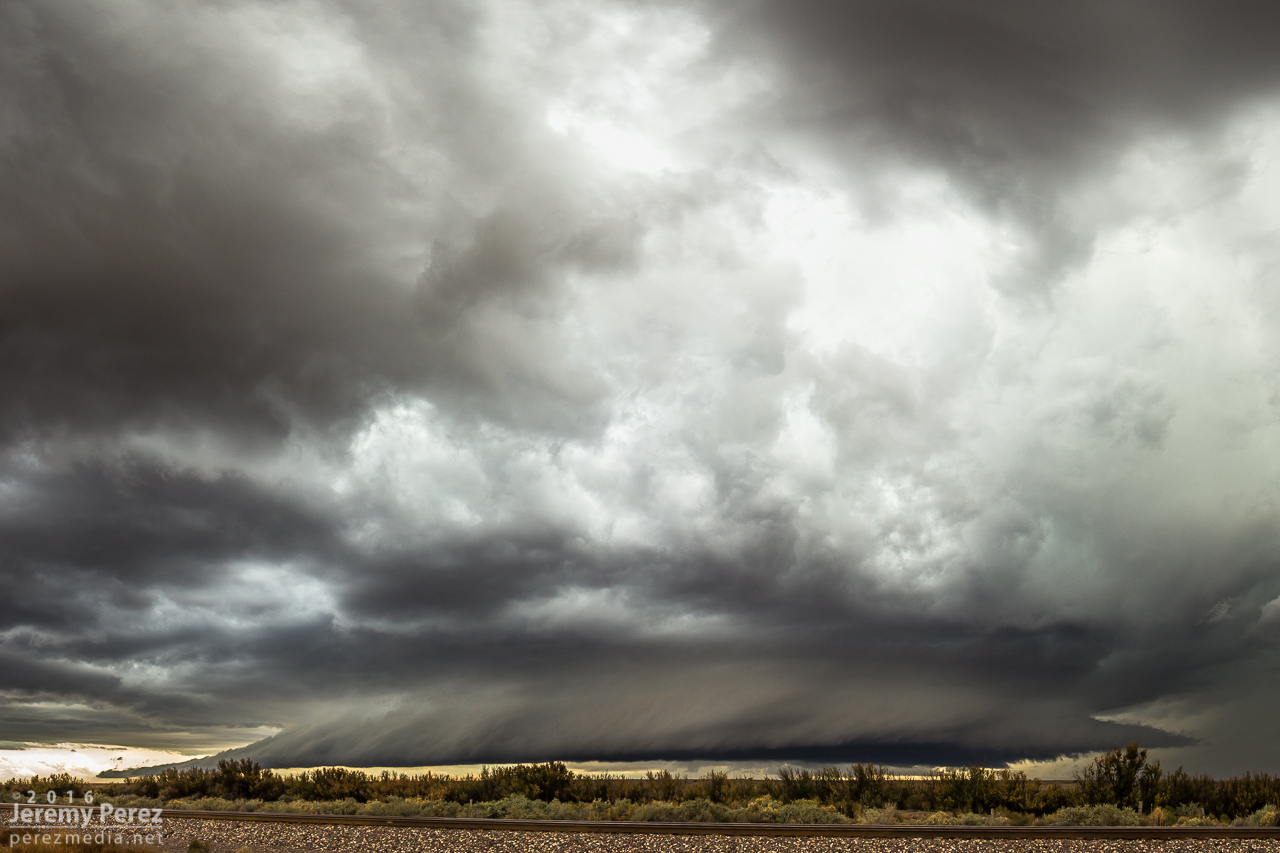
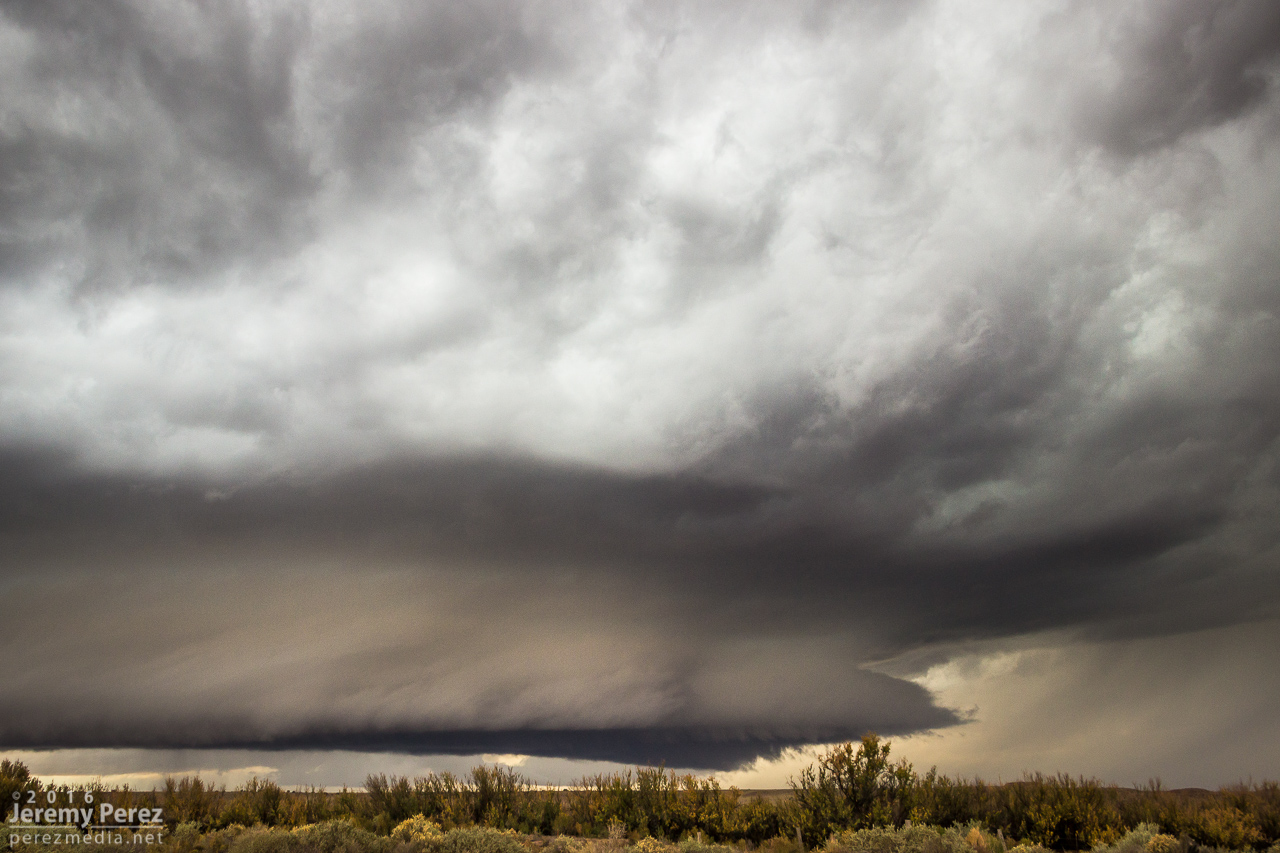
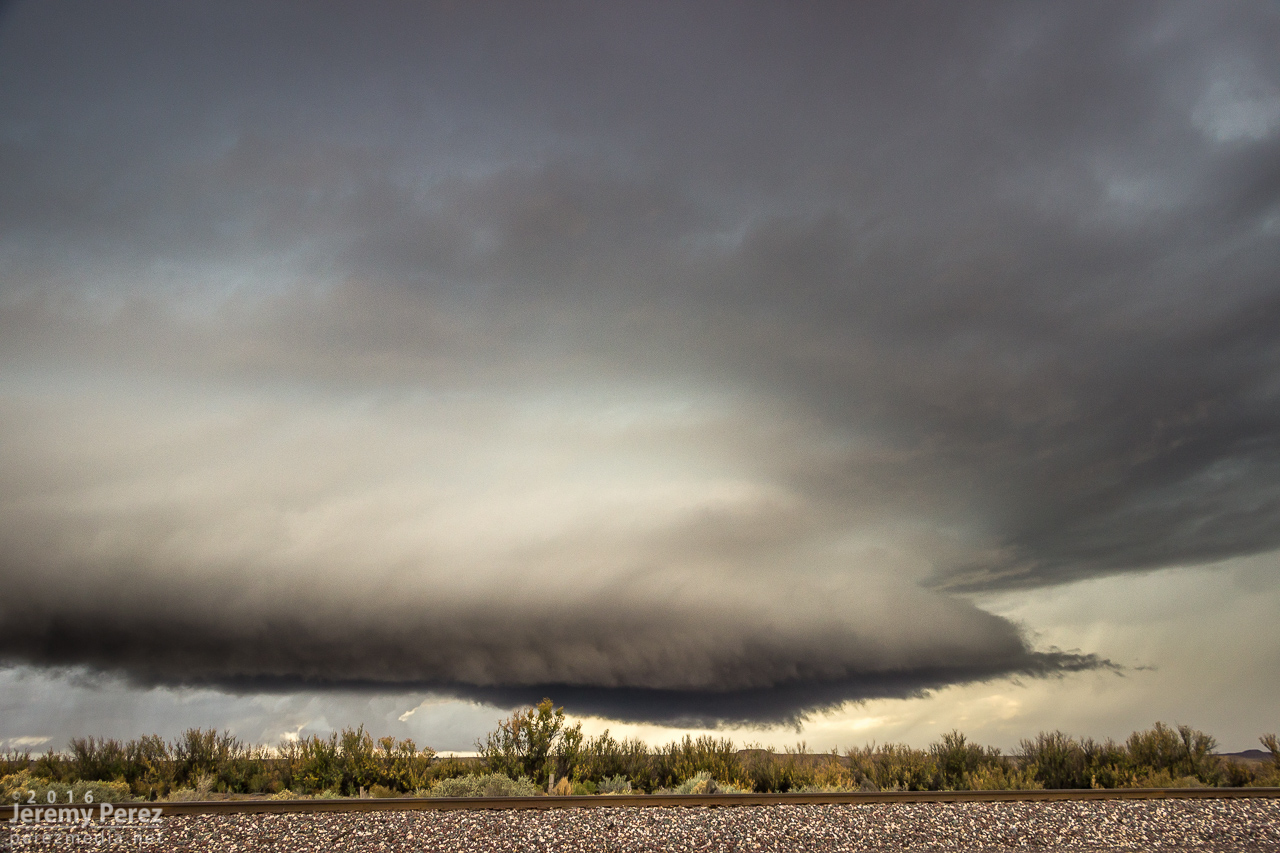
About 10 miles east of Winslow, I exited at Jackrabbit road, trying to position a couple miles east of where I thought the storm would cross. I haven't scouted this area before, and got stuck with some pretty bland landscape options…shooting perpendicular across railroad tracks makes me sad. But the storm…the storm was incredible. The RFD gust front had scooped up a gigantic cowcatcher shelf cloud as it loomed closer. After snagging a few still photos, I set both cameras up to catch both wide and tight video as it moved in.
Five-frame stitched pano looking south at the approaching supercell from 10 miles east of Winslow (2315Z)
Close up of the leading edge of the RFD shelf (2319Z)
(2320Z)
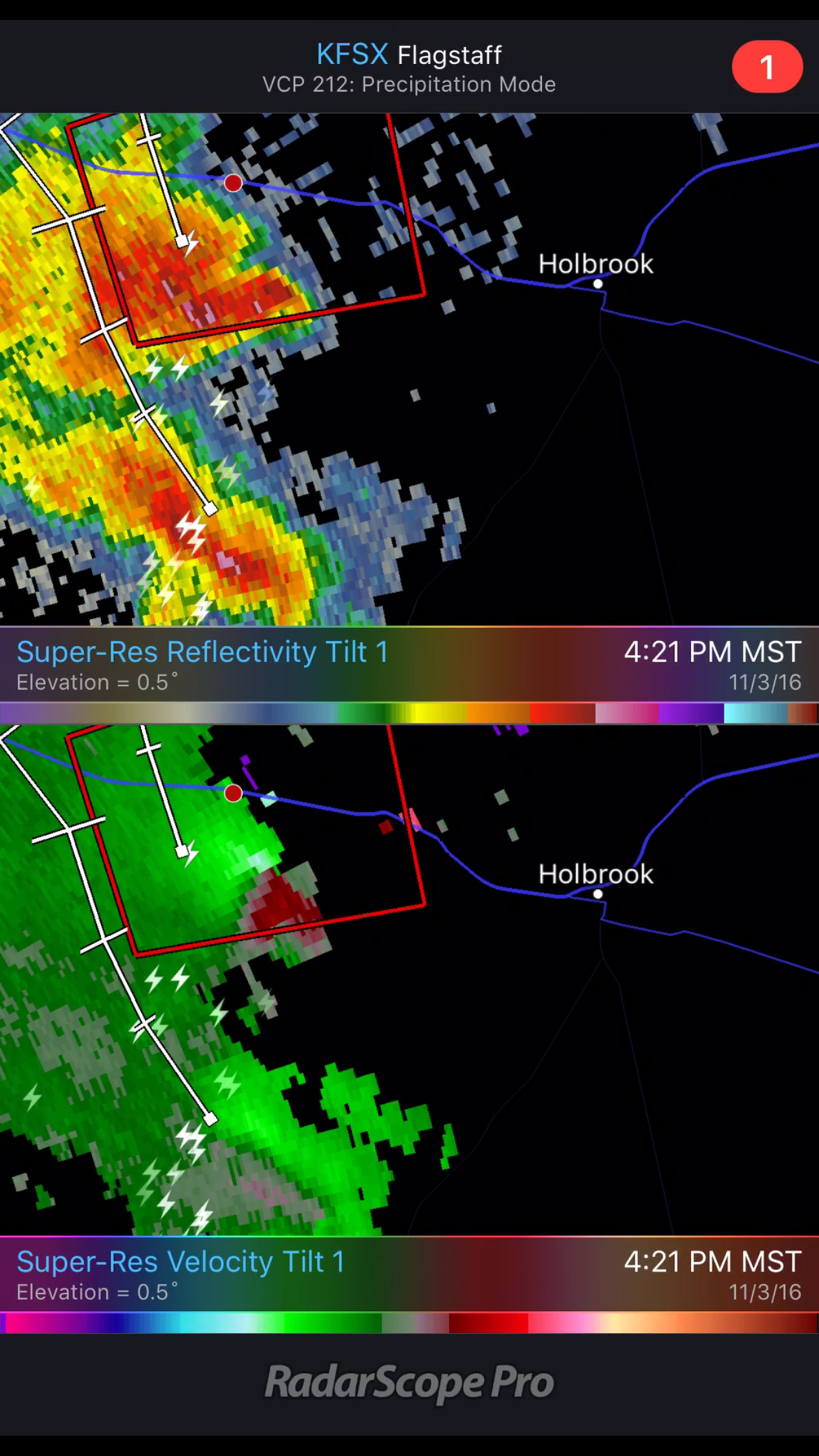
Within a few minutes, my phone belted out a warning alarm, and there I was smack dab in the middle of a tornado warning polygon. Although there was broad rotation, I didn’t notice anything tightening up apart from some fun eddies underneath the gust front.
Finding myself in the center of a tornado warning polygon (2321Z)
(2326Z)
Both cameras shooting video (2326Z)
Road options were no good once it crossed the interstate and I headed back west to Winslow to take Highway 87 north. From there I watched a trailing cell try to make good on whatever was left to chew on.
Looking southeast at the weakening remains of a trailing cell from a few miles north of Winslow (0006Z)
…and the very important rainbow shot (0016Z)
So, yeah, it feels great to finally have been on a tornado-warned Arizona supercell!












Recent Comments